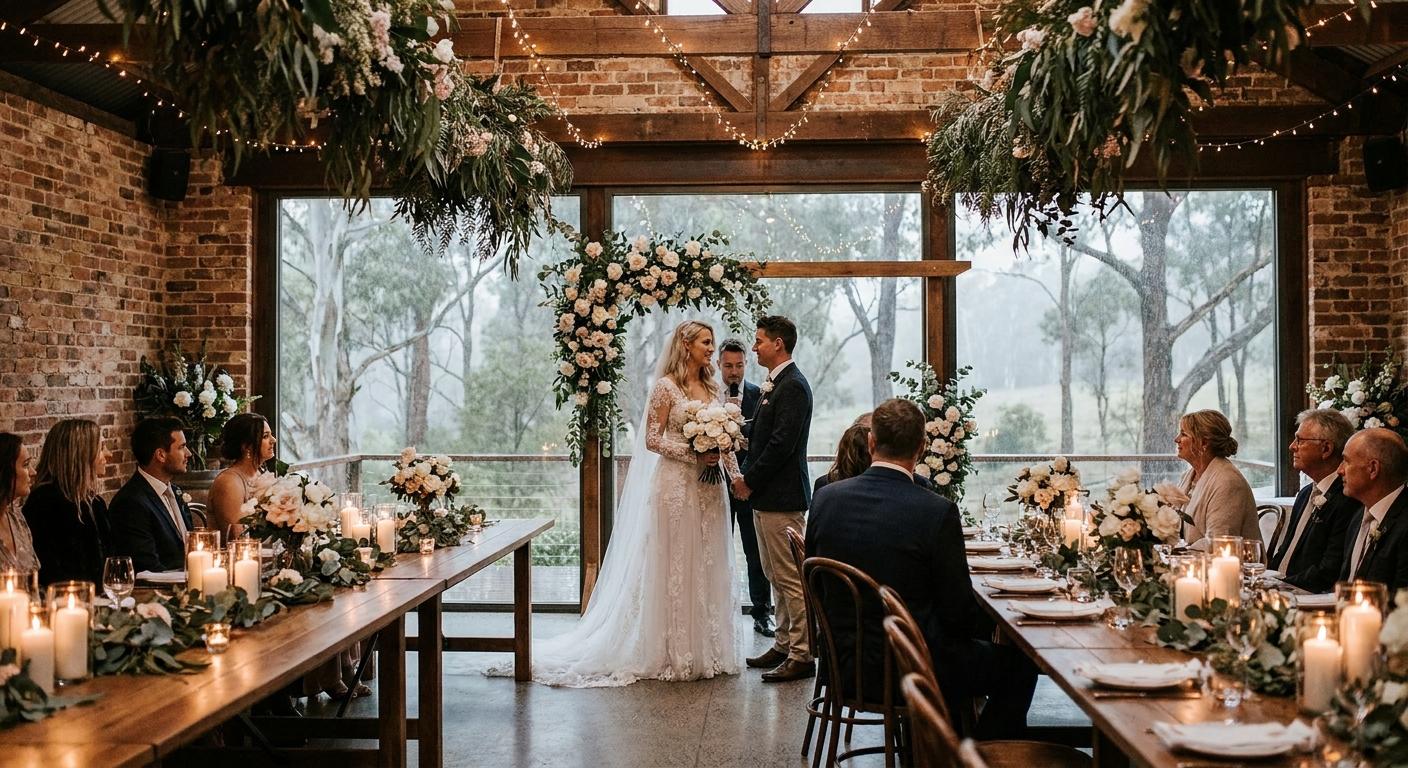
There is a quiet revolution happening in Australian wedding planning, and it is taking place in the colder months. For decades, the conventional wisdom held that an Australian wedding must fall between October and April — the warm months when outdoor ceremonies are reliable, gardens are in bloom, and guests can comfortably attend an evening celebration without a jacket. The winter months of June, July, and August were considered the off-season, a time when venues offered discounted rates to fill dates that couples were reluctant to book. That conventional wisdom is being rewritten. In 2026, Australian winter weddings are having their moment, and the reasons are more compelling than just cost savings.
Across the country, from the wineries of the Margaret River region in Western Australia to the heritage estates of the Yarra Valley in Victoria, from the coastal venues of the Gold Coast to the mountain retreats of the Blue Mountains in New South Wales, couples are discovering that a winter wedding offers something the peak season cannot: unhurried elegance, dramatic styling potential, and a guest experience that feels intimate rather than logistical. The winter wedding is not a compromise. It is a deliberate, sophisticated choice that more Australian couples are making with confidence. This guide covers everything you need to know about planning one.
Whether you are already considering a winter wedding or simply curious about what the cooler months can offer, the following pages walk through the practical, aesthetic, and logistical dimensions of a winter celebration in Australia. From choosing between an indoor venue and a covered outdoor space, to managing your RSVP timeline through winter flu season, to creating a styling palette that feels warm and romantic rather than cold and stark — this guide covers it all.
Why Winter Weddings Are Growing in Australia
The rise of the winter wedding in Australia is driven by a combination of practical economics and aesthetic aspiration. On the practical side, venues and suppliers in the winter months offer meaningfully lower prices than in the peak season. A marquee hire company in Sydney that charges premium rates for a December wedding may offer significant discounts for a July booking. A catering company in Melbourne that is fully booked every weekend from October through March may have substantial availability in June — and pricing that reflects that availability. For couples who are working within a specific budget, choosing a winter wedding can mean the difference between compromising on the venue or having the celebration they envisioned.
The aesthetic case for winter weddings is equally compelling. The cooler months offer styling opportunities that simply do not exist in summer. Candlelight reads differently in a room where the temperature is cool outside and warm inside. Darker colour palettes — deep burgundy, forest green, navy, charcoal — create atmosphere in ways that pastel spring palettes cannot. Textures that feel heavy and luxurious in a summer context — velvet, wool, dried florals, candlelight — become the natural vocabulary of a winter wedding. For couples who have a clear aesthetic vision, the winter months offer a canvas that summer simply cannot provide.
The guest experience dimension is also significant. Australian summer weddings, particularly those held outdoors, can be hot, uncomfortable, and logistically complex. Guests sweat through formal wear. Children become irritable in the heat. The ceremony runs late because golden hour photography takes longer in summer. The winter wedding eliminates these constraints. A ceremony that begins at 4pm in June or July arrives at golden hour naturally, with temperatures that are comfortable for guests in formal attire and light that is ideal for photography. The celebration can extend later into the evening without the pressure of a venue curfew driven by the heat of the day.
The Cost Advantage of Winter Weddings in Australia
The cost differences between peak and off-peak wedding seasons in Australia are substantial and worth understanding clearly. Venue hire fees in the peak months — October, November, December, January, and April — typically run at full price, with popular dates booked twelve to eighteen months in advance and prices reflecting demand. In the winter months of June, July, and August, many venues offer packages that are twenty to thirty percent below peak season pricing, and the availability of dates is significantly greater.
The savings extend beyond the venue. Photography packages may be more negotiable in winter because the booking calendar is less full. Celebrants who are in high demand during the peak season may have availability in July that they do not have in October. Marquee companies, hired cars, and florists all tend to have more pricing flexibility in the off-season. A couple who budgets carefully for a winter wedding can achieve a result that would cost significantly more in the peak months — or they can allocate those savings to other elements of their celebration.
It is worth noting that not all winter dates are equally off-peak. The school holiday periods — particularly the two weeks of the New South Wales and Victoria winter school holidays in late June to early July — remain expensive and busy. If your wedding falls within these windows, the cost advantage is reduced. But even within the school holiday period, the supply constraints are less severe than they are in the peak summer months, and negotiation room exists.
Choosing the Right Venue for a Winter Wedding in Australia
The venue decision for a winter wedding requires more careful evaluation than the same decision for a summer celebration. In summer, the risk is that outdoor spaces will be uncomfortably hot; in winter, the risk is that outdoor spaces will be cold, wet, or both. Your venue choice must account for the fact that your guests will be spending a longer portion of the celebration in indoor or covered spaces than they would in summer, and those spaces need to be comfortable, beautiful, and adequate for your guest count.
The first question to ask of any venue for a winter wedding is: what is the backup plan if weather is inclement? A venue that offers a beautiful outdoor ceremony space with no indoor equivalent is a risk in winter. A venue that offers an outdoor ceremony space with a connected indoor area that can serve as the backup — or a fully indoor alternative that is equally attractive — is a venue that is genuinely suited to a winter wedding. Ask specifically about heating. Some venues that are comfortable in summer become cold in winter if the heating infrastructure is inadequate. A site visit in the actual winter months — if you are planning twelve months ahead — will give you a much more accurate sense of the space than a summer visit.
Australian venues that are particularly well-suited to winter weddings include wineries with barrel rooms and cellars, heritage buildings with fireplaces and high ceilings, converted warehouses with heating systems designed for year-round use, and hotels and resorts with dedicated winter wedding packages. The Barossa Valley in South Australia, the Mornington Peninsula in Victoria, the Swan Valley in Western Australia, and the Hunter Valley in New South Wales all have venues with indoor spaces that are purpose-built for winter celebrations.
Maximising Indoor Spaces in Australian Winter Wedding Venues
When your celebration is primarily indoors, the styling requirements change. The ceiling height, wall colour, and available lighting of your indoor space will shape your decoration choices in ways that outdoor or marquee weddings do not require. A venue with exposed brick walls and warm lighting creates its own atmosphere; a venue with white walls and fluorescent lighting requires more investment in styling to create warmth.
Australian florists working in winter wedding venues typically focus on arrangements with depth and texture rather than the lush abundance that suits outdoor summer settings. Dried flowers, pampas grass, banksia, eucalyptus, and proteas are winter-appropriate choices that create visual impact in indoor spaces without requiring the garden-fresh aesthetic that reads well outdoors. Candlelight is the single most effective styling element for a winter indoor venue — it creates warmth, atmosphere, and intimacy in a way that no other element can match.
Creating a Winter Wedding Styling Palette That Feels Warm, Not Cold
The most common mistake couples make when planning a winter wedding isdefaulting to a cold palette — silvers, whites, icy blues — because they associate winter with cold. This is understandable but counterproductive. A winter wedding should feel warm, cosy, and inviting, not clinical or frosty. The palette should evoke the feeling of being indoors on a cold night: candlelight, rich textures, warm metallics, and colours that feel enveloping rather than bright.
The dominant colours for an Australian winter wedding palette in 2026 are deep, rich, and warm. Burgundy and wine red, forest green and sage, navy and slate blue, charcoal and warm grey, terracotta and rust — these colours create atmosphere in a way that pastels cannot. They photograph beautifully in the warm light of indoor venues, they complement the natural textures of winter florals, and they create a visual cohesion that makes the celebration feel intentional rather than arbitrary.
The accent colours are equally important. Gold, copper, bronze, and warm brass add warmth and elegance to a winter palette. These metallics work particularly well with candlelight — they catch and amplify the flame, creating a glow effect that is impossible to achieve with silver or chrome. The combination of a deep burgundy or forest green base with gold accents and candlelight is the foundational aesthetic of the modern Australian winter wedding.
Textiles and Lighting: The Two Elements That Define a Winter Wedding
Textiles and lighting are the two dimensions of winter wedding styling that most dramatically differentiate it from summer. In summer, light cotton fabrics, fresh florals, and natural textures dominate. In winter, heavier textures take over: velvet tablecloths, woollen throws on chairs, tapestries on walls, suede or leather details. These textures add warmth to a room in a way that lighter summer fabrics cannot, and they photograph with a richness that complements the darker colour palette.
Lighting in a winter wedding is not supplementary — it is foundational. The warm light of candles transforms an indoor venue in a way that overhead lighting cannot. The ideal approach for a winter wedding is to minimise or eliminate overhead lighting in favour of table candles, floor candelabras, fairy lights, and uplighting that washes the walls in warm colour. Many Australian venues have in-built lighting infrastructure that supports this approach; for venues that do not, hired lighting from specialist companies can achieve the same effect.
Managing Your RSVP Timeline Through the Winter Flu Season
The practical challenge that is specific to winter weddings — and does not apply to the same degree in summer — is managing your RSVP timeline through the flu and cold season. From June through August, Australian adults are more likely to experience illness that disrupts their plans, to have work demands related to end-of-financial-year pressures in June, or to have family obligations related to school holidays and interstate travel. These factors can affect both the rate at which guests respond to your invitation and the rate at which guests who have confirmed need to cancel or change their attendance.
The solution is a slightly earlier RSVP deadline and a more proactive follow-up sequence than you might employ for a summer wedding. For a winter wedding in July, we recommend setting your RSVP deadline at least four weeks before the event — two weeks earlier than the minimum we would recommend for a summer wedding. This gives you time to chase non-responses and to receive and manage late cancellations before your catering numbers are locked in with your venue.
A digital RSVP platform is particularly valuable for a winter wedding because it allows you to communicate quickly with your entire guest list if circumstances change. If an unexpected cold snap makes an outdoor ceremony uncomfortable, you can message all guests to let them know about a change of plan. If a guest cancels due to illness, you can adjust your seating chart in real time. These are communications that would require a phone tree or significant manual effort with a paper RSVP system, and the digital approach gives you speed and precision that matters when you have limited lead time.
Building a Weather Contingency Plan for Your Winter Wedding
Every outdoor or partially outdoor element of a winter wedding requires a weather contingency plan. This is not optional — it is essential planning that responsible couples do before committing to an outdoor ceremony or uncovered reception space in June, July, or August. Your contingency plan should identify the specific trigger point at which you move to the indoor alternative — for example, if sustained rainfall is forecast above five millimetres, or if the temperature is predicted to drop below ten degrees at the time of the ceremony.
Communicate your contingency plan to your guests in advance. A line on your wedding website or your invitation suite that says 'In the event of wet weather, the ceremony will move to the [indoor space name]' gives guests clarity and removes the awkwardness of last-minute venue changes. Some couples take this further and include a note in their invitations that guests should bring a jacket or layer up for an outdoor ceremony, which sets expectations appropriately for a winter event.
Seasonal Considerations for Australian Winter Weddings
The Australian winter creates specific planning considerations that couples from other countries do not face in the same way. The first is the variation in climate across the country. A winter wedding in Brisbane or on the Gold Coast in June may be warm enough for an outdoor ceremony in short sleeves — the Queensland winter is mild, dry, and one of the most pleasant times of year for an outdoor event. The same wedding in Melbourne or Hobart in June requires substantially more consideration of warmth, heating, and indoor alternatives. Understand the specific climate of your venue location in the month you are planning to marry.
The second consideration is the shortened daylight hours. In June, the sun sets in Sydney and Melbourne before 5pm. Your ceremony timing needs to account for this. A 3pm ceremony in June gives you approximately ninety minutes of natural light for photographs before the light fades — less if there is overcast weather. A 4pm ceremony gives you less. If you want golden hour photography, you need to schedule your ceremony early enough that the golden hour occurs after the service is complete and you are ready for portraits — typically 4.30pm to 5pm in June in southern Australia. Working backwards from your ideal photography time to your ceremony start time is a calculation that every June or July Australian couple should do deliberately.
The third consideration is seasonal produce for your catering menu. Winter in Australia is the season for warm, hearty cooking that suits indoor wedding menus beautifully. Root vegetables, pumpkin, winter squash, dark leafy greens, game meats, mushrooms, and rich sauces are all at their best in the Australian winter months. A menu that leans into seasonal winter produce is both more cost-effective — because seasonal ingredients are cheaper — and more appropriate for the atmosphere of a winter wedding than a menu designed for the lighter summer palette.
Navigating the Christmas Season in Late-Year Winter Weddings
If your winter wedding falls in November or December, you face a consideration that June and July couples do not: the Christmas party season. Many guests will have work Christmas functions, family Christmas preparations, and travel plans that compete with a late-year wedding date. The remedy is the same as for any date that conflicts with other obligations: send your save-the-dates early and give guests maximum notice. For a November or December wedding, save-the-dates sent twelve to eighteen months in advance — immediately upon setting the date — are not excessive. They give guests the maximum possible notice to plan around the conflict.
The Winter Wedding Guest Experience
Guests at a winter wedding are typically more present and more comfortable than guests at a summer celebration. The indoor orientation of a winter wedding — where the ceremony and reception both happen in enclosed or covered spaces — creates an intimacy that summer outdoor weddings cannot replicate. Guests are not scattered across a garden or a lawn; they are together in a single warm space, which facilitates conversation, connection, and a sense of shared experience that is the foundation of a memorable celebration.
The practical considerations for guests are manageable with the right communication. Invitations or the wedding website should set expectations clearly: let guests know if the ceremony is outdoor so they can dress appropriately, let them know if there is a cloakroom or if they will need to keep their coats at their table, let them know if the venue has heating so they can plan their layers accordingly. A considerate approach to communication before the event eliminates the awkwardness of underprepared guests on the day itself.
Gift and Registry Considerations for Winter Weddings
The timing of a winter wedding — particularly November or December — has gift registry implications that summer weddings do not face. Guests attending a winter wedding in late November or December are navigating Christmas gift purchases at the same time, and a wedding gift is an additional expense in an already expensive period. Couples getting married in this window should consider registering for gifts that offer flexibility — for example, a gift registry that allows guests to contribute to a honeymoon fund or a house fund rather than purchasing specific physical items from a traditional registry. This reduces the pressure on guests who are managing Christmas spending and aligns the gift with the practical reality of a couple who may already have the household items a traditional registry would supply.
Capturing the Beauty of an Australian Winter Wedding in Photographs
Winter wedding photography in Australia has distinctive qualities that summer simply cannot offer. The light in the winter months — particularly in the two hours before sunset, which is typically between 4.30pm and 5.30pm in June and July in southern Australia — is extraordinary. It is warm, directional, and soft in a way that the overhead summer sun cannot replicate. Winter is widely considered by professional wedding photographers to be one of the most flattering seasons for portrait photography, and the quality of the light on a winter evening in Australia is one of the most compelling arguments for choosing the cooler months.
The challenge of winter wedding photography is the limited window of natural light. In summer, you might have until 8pm to shoot in natural light; in June, you may lose it by 5pm. Working with an experienced winter wedding photographer means having a shot list that makes efficient use of the available light — capturing the details, the styling, and the early ceremony moments while natural light is still abundant, and planning for indoor or artificially lit portraits for the later portion of the evening.
Outdoor Portrait Sessions in Winter: What to Expect
Outdoor portrait sessions in winter are shorter and more targeted than summer sessions — typically thirty to forty minutes rather than the hour or more that a summer session might allow. This is not a disadvantage; it forces efficiency and focus that often produces better results. Your photographer will position you to maximise the available warm light, which means the session is concentrated around the golden hour window. The result is a set of images that feel intimate, warm, and romantic in a way that the longer, brighter summer sessions do not achieve.
Why the Winter Wedding Is the Right Choice for Australian Couples in 2026
The case for an Australian winter wedding is strong in 2026 and getting stronger. The practical economics — lower venue costs, greater supplier availability, more negotiation room on pricing — are compelling for any couple working within a budget. The aesthetic case — richer colours, candlelight warmth, textured elegance, extraordinary winter light — is equally compelling for any couple with a clear visual vision. And the guest experience argument — more intimate, more comfortable, more present — is one that guests themselves are increasingly voicing, as more couples attend winter weddings and discover how different the experience is from a peak-season celebration.
The winter wedding is no longer the underdog. It is a sophisticated choice made by couples who understand what the cooler months can offer and who have planned deliberately to make the most of them. If you are planning a wedding in 2026 or beyond and have not yet committed to a date, the winter months deserve your serious consideration. The venues are beautiful, the suppliers are available, the pricing is more accessible, and the result can be one of the most memorable celebrations of your life.
Whatever season you choose for your wedding, the principles of good planning remain the same: choose vendors who understand your vision, communicate clearly with your guests, and build a system for managing the logistics that allows you to be present on the day itself. Winter brings its own specific considerations, but they are manageable — and the reward is a celebration that feels warm, intimate, and genuinely special in a way that the peak season, for all its popularity, cannot always deliver.
The winter wedding is not a compromise. It is a choice, made deliberately by couples who understand what the cooler months can offer. In 2026, Australian winter weddings are growing in number, in sophistication, and in the quality of the venues, suppliers, and styling that support them. If you are considering a winter wedding, this guide has given you the information you need to make that decision with confidence. From choosing the right venue to managing your RSVP timeline, from creating a warm and compelling styling palette to planning for the practical realities of winter weather — the considerations are specific but manageable. And the result, when the planning is done well, is a celebration that your guests will remember for the warmth, the intimacy, and the extraordinary light of a winter evening in Australia.
For more guides on Australian wedding planning, explore the WeddingRSVP blog. From managing dietary requirements to choosing between digital and paper invitations, we cover every dimension of the Australian wedding planning process.