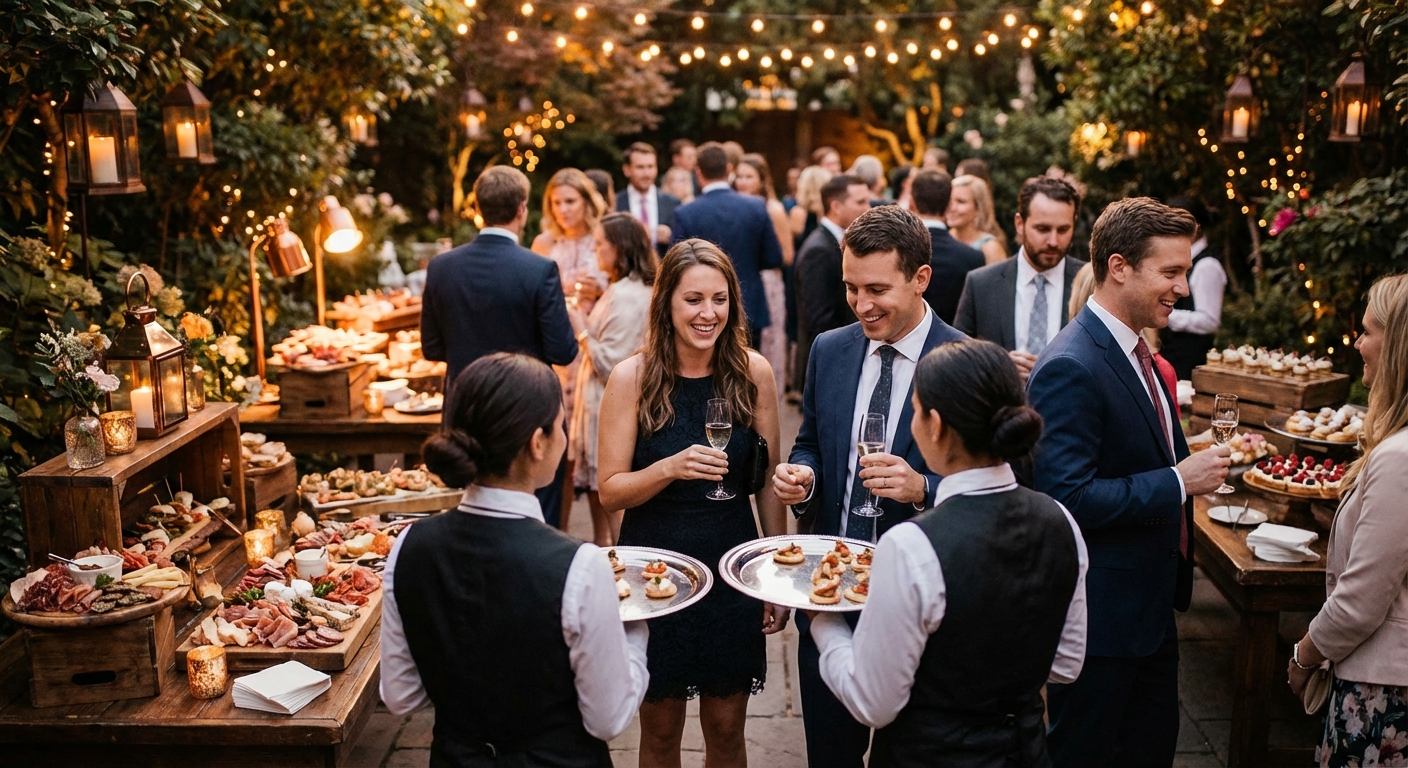
The traditional Filipino wedding reception, with its long head table, synchronized meal service, and hours of guests seated at numbered tables, is getting a modern makeover. In 2026, a growing number of Filipino couples are embracing the cocktail-style wedding reception, a format that replaces the conventional sit-down dinner with food stations, passed canapes, small plates, and an atmosphere that encourages guests to mingle freely throughout the celebration.
This shift is not just an aesthetic choice. Publications like The New York Times, Vogue, and The Knot have identified cocktail-style receptions as one of the defining wedding trends of 2026, and Filipino couples are adapting the concept to suit local tastes, traditions, and venues. From rooftop celebrations in Makati to garden receptions in Tagaytay, the cocktail wedding reception is redefining what it means to celebrate love in the Philippines.
But this format also introduces unique planning challenges, particularly around RSVP management, headcount accuracy, and dietary tracking. In this guide, we will explore everything you need to know about hosting a cocktail-style wedding reception, including how to adapt your RSVP process to make it work seamlessly.
What Is a Cocktail-Style Wedding Reception?
A cocktail-style wedding reception eliminates the traditional plated or buffet dinner in favor of a more fluid dining experience. Instead of assigning guests to tables for a multi-course meal, couples set up a variety of food stations, circulate passed canapes on silver trays, and offer small plates that guests can enjoy while standing, perching at high-top tables, or lounging in curated seating areas.
How It Differs from Traditional Filipino Receptions
Traditional Filipino wedding receptions typically follow a structured timeline: guests are seated, a blessing is offered, multiple courses are served, and entertainment like games and dancing fills the gaps between dishes. The cocktail-style reception flips this script entirely. There is no formal seating chart, no synchronized meal service, and no rigid schedule.
Instead, the evening flows organically. Guests arrive, grab a drink from the bar, browse the food stations at their own pace, and move freely between conversation groups. Entertainment might include a live acoustic set, a DJ spinning ambient tracks, or interactive stations like a build-your-own cocktail bar. The result is an atmosphere that feels more like an upscale party than a formal banquet.
Why It Is Trending in 2026
Several factors are driving the cocktail reception trend among Filipino couples in 2026. First, there is a generational shift toward less formal celebrations. Millennial and Gen Z couples increasingly prefer experiences over rigid traditions. Second, cocktail receptions can be more cost-effective, as food stations and small plates often cost less per head than a full plated dinner. Third, the format works beautifully in non-traditional venues like art galleries, rooftop terraces, and outdoor gardens, which are themselves trending in the Philippine wedding scene.
Social media has also played a role. The visual appeal of elegantly arranged food stations, artisanal cocktail bars, and guests mingling in beautifully lit spaces translates perfectly to Instagram and TikTok, giving couples added incentive to choose this format.
Designing Your Food Stations and Menu
The heart of any cocktail-style wedding reception is the food. Without a plated dinner to anchor the evening, your food stations become both the culinary and visual centerpiece of the celebration. Filipino couples have a unique advantage here, as the country's rich and diverse culinary traditions lend themselves perfectly to the food station format.
Filipino-Inspired Food Station Ideas
Consider setting up a lechon carving station, where a whole roasted pig is carved to order and served with liver sauce and pickled vegetables on small plates. A sinigang station featuring miniature bowls of tamarind-soured soup with prawns or pork belly offers a comforting, familiar flavor in an elevated presentation. A kinilaw bar, the Filipino equivalent of a ceviche station, allows guests to watch as fresh fish is prepared with vinegar, citrus, and coconut milk.
Other popular options include a sisig station served on sizzling mini plates, a pancit station offering two or three noodle varieties, and a dessert spread featuring leche flan, ube halaya, bibingka bites, and turon spring rolls. The key is variety, presentation, and ensuring each station tells a story about the couple's tastes and heritage.
Passed Canapes and Small Plates
In addition to stationary food stations, passed canapes ensure that guests who are deep in conversation do not miss out on the food. Work with your caterer to design bite-sized offerings that are easy to eat while standing: think lumpia cups with garlic aioli, tuna tartare on crispy wonton chips, adobo-glazed pork belly skewers, and grilled prawn toasts.
A good rule of thumb for cocktail receptions is to plan for 10 to 12 pieces per guest over a three-hour reception, plus whatever they consume at the food stations. This ensures nobody goes hungry while maintaining the light, grazing feel that defines the format.
Handling Dietary Restrictions
One challenge of the cocktail format is that guests serve themselves, making it harder to control for allergies and dietary restrictions. Clear labeling at every station is essential. Use elegant signage to indicate which items are vegetarian, halal, gluten-free, or contain common allergens like shellfish and nuts.
This is where your RSVP system becomes critical. By collecting dietary information during the RSVP process, you can share a consolidated report with your caterer and ensure that every restriction is accounted for across your stations. A digital RSVP tool that includes a dietary preferences field makes this process significantly easier than trying to track restrictions via group chat or word of mouth.
How Cocktail Receptions Change Your RSVP Strategy
The cocktail-style format fundamentally changes how you need to think about RSVPs and headcount planning. Without assigned seats and plated meals, the stakes around exact numbers shift, but they do not disappear. In some ways, accurate RSVP data becomes even more important.
Headcount Planning Without Assigned Seats
For a plated dinner, you need an exact guest count days before the event because each seat represents a paid meal. Cocktail receptions offer slightly more flexibility since food is prepared in bulk for stations rather than plated individually. However, you still need accurate numbers to ensure you order enough food, rent enough glassware and high-top tables, and comply with venue capacity limits.
A reliable RSVP system with real-time tracking lets you monitor responses as they come in, send reminders to non-responders, and adjust your catering order accordingly. With cocktail receptions, caterers typically plan for the confirmed headcount plus a 5 to 10 percent buffer, so the closer your RSVP numbers are to reality, the less food waste and overspending you will face.
Dietary Tracking Through Your RSVP System
As mentioned above, dietary restrictions require special attention in the cocktail format. Your RSVP form should include a clear field for dietary needs, allergies, and food preferences. A digital system allows you to automatically compile this data into a report that you can hand directly to your caterer, ensuring no guest is overlooked.
For Filipino weddings, common considerations include halal requirements for Muslim guests, vegetarian options for health-conscious attendees, and shellfish or seafood allergies that are particularly relevant given the prominence of seafood in Filipino cuisine. Having this information collected digitally and organized automatically saves hours of manual coordination.
Managing Plus-Ones and Group RSVPs
Cocktail receptions can feel more inclusive and open, which sometimes leads to confusion about plus-ones and uninvited extras. Your RSVP system should clearly indicate how many guests each invitation covers. A digital RSVP tool that limits responses to the allocated number of seats prevents awkward situations where guests assume the casual format means they can bring additional friends or family.
This is especially relevant in Filipino culture, where large extended families and close community ties can lead to well-meaning but unplanned additions to the guest list. A clear, digital RSVP process sets expectations politely and firmly.
Venue Selection and Logistics for Cocktail Receptions
Choosing the right venue is crucial for a successful cocktail-style reception. The format demands a different spatial layout than a traditional banquet, and Filipino couples have a wealth of stunning venue options to explore.
Ideal Venue Types in the Philippines
Cocktail receptions thrive in open, flexible spaces that allow guests to move freely. Garden venues in Tagaytay, Antipolo, and Batangas offer natural beauty and ample room for food stations spread across manicured lawns. Rooftop venues in BGC and Makati provide stunning city skyline backdrops. Industrial-chic warehouses, art galleries, and heritage houses in Intramuros or Silay add character and visual interest.
When evaluating venues, prioritize flow. Guests should be able to move between the bar, food stations, lounge areas, and the dance floor without bottlenecks. A good cocktail reception venue has multiple zones that feel connected but distinct, encouraging exploration and conversation.
Layout and Flow Tips
Spread your food stations around the perimeter of the space rather than clustering them in one area. This prevents long lines and encourages guests to circulate. Place the bar in a central or highly visible location, and create multiple seating clusters with a mix of high-top tables, lounge furniture, and cocktail rounds. Plan for about 60 to 70 percent of your guest count in seating, as not everyone will sit at the same time.
Lighting is critical. String lights, lanterns, and uplighting can transform any space into an intimate cocktail setting. Work with your venue coordinator to plan the layout well in advance, and consider a walkthrough with your caterer to finalize station placement.
Budget Considerations: Is a Cocktail Reception More Affordable?
One of the most common questions Filipino couples ask about cocktail-style receptions is whether they actually save money. The answer depends on your choices, but in many cases, yes, the format can be more budget-friendly.
Comparing Costs with Traditional Receptions
A plated dinner at a mid-range Manila venue might cost PHP 2,500 to PHP 4,000 per head for a multi-course meal. A cocktail reception with food stations and passed canapes at the same venue might run PHP 1,800 to PHP 3,000 per head, depending on the complexity of the menu. You also save on table linens, charger plates, and elaborate centerpieces that a full sit-down dinner requires.
However, cocktail receptions can incur additional costs in other areas: more bar staff, additional serving trays, high-top table rentals, and lounge furniture. The net savings depend on how elaborate your setup is, but most couples report spending 15 to 25 percent less overall compared to a traditional plated reception.
Where to Splurge and Where to Save
Invest in quality food and drinks, as these are the centerpiece of the cocktail experience. Splurge on a craft cocktail bar or premium wine selection if your budget allows. Save on formal decorations and table settings, since the food stations themselves become the decor. Spend on great lighting and ambient music, which set the tone far more than table runners and chair covers ever could.
Frequently Asked Questions About Cocktail-Style Wedding Receptions
Will My Guests Go Hungry at a Cocktail Reception?
Not if you plan properly. The key is offering enough variety and volume across your food stations and passed canapes. Plan for 10 to 12 passed pieces per guest plus ample station food over the course of the reception. Communicate the format on your invitation or wedding website so guests know to expect a grazing style rather than a sit-down meal. Some couples also include a late-night snack station with comfort food like arroz caldo or grilled cheese sandwiches to ensure nobody leaves hungry.
What About Elderly Guests or Those Who Cannot Stand for Long?
This is an important consideration, especially in Filipino culture where lolas and lolos are honored guests. Ensure you have adequate comfortable seating throughout the venue. Consider designating a quieter lounge area with easy access to food for elderly guests or those with mobility concerns. You can even arrange for their food to be brought to them by servers, combining the cocktail atmosphere with personal attention.
How Long Should a Cocktail-Style Reception Last?
Most cocktail receptions run between two and a half to four hours. The shorter format is actually a benefit for many couples, as traditional Filipino receptions can stretch to five or six hours with all the programs and games. A focused three-hour cocktail reception keeps energy high, ensures the food stays fresh, and gives the evening a lively, memorable pace.
Can We Still Include Filipino Wedding Traditions?
Absolutely. You can still incorporate the money dance, bouquet and garter toss, cake cutting, and first dance into a cocktail reception. The difference is that these moments become highlights punctuating the flow of the evening rather than items on a rigid program. Many couples find that traditions feel more spontaneous and joyful in this format, as guests are already on their feet and engaged rather than seated and waiting.
The cocktail-style wedding reception represents a refreshing evolution in how Filipino couples celebrate their union. By replacing the formality of plated dinners with the warmth of shared food stations, passed canapes, and open mingling, couples create an atmosphere that feels both elegant and genuinely fun. The format offers flexibility in venue choice, potential cost savings, and an experience that guests will remember as something truly different.
However, the casual feel of a cocktail reception should not translate to casual planning. Accurate RSVP management is essential to ensure the right amount of food, proper dietary accommodations, and a comfortable guest experience. A digital RSVP system that tracks headcount in real time, collects dietary information, and manages plus-ones will be your most valuable planning tool as you bring your cocktail-style celebration to life.
Whether you are dreaming of a garden soiree in Tagaytay or a chic rooftop gathering in the city, the cocktail-style reception gives you the freedom to craft a celebration that is uniquely yours. Embrace the trend, plan thoughtfully, and raise a glass to the future of Filipino weddings.