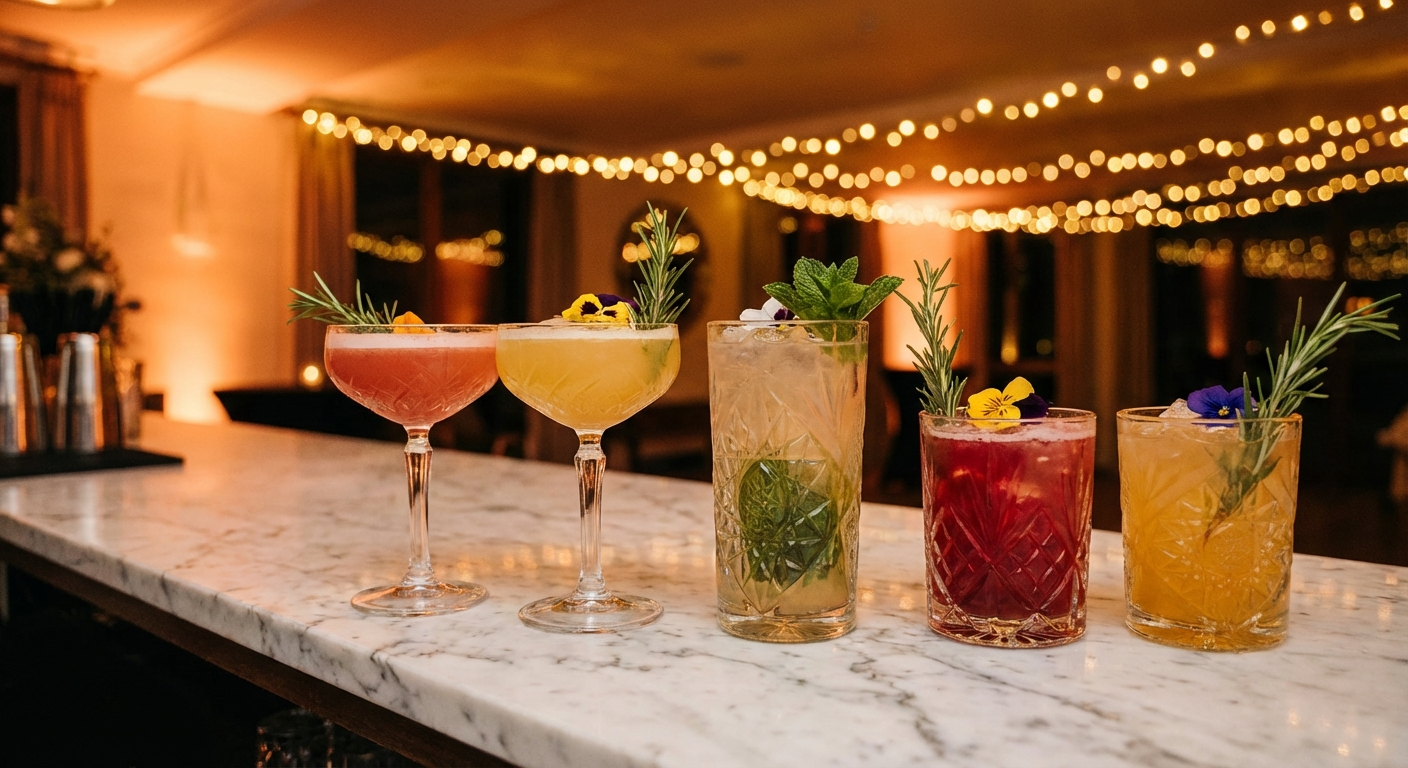
The wedding bar is undergoing a quiet revolution. For generations, open bars stocked with spirits, wine, and beer were considered non-negotiable at receptions. The drinks menu was an afterthought at best, a list of standard options that rarely reflected the couple's personality or considered the diverse preferences of their guest list. In 2026, that is changing dramatically.
Mocktail menus have emerged as one of the defining trends of the year, driven by a convergence of cultural shifts. The sober curious movement continues to grow, with nearly 30 percent of millennials and Gen Z identifying as non-drinkers or light drinkers. Health consciousness, religious considerations, pregnancy, designated driving, and simple personal preference all contribute to a guest list where a significant portion will appreciate thoughtful non-alcoholic options that go far beyond soda and juice.
This is not about eliminating alcohol from your wedding. It is about elevating the non-alcoholic experience to match the care and creativity you put into every other aspect of your celebration. When done well, a mocktail menu becomes a talking point, a photo opportunity, and a genuine expression of hospitality that makes every guest feel considered and welcome.
Why Mocktail Menus Matter More Than Ever in 2026
The cultural landscape around alcohol has shifted significantly in recent years. What was once a fringe movement has become mainstream. Dry January participation has doubled since 2020, non-alcoholic spirit brands have multiplied across store shelves, and major cities now boast entirely sober bars and restaurants. This shift is not a passing fad. It reflects a fundamental change in how younger generations think about drinking.
For wedding planning specifically, the implications are practical. Consider your guest list. Among 150 guests, you can reasonably expect 20 to 40 people who either do not drink alcohol at all or would prefer a sophisticated alternative. That group includes pregnant guests, designated drivers, guests in recovery, those with religious observances, health-conscious attendees, and people who simply do not enjoy alcohol. Offering them flat water and cola while everyone else enjoys craft cocktails sends an unintended message about who the celebration is really for.
The 2026 approach treats mocktails not as substitutes but as a parallel experience. A well-designed mocktail menu features drinks that are just as visually stunning, creatively named, and carefully crafted as their alcoholic counterparts. Some couples are going further, designing their entire bar program around a shared concept where alcoholic and non-alcoholic versions of signature drinks sit side by side, distinguished only by a subtle menu notation.
From a budget perspective, mocktails can also be surprisingly strategic. Non-alcoholic ingredients generally cost less than spirits, meaning a robust mocktail program can help manage overall bar costs while increasing perceived value and guest satisfaction. Several couples have reported that their mocktail offerings generated more social media attention than their alcoholic drinks, with guests photographing and sharing the creative presentations.
Designing Your Mocktail Menu: From Concept to Glass
A successful mocktail menu begins with the same design thinking you would apply to your food menu. It should reflect your wedding theme, complement your cuisine, and offer enough variety to satisfy different palates. The goal is three to five signature mocktails that cover a range of flavor profiles: something citrusy and refreshing, something herbal and complex, something sweet and celebratory, and perhaps something with warming spice notes.
Building Flavor Profiles with Quality Ingredients
The foundation of excellent mocktails lies in quality ingredients. Fresh-pressed juices, house-made syrups, premium tonics, and non-alcoholic spirits have improved dramatically in recent years. Brands like Seedlip, Lyre's, and Monday offer spirit alternatives that provide the complexity and botanical depth that distinguish a cocktail from flavored water.
Fresh herbs are essential. Rosemary, thyme, basil, mint, and lavender all contribute aromatic complexity that elevates a simple drink into something memorable. Edible flowers add visual impact without artificial coloring. Citrus peels, expressed over the glass, release essential oils that engage the sense of smell before the first sip.
Consider your season. Spring and summer weddings pair naturally with light, floral, and fruit-forward profiles. Think cucumber and elderflower spritzes, watermelon and mint coolers, or passion fruit and vanilla fizzes. Autumn and winter celebrations call for warmth: apple cider with cinnamon and star anise, cranberry and rosemary shrubs, or spiced pear bellinis topped with sparkling grape juice.
Shrubs, which are drinking vinegars made from fruit, sugar, and vinegar, deserve special attention. They provide the acidic backbone that makes cocktails interesting and are among the easiest wedding mocktail bases to prepare in advance. A raspberry shrub mixed with sparkling water and garnished with fresh berries creates a drink that is visually striking, complex in flavor, and refreshingly different from anything your guests typically encounter at weddings.
Presentation and Glassware That Elevate the Experience
Presentation accounts for at least half the impact of any drink. Serve mocktails in the same quality glassware you use for cocktails. Coupe glasses, highballs, rocks glasses, and wine glasses all communicate that this drink is worth paying attention to. Avoid plastic cups or obviously different serving vessels that create a visible hierarchy between drinkers and non-drinkers.
Garnishing is where mocktails can actually surpass their alcoholic counterparts. Without the flavor dominance of spirits, garnishes contribute more meaningfully to the overall experience. Dehydrated citrus wheels, fresh herb sprigs, edible flower ice cubes, sugared rims with colored salts, and branded stirrers all enhance the Instagram-worthy quality that modern wedding guests expect.
Consider a signature mocktail station where guests can watch drinks being prepared. The theater of mixology, the shaking, straining, garnishing, and careful pouring, is just as compelling without alcohol. A dedicated mocktail station also signals clearly that non-alcoholic options are a feature, not an afterthought.
Five Signature Wedding Mocktail Recipes for 2026
These recipes have been designed specifically for wedding service, meaning they can be batched in advance, scale easily, and maintain quality when prepared by catering staff rather than professional bartenders.
The Garden Ceremony Spritz
Combine 60ml of elderflower cordial with 30ml of fresh lemon juice and 15ml of rosemary simple syrup in a wine glass filled with ice. Top with 120ml of premium tonic water and garnish with a sprig of fresh rosemary and a lemon wheel. This drink bridges the gap between aperitif and refreshment, making it ideal for ceremony arrival or cocktail hour. The rosemary aroma creates an immediate sensory impression before the first sip.
For batch preparation, combine the elderflower, lemon, and rosemary syrup in a large dispenser up to four hours in advance. Add tonic water to individual glasses at service time to preserve carbonation.
The Blushing Toast
This celebratory option serves as the non-alcoholic equivalent of champagne for toasting. Mix 30ml of white peach puree with 15ml of vanilla syrup and 15ml of fresh lime juice. Pour into a coupe glass and top with chilled sparkling grape juice or premium sparkling water. Add a single edible rose petal floating on the surface.
The visual effect mimics a bellini, and the peach-vanilla combination provides enough sweetness and complexity to feel festive without being cloying. This recipe scales exceptionally well for large-format service during toast moments.
The Midnight Garden
For a more complex, spirit-forward profile, muddle three blackberries with five fresh basil leaves in a rocks glass. Add 45ml of Seedlip Garden 108 or similar botanical non-alcoholic spirit, 20ml of blackberry shrub, and 15ml of fresh lime juice. Fill with ice, stir gently, and top with a splash of soda. Garnish with a basil leaf and a single blackberry on a cocktail pick.
This drink appeals to guests who prefer less sweetness and more depth. The botanical spirit provides the complexity that experienced cocktail drinkers expect, while the shrub adds the tangy backbone that keeps the drink interesting through multiple sips.
The Golden Hour
Combine 45ml of fresh pineapple juice, 30ml of coconut cream, 20ml of passion fruit puree, and 15ml of lime juice in a shaker with ice. Shake vigorously and strain into a highball glass over fresh ice. Drizzle a thin line of passion fruit puree over the top for a sunset gradient effect. Garnish with a dehydrated pineapple ring.
This tropical option works particularly well for summer and destination weddings. The coconut cream provides a rich mouthfeel that makes the drink substantial and satisfying. It photographs beautifully and consistently generates the most social media engagement of any wedding mocktail recipe.
The Winter Ember
Warm 150ml of fresh apple cider with a cinnamon stick, two cloves, a star anise, and a thin slice of fresh ginger for five minutes without boiling. Strain into a heat-safe glass or mug. Add 15ml of maple syrup and 10ml of fresh lemon juice. Garnish with a cinnamon stick and a thin apple slice.
Warm mocktails are chronically underrepresented at weddings, even during cold-weather celebrations. This recipe fills that gap with a drink that is comforting, aromatic, and sophisticated. The spice combination fills the room with a welcoming fragrance that enhances the overall atmosphere of a winter reception.
Using Your RSVP to Capture Drink Preferences
One of the most practical innovations in modern wedding planning is incorporating drink preferences into your RSVP process. Rather than guessing how many guests will want mocktails versus cocktails, you can collect this information in advance and plan your bar quantities accordingly.
Digital RSVP platforms make this particularly seamless. Adding a drink preference question to your online RSVP form takes seconds and provides data that helps you and your caterer plan more accurately. The question can be framed inclusively: rather than asking guests to identify as drinkers or non-drinkers, present the options as a menu preview where guests select which signature drinks appeal to them.
Consider phrasing like: 'We are designing a custom drink menu for our reception. Which of these sound appealing to you?' followed by your signature drink names with brief descriptions. Include both alcoholic and non-alcoholic options in the same list without obvious categorization. This approach normalizes mocktail selection and gives you accurate preparation numbers.
The data you collect serves multiple purposes. It helps your caterer order the right quantities of ingredients, reducing waste and cost. It allows you to adjust your menu if one option is overwhelmingly popular or conspicuously unpopular. And it creates anticipation among guests who are already looking forward to trying the drinks they selected weeks before the wedding.
For couples using traditional paper RSVPs, a simple checkbox section works well. List your signature drinks with small check boxes and a line that reads 'Check any that catch your eye.' The casual framing encourages honest responses without making the question feel clinical or intrusive.
Working with Your Caterer and Venue on Mocktail Service
Communication with your catering team and venue is critical for mocktail success. Not all caterers have experience preparing sophisticated non-alcoholic drinks, and some venues may have policies or logistics that affect your plans. Start these conversations early in the planning process.
Request a tasting session that specifically includes your mocktail menu. Evaluate not just flavor but preparation time, consistency across multiple servings, and visual presentation. A drink that tastes excellent when carefully prepared by a head bartender may fall apart when a catering team is producing hundreds during a fast-paced reception.
Discuss logistics with your venue. Will mocktails be served from the same bar as alcoholic drinks, or from a separate station? A shared bar normalizes the experience but may slow service. A dedicated station creates a moment of discovery but risks feeling segregated. The right choice depends on your venue layout, guest count, and service style.
Batch preparation is your best friend for wedding-scale mocktail service. Most mocktail recipes can be partially prepared hours in advance, with only carbonation and final garnishing happening at service time. Work with your caterer to identify which components can be batched and establish a preparation timeline that maintains quality without overwhelming the bar staff.
Budget conversations should address mocktails directly. Request a line-item breakdown that shows the cost of non-alcoholic ingredients separately from spirits. You may find that a generous mocktail program adds surprisingly little to your overall bar budget while significantly improving the experience for a substantial portion of your guests.
Bar Etiquette: Making Every Guest Feel Welcome
The way you present your drink options communicates as much as the drinks themselves. Thoughtful bar etiquette ensures that choosing a non-alcoholic drink feels like a positive selection rather than a conspicuous opt-out.
Menu design matters. Present your mocktails on the same menu card as your cocktails, using the same formatting, typography, and creative naming conventions. Avoid labels like 'virgin' or 'alcohol-free' as primary descriptors. Instead, use category headers like 'Signature Cocktails' and 'Signature Mocktails' or, better yet, integrate them into a single list with discreet symbols indicating which contain alcohol.
Train your bar staff to offer mocktails proactively. When a guest approaches the bar, staff should present the full menu rather than defaulting to 'What can I get you to drink?' which implicitly assumes an alcoholic order. A simple 'We have five signature drinks this evening, three cocktails and two mocktails. Can I walk you through them?' creates a welcoming experience for everyone.
Glassware consistency is non-negotiable. Serving mocktails in different glasses, smaller portions, or with obviously less elaborate garnishing creates a visible distinction that undermines the entire purpose of offering premium non-alcoholic options. Every drink that leaves the bar should look like it belongs at your wedding.
Consider the timing of your drink service. Having mocktails available from the moment guests arrive, ideally as welcome drinks offered by circulating staff, sets the tone immediately. It communicates that non-alcoholic options are woven into the fabric of your celebration from the very first moment.
Budget Considerations and Planning Timeline
Adding a quality mocktail program to your wedding does not require a dramatic budget increase. Non-alcoholic spirits typically cost 40 to 60 percent less than their alcoholic equivalents. Fresh juices, syrups, and garnishes add cost but can be partially offset by the reduction in total spirits ordered, especially when your RSVP data shows significant mocktail interest.
A reasonable budget allocation for a mocktail menu alongside your standard bar is an additional 8 to 15 percent of your total beverage budget. This covers premium non-alcoholic spirits, specialty ingredients, additional garnishing materials, and any extra staffing needed for preparation. For a wedding with a total bar budget of $3,000, expect to invest $240 to $450 for a comprehensive mocktail program.
Your planning timeline should incorporate mocktail decisions early. At six months out, begin researching recipes and discussing options with your caterer. At four months, finalize your mocktail menu and conduct tastings. At two months, update your RSVP with drink preference options if you have not already. At one month, confirm quantities with your caterer based on RSVP responses. In the final week, verify ingredient sourcing and review the preparation timeline with your catering team.
The investment pays dividends beyond the wedding day itself. Guest feedback consistently identifies thoughtful drink options as a standout element of the reception experience. In an era where every detail is photographed and shared, a beautiful mocktail in a crystal coupe generates positive social media engagement that extends the reach and memory of your celebration well beyond the event itself.
The mocktail revolution in weddings reflects something larger than a beverage trend. It represents a fundamental shift toward celebrations that genuinely consider and include every guest. When you invest thought and creativity into your non-alcoholic offerings, you communicate that your wedding is designed for everyone who matters to you, regardless of their relationship with alcohol.
The practical benefits are clear: better budget control through RSVP-driven planning, reduced waste from accurate preparation quantities, and increased guest satisfaction across your entire celebration. But the deeper benefit is the one that matters most. Every guest at your wedding should feel that they belong there, that their presence was anticipated and their experience was considered. A thoughtfully designed mocktail menu, presented with the same care and creativity as every other element of your wedding, accomplishes exactly that.