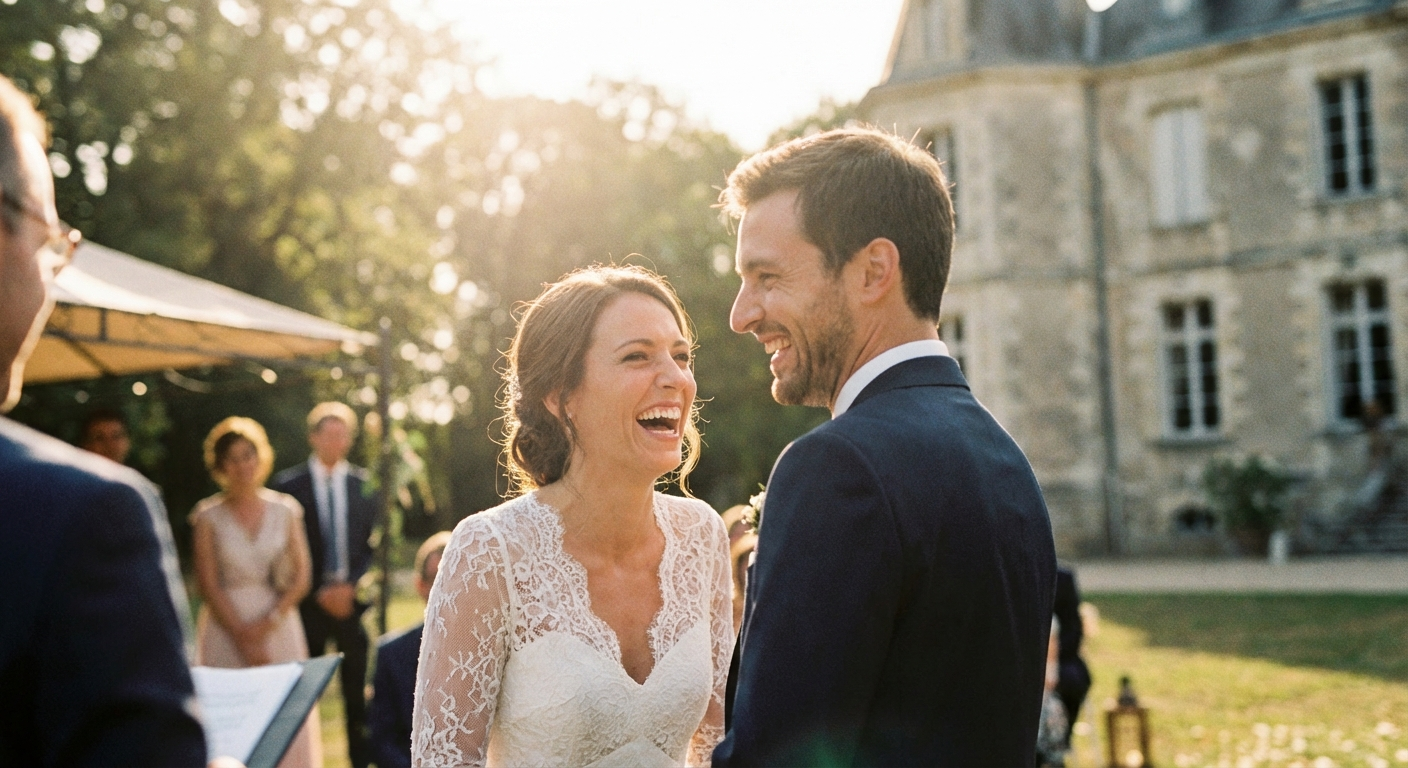
For decades, wedding photography followed a predictable formula. The couple would step away from their guests for an hour or more, pose in front of carefully selected backdrops, hold bouquets at precise angles, and smile on command while a photographer directed every tilt of the head and placement of hands. The resulting images were polished, symmetrical, and often interchangeable from one wedding to the next.
In 2026, that formula is being quietly replaced by something fundamentally different. Documentary-style wedding photography, also known as reportage or photojournalistic wedding photography, prioritizes real moments over manufactured ones. The photographer observes rather than directs, captures rather than constructs, and delivers a collection of images that tell the genuine story of your wedding day rather than an idealized version of it.
This shift is not happening in isolation. It reflects broader cultural changes in how couples think about authenticity, how social media has reshaped visual expectations, and how the wedding industry itself is evolving away from rigid traditions toward personalized experiences. Understanding what documentary-style photography actually involves, how it differs from traditional approaches, and how to find a photographer who excels at it will help you make one of the most consequential decisions of your wedding planning process.
What Documentary-Style Wedding Photography Actually Means
Documentary wedding photography borrows its philosophy from photojournalism and documentary filmmaking. The photographer's role shifts from director to observer. Rather than arranging people into compositions and telling them when to smile, a documentary photographer moves through the wedding day unobtrusively, anticipating moments before they happen and capturing them as they unfold naturally.
This means the tears your father tries to hide during the first look. The unscripted laughter between bridesmaids as they help with the dress. The quiet moment when you and your partner lock eyes across the room during the reception. The chaos of the dance floor at midnight. These are the images that define a documentary approach, and they carry an emotional weight that posed photographs rarely achieve.
It is important to distinguish documentary-style from simply candid photography. Any photographer can take candid shots between posed sessions. True documentary photography is a complete philosophy that shapes the entire day. The photographer plans their coverage around the natural flow of events rather than interrupting that flow to create photo opportunities. There may still be a brief session for family groupings or a few minutes set aside for couple portraits, but these represent a small fraction of the overall coverage rather than the centerpiece of it.
The aesthetic of documentary wedding photography also tends to differ from traditional work. Expect images with natural light, environmental context, and compositions that include the beautiful imperfections of real life. A slightly crooked boutonniere, a windblown veil, a guest caught mid-laugh with their mouth wide open. These details, which a traditional photographer might correct or avoid, are exactly what documentary photographers seek out because they are what make your wedding yours.
Why 2026 Couples Are Choosing Documentary Over Posed
Several converging trends explain why documentary wedding photography has moved from niche preference to mainstream demand in 2026. The most significant is a generational shift in how couples define meaningful photography. Millennials and Gen Z couples have grown up in a visual culture saturated with curated, filtered imagery on social media. Rather than wanting more of the same on their wedding day, many are actively seeking the opposite: images that feel real, unscripted, and emotionally honest.
This desire for authenticity extends beyond photography into nearly every aspect of modern weddings. Couples are writing their own vows, choosing non-traditional venues, and designing celebrations that reflect their actual lives rather than conforming to inherited templates. Documentary photography aligns naturally with this ethos because it documents the wedding you actually had rather than the wedding you were supposed to have.
Practical considerations also play a role. Traditional posed photography often requires the couple to disappear from their own celebration for sixty to ninety minutes during cocktail hour or between the ceremony and reception. Documentary coverage dramatically reduces this absence because the photographer is capturing the celebration as it happens rather than pulling people away from it. For couples who have invested significant money and planning into creating an experience for their guests, spending more time at their own party holds obvious appeal.
The influence of wedding content on social media platforms has also shifted expectations. The most shared and engaged-with wedding content online is no longer the perfectly posed portrait. It is the unexpected moment, the genuine emotion, the image that makes viewers feel like they were there. Couples planning weddings in 2026 have internalized this shift and are choosing photographers whose work reflects it.
Finally, couples who have attended weddings with documentary coverage often become converts. Seeing a friend or family member's wedding album that reads like a visual narrative rather than a collection of formal portraits demonstrates the difference in a way that no photographer's website can fully convey.
Traditional vs. Documentary: Understanding the Real Differences
The distinction between traditional and documentary wedding photography goes deeper than just posed versus candid. It affects the entire experience of being photographed on your wedding day, the images you receive, and how you will feel looking at them years from now.
In a traditional approach, the photographer typically works from a shot list. This list includes specific groupings such as bride with bridesmaids, groom with parents, and full wedding party, specific moments that must be captured from specific angles, and a series of couple portraits in predetermined locations. The day's timeline is built partly around the photography schedule, and guests understand that there will be periods where the couple is unavailable for photos.
A documentary photographer may still capture family groupings if the couple requests them, but the coverage is driven by the day's events rather than a predetermined list. The photographer arrives early, observes the preparation, and begins building the visual narrative from the first moments. They cover the ceremony from multiple angles without directing it, move through the reception as a quiet observer, and capture the interactions, emotions, and details that collectively tell the story of the day.
The resulting images differ significantly. Traditional albums tend to feature a high proportion of people looking directly at the camera, standing in flattering poses, in carefully chosen locations. Documentary albums feature people engaged with each other, caught in genuine emotional states, in the actual environments where the day unfolded. Both approaches produce beautiful images, but they tell very different stories.
One common misconception is that documentary photography means lower quality or less professional results. In reality, documentary work demands exceptional technical skill because the photographer cannot control lighting, positioning, or timing. They must be able to produce compelling images in whatever conditions the day presents, which requires deep expertise in exposure, composition, and anticipating human behavior.
How to Find and Evaluate a Documentary Wedding Photographer
Finding a photographer who genuinely excels at documentary-style work requires looking beyond marketing language. Many photographers have added terms like documentary, photojournalistic, or candid to their websites in response to market demand without fundamentally changing their approach. Evaluating portfolios with a critical eye is essential.
Start by examining full wedding galleries rather than curated highlight reels. Any photographer can select their ten best candid shots from a wedding and present them as documentary work. A full gallery reveals the truth. Look for consistent quality across the entire event, from getting ready through the last dance. Are the images telling a coherent story? Can you follow the emotional arc of the day? Do the people in the photographs look like they are living their lives rather than performing for a camera?
Pay attention to the ratio of posed to unposed images. A true documentary photographer's gallery will be overwhelmingly composed of unscripted moments. If the gallery is mostly posed portraits with a few candid shots sprinkled in, the photographer is offering traditional coverage with a documentary label.
Look at how the photographer handles challenging moments. Documentary work shines in imperfect conditions: rain during an outdoor ceremony, cramped getting-ready spaces, dimly lit reception venues. A skilled documentary photographer produces compelling work regardless of conditions because they are capturing emotion and story rather than relying on controlled settings.
Ask potential photographers specific questions about their approach. How much of the day do they spend directing versus observing? Do they use a shot list? How do they handle family group photos? What does their typical timeline look like? The answers will reveal whether their documentary claims match their actual practice.
Reviews and testimonials from previous couples are particularly valuable for evaluating documentary photographers. Look for comments about how unobtrusive the photographer was, how guests did not notice the camera, and how the images captured moments the couple did not even know had happened. These are the hallmarks of genuine documentary work.
How to Prepare for Documentary-Style Wedding Coverage
Preparing for documentary photography requires a different mindset than preparing for traditional coverage. Since the goal is to capture your day as it naturally unfolds, the best preparation involves creating conditions that allow natural moments to happen rather than staging specific ones.
Build your timeline with breathing room. Documentary photography thrives when there is space between scheduled events for spontaneous interactions to occur. A tightly packed schedule where guests are constantly being herded from one activity to the next leaves little room for the organic moments that make documentary coverage special. Allow extra time between the ceremony and reception, let cocktail hour run a full hour, and avoid over-programming the reception.
Communicate with your wedding party and families about the photographic approach. If your parents expect a thirty-minute session of formal family combinations, letting them know in advance that the approach will be different prevents disappointment or confusion on the day. Most documentary photographers still accommodate a short session for essential family groupings, typically fifteen minutes or less, but setting expectations beforehand keeps everyone comfortable.
Choose your getting-ready locations thoughtfully. Documentary photographers capture the preparation process as part of the story, so getting ready in a space with good natural light, enough room for the photographer to move around, and an environment that reflects your personality will yield better results than a cramped, artificially lit hotel room.
Trust the process. The most common challenge couples face with documentary photography is the temptation to perform for the camera. When you notice the photographer nearby, resist the urge to pose or look directly at the lens. Stay present in whatever moment you are experiencing. The best documentary images come from subjects who have forgotten the camera exists.
Brief your vendors as well. A coordinator who keeps pulling the photographer aside for staged shots, or a DJ who stops the action for photo opportunities, can undermine the documentary approach. Let your vendor team know that the photographer will be working unobtrusively and does not need the day to pause for photography.
What Your Documentary Wedding Album Will Look Like
Couples who choose documentary coverage should expect a wedding album that reads more like a visual narrative than a portrait collection. The images will follow a chronological arc from preparation through the end of the night, capturing not just the major milestones but the connective tissue between them.
You will see images of yourself that you did not know were being taken. The moment you first read your partner's handwritten note before the ceremony. The expression on your face when you tasted the cake. The way you leaned into your best friend during a quiet moment at the reception. These unexpected captures are often the images couples treasure most because they reveal genuine emotions that posed photography cannot access.
The album will also feature your guests in a way that traditional coverage rarely achieves. Because the photographer is moving through the celebration rather than stationed at a portrait area, they capture the reactions, conversations, and interactions of the people you love. Your grandmother wiping away tears during the vows. Your college friends reuniting on the dance floor. Children falling asleep in their parents' arms as the night winds down. These images give your album depth and context that extends far beyond the couple.
Expect a higher volume of delivered images than traditional coverage typically produces. Documentary photographers shoot continuously throughout the day, and while they curate the final gallery to remove technical duplicates and unflattering moments, the result is typically several hundred more images than a traditional photographer would deliver for the same hours of coverage.
The editing style of documentary photographers also tends to favor natural tones and minimal retouching. Heavy filters, dramatic color grading, and extensive skin retouching work against the authentic aesthetic that documentary photography aims to achieve. Your images will look like your wedding day actually looked, which is precisely the point.
Blending Documentary and Traditional Approaches
Not every couple wants to go fully documentary, and that is a perfectly valid choice. Many photographers in 2026 offer a blended approach that combines documentary coverage of the majority of the day with a short, focused session for essential posed portraits. This hybrid model gives couples the authentic storytelling of documentary work while still ensuring they have the formal family photographs and couple portraits that many families expect.
If you choose a blended approach, the key is to minimize the interruption that posed sessions create. Work with your photographer to identify the absolute essential groupings, typically immediate family only, and schedule the session for a natural transition point in the day. Fifteen to twenty minutes is usually sufficient for a focused photographer to capture the key combinations without derailing the celebration's momentum.
Some couples opt for a brief first look session before the ceremony where the photographer captures a few directed portraits, then switches entirely to documentary mode for the ceremony, reception, and everything after. This approach front-loads the posed work so that the rest of the day flows naturally without interruption.
When evaluating photographers who offer blended coverage, look for those whose documentary work stands strong on its own. A photographer who is primarily traditional but offers to take some candid shots is different from a photographer whose foundation is documentary but who can also deliver polished portraits when needed. The latter will produce better results in a blended approach because their default mode is observation rather than direction.
Cost and Practical Considerations for Documentary Coverage
Documentary wedding photographers typically price their services similarly to traditional photographers of equivalent experience and quality. In 2026, expect to invest between two thousand and eight thousand dollars for full-day documentary coverage, depending on your market, the photographer's experience, and the package inclusions. Premium documentary photographers with national reputations or published work may charge significantly more.
One practical consideration unique to documentary coverage is the length of the booking. Because documentary photographers aim to capture the complete story of the day, most recommend a minimum of eight to ten hours of coverage. Starting from the preparations through the reception ensures no chapter of the day's narrative is missing. This is longer than some traditional packages that focus primarily on the ceremony and portrait sessions.
Second shooters are particularly valuable in documentary coverage. While a single photographer can produce excellent documentary work, having a second photographer allows simultaneous coverage of parallel moments, such as the bride and groom preparing in separate locations, or different angles of the ceremony. Most documentary photographers offer second shooter options, and for larger weddings, the additional perspective significantly enriches the final gallery.
When reviewing contracts, pay attention to the delivery timeline and the number of images included. Documentary photographers typically deliver more images than traditional photographers due to the continuous shooting approach, but processing and curating a larger volume of images also takes more time. Delivery timelines of six to twelve weeks are standard for documentary work.
Finally, consider booking an engagement session with your documentary photographer. This serves a dual purpose: it lets you experience how the photographer works in a low-pressure setting, and it helps the photographer learn how you move, interact, and express affection naturally. This familiarity translates directly into better, more intuitive coverage on the wedding day.
Frequently Asked Questions About Documentary Wedding Photography
Will we still get family group photos with a documentary photographer?
Yes, most documentary photographers accommodate a short session for essential family groupings. The key difference is that this session is kept brief and efficient, typically fifteen minutes or less, rather than dominating the post-ceremony timeline. Communicate your must-have groupings in advance so the photographer can plan accordingly and move through them quickly.
What if we want some posed couple portraits too?
Many documentary photographers offer blended packages that include a focused portrait session alongside documentary coverage. This is increasingly common in 2026 as couples seek the best of both approaches. Discuss your expectations during the booking process to ensure the photographer can deliver both styles at the level of quality you expect.
How do we know if a photographer is truly documentary-style?
Review full wedding galleries rather than curated highlights. Look for a high ratio of unscripted to posed images, consistent quality across all phases of the day, and images that capture genuine emotions in real settings. Ask the photographer to describe their typical workflow. A true documentary photographer will describe an observational, non-directive approach as their default mode rather than an add-on to traditional coverage.
Is documentary photography a good choice for camera-shy couples?
Documentary photography is often an excellent choice for camera-shy couples precisely because it minimizes direct interaction with the camera. Since the photographer works unobtrusively and captures moments as they happen naturally, couples who feel uncomfortable posing or performing for a lens often find documentary coverage far more relaxing. The resulting images also tend to look more natural because they capture how you actually behave rather than how you look when trying to pose.
Can documentary photographers work in dark reception venues?
Skilled documentary photographers are experts at working in challenging light conditions, including dim reception venues. They use high-performance camera bodies capable of clean results at high ISO settings, fast lenses that gather more light, and when necessary, subtle off-camera flash techniques that preserve the ambient atmosphere. When evaluating photographers, specifically ask to see work from low-light receptions to assess their capability in conditions similar to your venue.
Documentary-style wedding photography represents more than a passing trend. It reflects a fundamental shift in how couples want to remember their wedding day. Rather than a collection of perfect poses that could belong to any couple, documentary coverage delivers a visual story that is unmistakably and irreplaceably yours.
The laughter, the tears, the chaos, the quiet moments, the unexpected interactions, and the raw emotions of your celebration are what you will want to revisit in ten, twenty, and fifty years. A skilled documentary photographer captures all of it, preserving not just how your wedding looked but how it felt. As you plan your 2026 wedding, consider whether the story of your actual day might be more valuable than any posed portrait could ever be.