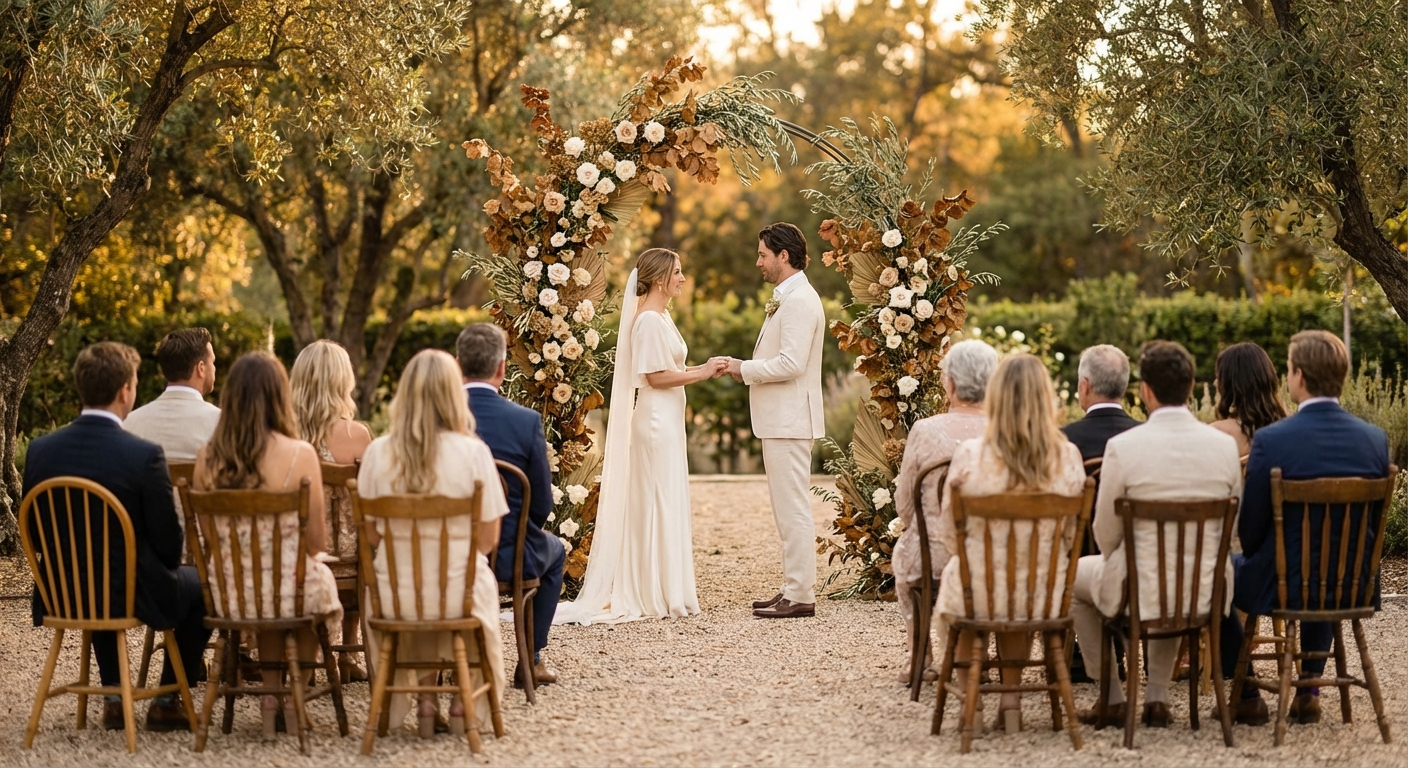
The grand wedding with three hundred guests and a banquet hall reception is no longer the default. In 2026, couples are choosing intimacy over spectacle, hosting ceremonies with twenty, fifty, or perhaps eighty of their closest people rather than casting the widest possible net across every branch of the family tree and every colleague from the office. According to wedding industry reports and the trend data emerging from this season, private ceremonies and smaller guest lists have become the single most defining shift in how modern couples celebrate.
This shift changes everything about the RSVP process. When every seat at the table is intentional, the invitation carries more weight. The response matters more. The etiquette around declining, around plus-ones, around dietary requests and travel logistics, all of it operates under different rules when the gathering is small enough that every absence is felt and every addition disrupts a carefully balanced plan.
Whether you are a couple planning an intimate celebration or a guest who has received one of those coveted invitations, this guide covers every dimension of RSVP etiquette for the small wedding era. From how to word your invitations to how to handle the awkward conversations that inevitably follow a trimmed guest list, these are the protocols and principles that will carry you through 2026 wedding season with grace.
Why Intimate Weddings Dominate in 2026
The intimate wedding trend did not appear overnight. It has been building steadily since the early 2020s, when global circumstances forced couples to reconsider what a wedding truly needed to be meaningful. What started as a compromise became a revelation. Couples who married with only their closest circle discovered something powerful: the emotional intensity of a small gathering often surpasses what a large event can deliver.
In 2026, several forces are accelerating this shift. Rising venue and catering costs make large weddings financially punishing. The average wedding now costs significantly more per guest than it did even five years ago, and couples are responding by investing more per person in a smaller group rather than spreading a budget thin across hundreds. The result is better food, better wine, better experiences, and a more meaningful day for everyone present.
Gen Z couples entering the wedding market are bringing their own values to the table. This generation prizes authenticity over performance, connection over spectacle. A wedding with thirty guests where every person has a genuine relationship with the couple aligns with those values in a way that a two-hundred-person event with distant relatives and obligatory business invites simply does not.
Social media has also played a paradoxical role. While platforms once pressured couples toward bigger, more photogenic events, the current aesthetic favors intimacy. Candid film photography, organic floral arrangements, vintage decor, and relaxed timelines all photograph beautifully in small settings. The most shared and admired wedding content in 2026 tends to come from intimate celebrations, not massive productions.
How a Small Guest List Changes RSVP Dynamics
When a wedding has two hundred and fifty guests, ten people declining is a rounding error. The couple adjusts a few table assignments, the caterer reduces a handful of plates, and the day proceeds without disruption. When a wedding has forty guests, ten declines represent a quarter of the entire celebration. The room feels different. The energy shifts. The couple may need to fundamentally rethink their seating arrangement, their ceremony layout, or even their venue.
This mathematical reality changes the emotional weight of every RSVP response. For couples, each invitation is an intentional choice. They have already done the difficult work of narrowing their list, often through painful conversations about which family members, which friends, which colleagues make the final cut. Every invitation that goes out represents someone they genuinely want present on one of the most important days of their lives.
For guests, this means the RSVP carries a different obligation. Declining a large wedding is socially simple. Declining an intimate one requires more thought, more sensitivity, and often a personal conversation rather than simply checking a box on a response card. The smaller the wedding, the more your presence or absence is noticed and felt.
Invitation Wording for Intimate Weddings: Setting Expectations Early
The invitation itself is your first opportunity to communicate that this is not a standard wedding and that the RSVP process will work differently. Clear, thoughtful wording prevents misunderstandings and sets the tone for the entire guest experience.
Many couples planning intimate weddings include a brief note on the invitation or the wedding website that gently communicates the scale of the event. Phrases like "We are celebrating with our closest family and friends" or "Please join us for an intimate gathering" signal to guests that this is a deliberately small affair. This context helps guests understand why certain people in their shared social circle may not have received an invitation.
Be explicit about plus-ones. In large weddings, a blanket "and guest" on the envelope is common. In intimate weddings, every seat is accounted for. Address invitations specifically to the people who are invited. If a guest's partner is included, name them on the invitation. If the invitation is for one person only, address it to that person alone. Ambiguity on this point leads to awkward conversations later.
Include RSVP deadlines that are earlier than you might set for a larger event. With a small guest list, you need to know your final numbers sooner because every detail of the day is calibrated to the group size. A deadline six to eight weeks before the wedding gives you enough time to adjust plans if needed and, in some cases, to extend invitations to people on a secondary list if space opens up.
Digital RSVP Tools Built for Intimate Celebrations
Online RSVP platforms have become the standard for weddings of all sizes, but they offer particular advantages for intimate celebrations where precision matters. A well-designed digital RSVP system collects exactly the information you need while making the process seamless for your carefully chosen guests.
The best platforms for small weddings allow couples to pre-populate the guest list so that each person responding sees only their own name and any specifically invited companions. This eliminates the plus-one ambiguity entirely. The guest logs in or enters their name, confirms their attendance, and provides any additional information the couple has requested, such as dietary restrictions or song requests.
Meal selection becomes especially important at intimate weddings because the dining experience is often more elevated. Rather than a buffet serving hundreds, couples hosting thirty or forty guests may offer a plated multi-course meal with specific options. The RSVP form should capture these preferences clearly and early so the caterer can plan with precision.
Real-time tracking is another feature that serves small weddings well. When you are waiting on responses from forty people, you want to see at a glance who has responded, who has not, and what the current headcount looks like. This allows you to send targeted reminders to the handful of guests who have not yet responded rather than blasting the entire list.
Travel and accommodation questions can also be integrated into the RSVP flow. Intimate weddings are often held at destination venues or unique locations that require travel logistics. Collecting arrival dates, transportation needs, and accommodation preferences through the RSVP form helps couples coordinate group bookings and welcome events.
Handling the Difficult Conversations Around Guest List Cuts
The hardest part of planning an intimate wedding is not choosing the venue or selecting the menu. It is telling people they are not invited. In a culture where weddings have traditionally been community events, narrowing the list to your innermost circle inevitably means leaving out people who might expect to be included.
The most important principle is to have a clear and consistent rationale for your guest list. Whether you have drawn the line at immediate family and closest friends, at a specific number, or at some other meaningful boundary, being able to articulate that boundary helps when the inevitable questions arise. You do not owe anyone a detailed justification, but having a simple, honest explanation makes the conversation easier.
When someone expresses disappointment at not being invited, acknowledge their feelings directly. A response like "We truly wish we could include everyone we care about, but we have made the difficult decision to keep our celebration very small" is honest and respectful. Avoid making promises about future celebrations or alternative events unless you genuinely intend to follow through.
Consider the timing of your communication. People who might expect an invitation should ideally hear about the intimate nature of your wedding before invitations go out, not after. A personal phone call or message explaining your plans prevents the sting of simply never receiving an invitation while watching others in the social circle post about theirs.
For family dynamics, which are often the most complex, couples may need to have these conversations together. Presenting a united front when explaining to extended family that the wedding will include only parents and siblings, for example, prevents the perception that one partner's family was favored over the other.
RSVP Etiquette for Guests of Intimate Weddings
If you have received an invitation to an intimate wedding, understand the significance. You are one of a deliberately chosen few. The couple went through a difficult process to arrive at their guest list, and your name survived every round of cuts. That invitation is a meaningful expression of how important you are to them.
Respond promptly. The single most important thing you can do as a guest of a small wedding is to RSVP quickly and decisively. The couple is planning every detail around a specific headcount, and your delayed response creates a cascade of uncertainty. If the RSVP deadline is six weeks out, do not wait until week five. Respond within a few days of receiving the invitation.
If you must decline, do so with care. A brief, personal note explaining why you cannot attend goes much further than a checked box on a response card. For an intimate wedding, a phone call to the couple is even better. Express genuine regret and enthusiasm for their marriage, even if you cannot be there for the ceremony.
Do not ask to bring additional guests. If your invitation is addressed to you alone, it is for you alone. The couple has not overlooked your partner or your children. They have made a deliberate decision about their guest count, and asking for additions puts them in the uncomfortable position of either disrupting their plans or declining your request.
Respect the privacy of the event. Intimate weddings often come with social media boundaries. Some couples prefer that guests not post photos or details online, particularly if they have had difficult conversations with people who were not included. Follow whatever guidance the couple provides about sharing content from the day.
If you learn that someone you know was not invited, do not discuss it with them in a way that emphasizes your own inclusion. A casual mention of your plans for the wedding weekend to someone who was cut from the list is, at best, thoughtless. Be sensitive to the social dynamics that intimate guest lists inevitably create.
Managing RSVP Responses: A Practical Framework for Couples
With a small guest list, RSVP management should be meticulous. Create a simple tracking system, whether a spreadsheet, a dedicated app, or the built-in tools on your wedding website, that captures each guest's response status, meal preference, dietary needs, travel plans, and any special notes.
Set up a follow-up schedule. One week after invitations go out, note who has responded. Two weeks out, send a gentle reminder to anyone who has not. As your deadline approaches, do not hesitate to reach out personally to stragglers. With a small wedding, you can afford to make individual phone calls or send personal texts, and this personal touch is both appropriate and effective.
Have a waitlist strategy if applicable. Some couples maintain a short secondary list of people they would love to include if space opens up due to declines. If you choose this approach, be prepared to extend those invitations quickly and gracefully after receiving declines. The secondary guests should never feel like afterthoughts.
Communicate any changes promptly. If a decline opens up the possibility of adjusting seating, changing the meal plan, or altering any logistical detail, coordinate with your vendors immediately. The advantage of a small wedding is that changes are easier to implement, but only if you act quickly.
Keep a record of every interaction related to RSVPs. Notes about dietary restrictions mentioned in passing, travel complications a guest mentioned casually, or personal circumstances that might affect attendance are all valuable. With only thirty or forty guests, you can and should provide a personalized experience, and your RSVP tracking system is the foundation for that.
Ceremony-Only Invitations Versus Full Celebration Invitations
A growing practice in 2026 is the tiered invitation, where the most intimate circle is invited to both the ceremony and reception, while a slightly wider group is invited to only one portion of the day. This approach allows couples to maintain an intimate ceremony while celebrating more broadly afterward, or vice versa.
If you choose this approach, clarity in your invitation wording is essential. Guests should understand exactly which portion of the day they are invited to without ambiguity. Separate enclosure cards or clearly segmented sections on your wedding website can communicate this effectively.
For guests receiving a ceremony-only or reception-only invitation, the RSVP etiquette remains the same: respond promptly, respect the boundaries, and celebrate the couple's choices. Being invited to any portion of an intimate wedding is meaningful, and the appropriate response is gratitude rather than disappointment about what was not included.
Some couples choose to host a larger celebration at a later date, often more casual in nature, for the broader community that could not be included in the intimate event. If this is your plan, mentioning it on your wedding website or in conversations with those not on the primary list provides a gracious alternative and reduces any sense of exclusion.
Building a Wedding Website That Serves Your Intimate Guest List
Your wedding website serves a different purpose when the guest list is small. Rather than broadcasting information to hundreds of people, many of whom you barely know, the site becomes a curated communication hub for your closest circle. This allows you to be more personal, more detailed, and more intentional with every piece of content.
Include a password or access control on the site. With a small wedding, you may not want the details publicly accessible, especially if you are navigating sensitive dynamics around who was and was not invited. A simple password shared with your guest list keeps the information private.
Use the site to tell your story in a way that resonates with people who already know you well. Rather than generic "how we met" summaries, share the details and inside jokes that your closest friends and family will appreciate. This personal touch reinforces why each guest was chosen and sets the tone for the celebration.
Integrate your RSVP form directly into the site with personalized access. When a guest logs in and sees their name already populated, with the correct number of seats allocated to their household, it eliminates confusion and reinforces the intentionality of the invitation.
Provide thorough logistical information. Intimate weddings are often held at unique venues that require specific directions, parking instructions, or accommodation recommendations. Your small guest list allows you to be extraordinarily detailed, even providing personalized travel suggestions based on where each guest is coming from.
The Future of Intimate Wedding RSVPs
The shift toward smaller weddings is not a passing trend. It reflects deeper cultural values around authenticity, intentionality, and meaningful connection that are unlikely to reverse. As more couples choose intimate celebrations, the tools, platforms, and etiquette frameworks around RSVPs will continue to evolve to serve this format.
We are already seeing RSVP platforms develop features specifically designed for small weddings: personalized guest portals, integrated travel coordination, real-time dietary tracking for bespoke dining experiences, and communication tools that facilitate the kind of personal outreach that intimate events demand.
For couples planning their 2026 wedding, the message is clear. An intimate guest list is not a limitation. It is a design choice that elevates every aspect of the celebration, from the RSVP process to the last dance. Embrace the intimacy, invest in the details, and trust that the people who matter most will show up with the same intention and care that went into their invitation.
The wedding industry is adapting, and the RSVP process is adapting with it. Whether you are sending invitations to twenty guests or eighty, the principles remain the same: communicate clearly, respect your guests, respond thoughtfully, and remember that at the center of every RSVP exchange is a celebration of love that deserves to begin with grace.
The intimate wedding is not a smaller version of a big wedding. It is an entirely different experience, one that demands its own approach to every element of planning, including the RSVP process. When every guest is handpicked and every seat at the table carries significance, the way you invite, the way you respond, and the way you manage the logistics all operate at a higher level of intentionality.
For couples, this means being clear, being early, and being willing to have the hard conversations that a trimmed guest list inevitably requires. For guests, it means responding with the promptness and thoughtfulness that the invitation deserves. And for everyone involved, it means recognizing that in 2026, a wedding invitation to an intimate celebration is one of the most personal gestures someone can extend.