Few details on a wedding invitation cause as much quiet anxiety as the dress code line. Whether it reads "Black Tie" or "Garden Chic" or offers no guidance at all, guests often find themselves unsure of what exactly is expected. The wrong choice can leave you feeling overdressed at a backyard barbecue reception or underdressed at a ballroom affair, and neither scenario makes for a comfortable evening.
In 2026, the dress code conversation has become both simpler and more complex. Simpler because couples are increasingly explicit about what they want guests to wear, often including dress code details on their wedding websites alongside RSVP forms. More complex because the range of formality levels has expanded well beyond the traditional "formal" and "casual" binary. Terms like "festive attire," "garden formal," and "coastal chic" have entered the wedding vocabulary, each carrying specific visual expectations.
This guide walks through every major dress code category you are likely to encounter in 2026, with concrete guidance on what each means for both women and men. Whether you are attending a candlelit cathedral ceremony or a barefoot beach celebration, you will know exactly what to wear and how to wear it with confidence.
Why Wedding Dress Codes Exist and Why They Matter
A wedding dress code is not about restricting your personal style. It is about creating visual harmony across the celebration. When every guest dresses to the same level of formality, the entire event feels cohesive and intentional. Photographs look better, the atmosphere aligns with the venue, and the couple's vision for their day comes to life in the crowd as much as in the decor.
From an etiquette standpoint, honoring the dress code is a form of respect for the couple's planning. They chose a venue, selected a color palette, arranged lighting, and curated every visual detail. When guests dress appropriately, they become part of that design rather than a visual disruption.
Practically, dress codes also help guests. Rather than agonizing over every option in the closet, a clear dress code narrows the field and makes the decision manageable. This is why the best wedding invitations and RSVP websites include dress code information prominently, often with a brief description of the venue and setting to provide additional context.
Black Tie: The Most Formal Wedding Invitation
Black tie is the highest level of formality most wedding guests will encounter. It signals an evening event, typically in a grand venue such as a ballroom, historic estate, or luxury hotel. When an invitation specifies black tie, the couple expects guests to dress at the highest standard.
For men, black tie means a tuxedo. A black or midnight navy single-breasted tuxedo with satin lapels, a white dress shirt with French cuffs, a black bow tie, and black patent leather or highly polished dress shoes. A cummerbund or low-cut vest is appropriate but not required. This is not the occasion for a standard dark suit, regardless of how nice it is.
For women, black tie calls for a floor-length gown. The silhouette can range from fitted columns to flowing A-lines depending on personal preference. Rich fabrics like silk, satin, crepe, and velvet are ideal. Jewelry should be refined and intentional. Clutch bags and heels complete the look. In 2026, jewel-toned gowns in emerald, sapphire, and deep burgundy are particularly popular for formal wedding guests.
If the invitation reads "Black Tie Optional," the expectation softens slightly. Men may wear a dark formal suit instead of a tuxedo, and women may choose an elegant cocktail-length dress in addition to a full gown. The key word is optional, not casual. The overall formality should still read as elevated.
Formal Attire: Elevated Without the Tuxedo
Formal attire, sometimes listed as "Formal" or "Black Tie Invited," occupies the space just below black tie. It is the most common dress code for evening weddings at upscale venues, country clubs, and elegant restaurants. The distinction from black tie is that a tuxedo is not expected, but the standard remains high.
Men should wear a dark suit in charcoal, navy, or black. A well-fitted suit in a quality fabric reads as appropriately formal. Pair it with a pressed dress shirt, a silk tie or subtle patterned tie, polished dress shoes, and a leather belt. In warmer months, navy with a lighter shirt and tie combination works well without sacrificing formality.
Women have considerable flexibility within formal attire. A floor-length gown is welcome, as is a sophisticated midi or knee-length cocktail dress in a luxe fabric. Structured jumpsuits in elegant materials have also become a popular formal option in 2026. The goal is polished refinement. Think of the outfit you would wear to a gala at an art museum or a dinner at the finest restaurant in your city.
Cocktail Attire: The Most Common Wedding Dress Code
Cocktail attire is the workhorse of wedding dress codes. It appears on more invitations than any other formality level and covers the broadest range of venues and times of day. If an invitation does not specify a dress code at all, cocktail attire is the safest assumption for most weddings held in restaurants, boutique hotels, gardens, and event spaces.
For men, cocktail attire means a suit. It does not need to be black or charcoal. Navy, medium gray, and even lighter shades work depending on the season and time of day. A dress shirt and tie are standard, though in warmer weather or more relaxed settings, an open collar can work if the suit itself is sharp. Loafers or dress shoes in leather, not sneakers, complete the look.
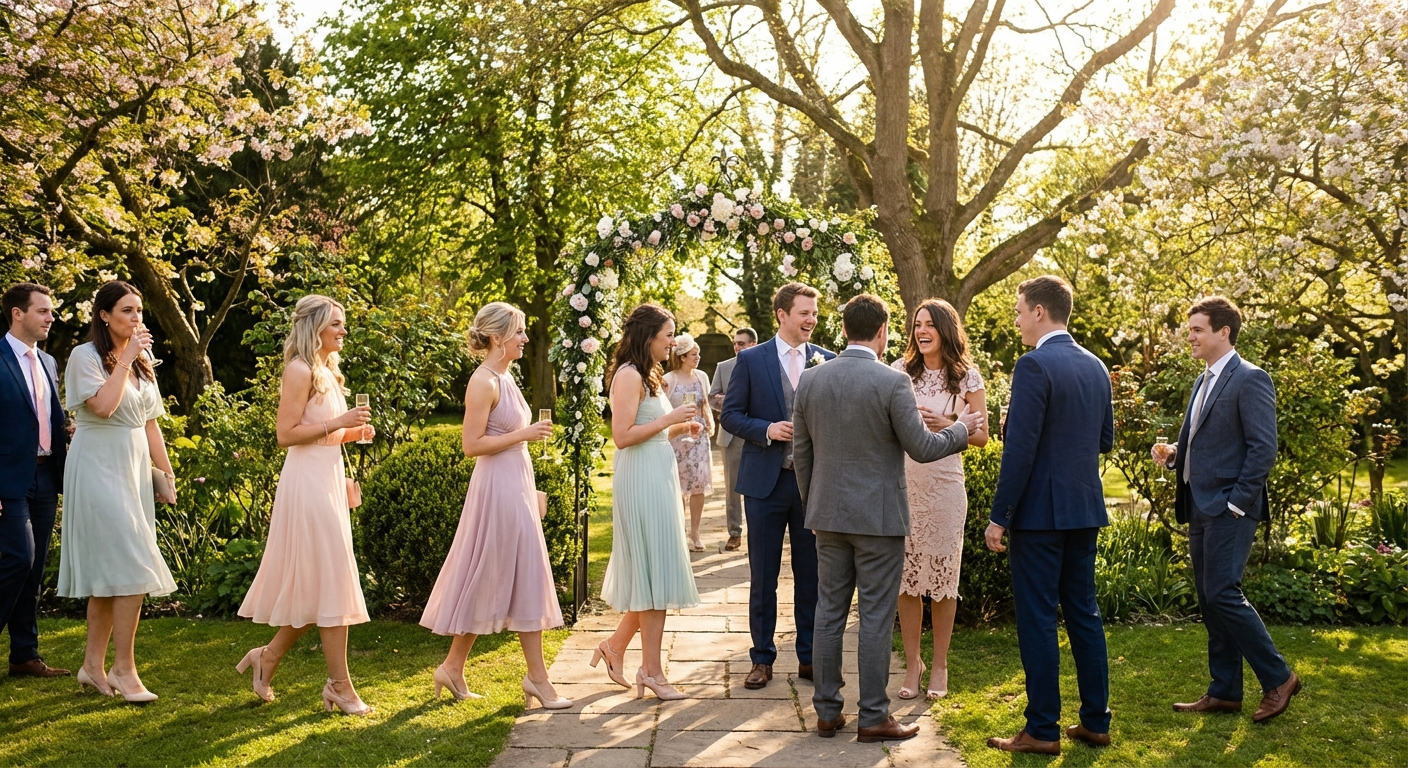
For women, cocktail attire is the sweet spot of wedding guest dressing. A knee-length or midi dress in a flattering silhouette is the classic choice. Fabrics like crepe, silk, chiffon, and lace all work well. In spring 2026, soft pastels, botanical prints, and dusty rose tones are trending strongly for wedding guests. Heels or dressy flats, a small clutch or structured bag, and understated jewelry pull the look together.
The common mistake with cocktail attire is dressing too casually. A sundress and sandals do not qualify, nor does a blazer over jeans. The word "cocktail" refers to the kind of outfit you would wear to a sophisticated evening reception, not a happy hour at a casual bar.
Semi-Formal: Polished but Approachable
Semi-formal sits one step below cocktail attire and is common for afternoon ceremonies, restaurant receptions, and celebrations at stylish but not extravagant venues. The tone is put-together without being stiff.
Men should wear dress pants and a button-down shirt at minimum. A blazer or sport coat elevates the look and is recommended. A tie is optional but appropriate. Chinos in a dark wash can work if paired with a blazer and dress shoes. Avoid jeans, sneakers, and overly casual button-downs with loud patterns.
Women can choose from a wide range of dresses, separates, and dressy jumpsuits. A midi dress in a seasonal print, a structured blouse with tailored trousers, or a wrap dress with heeled sandals all read as semi-formal. The fabric and fit matter more than the specific garment. Clean lines, intentional accessories, and shoes that suggest effort will keep you in the right range.
Semi-formal is often the dress code for spring garden weddings and outdoor celebrations where the setting is beautiful but not ostentatious. If the invitation mentions a garden, park, or outdoor venue alongside a semi-formal dress code, factor in practical considerations like heel-friendly shoes and sun protection.
Garden Party, Festive, and Creative Dress Codes
The rise of non-traditional wedding formats in 2026 has brought a wave of creative dress code terminology. These terms can feel ambiguous, but they generally share a common thread: the couple wants guests to dress well while embracing a specific aesthetic or setting.
Garden Party and Garden Formal
Garden party attire suggests a celebration held outdoors, typically during the afternoon, in a setting surrounded by nature. Think floral prints, light and breathable fabrics, and colors that complement a natural landscape. For women, this is the time for flowing midi dresses, feminine prints, and wedge sandals or block heels that handle grass gracefully. For men, a linen blazer over a light dress shirt with tailored trousers works perfectly.
Garden formal raises the bar slightly. The venue may still be outdoors, but the overall expectation is more polished. Think of what you would wear to a cocktail-attire wedding, then adjust for an outdoor setting. Structured dresses in elegant fabrics, refined accessories, and shoes that balance formality with practicality are the right approach.
Festive Attire
Festive attire is an invitation to bring personality and color to your outfit. It typically appears on invitations for celebrations that prioritize fun, energy, and visual impact. Bold colors, interesting textures, statement jewelry, and fashion-forward silhouettes are all encouraged.
This dress code is not a license to wear anything. The formality baseline is still cocktail attire. The difference is that the couple wants guests to express themselves with more confidence and creativity than a traditional dress code might suggest. If you have a stunning printed suit, an architectural dress, or a bold color combination you have been waiting to wear, this is your moment.
Beach, Coastal, and Resort Chic
Beach and coastal wedding dress codes balance elegance with the practical realities of sand, wind, and heat. Lightweight fabrics, relaxed silhouettes, and breathable construction are essential. For women, flowing maxi dresses, linen midi skirts with silk camisoles, and flat sandals or espadrilles are ideal. For men, a linen shirt with tailored shorts or lightweight trousers, and leather sandals or clean loafers, strike the right note.
Resort chic elevates the beach dress code. The setting may be tropical, but the venue is upscale, perhaps a luxury resort ballroom or a cliffside terrace. In this case, dress closer to cocktail attire but in lighter fabrics and brighter tones. A silk dress with heeled sandals or a linen suit with a patterned pocket square captures the spirit.
Casual Wedding Attire: Relaxed Does Not Mean Sloppy
A casual wedding dress code is increasingly common for intimate celebrations, backyard weddings, brunch receptions, and elopement parties. It signals that the couple wants guests to be comfortable, but it does not mean anything goes.
For men, clean chinos or tailored trousers with a collared shirt are the baseline. A casual blazer is a nice touch without being overdone. Loafers, clean leather sneakers, or desert boots work for footwear. Avoid athletic wear, graphic tees, flip-flops, and distressed jeans.
For women, a sundress in a flattering cut, a blouse with tailored pants, or a casual jumpsuit are all appropriate. The outfit should look intentional rather than thrown together. Flat sandals, clean sneakers, or low-heeled mules are fine. The test is whether you look like you made an effort to honor the occasion, even if the effort was choosing a comfortable, well-fitting outfit.
When in doubt about a casual dress code, err slightly on the dressier side. It is always better to be the best-dressed casual guest than the one who took the term too literally.
How Dress Codes Connect to Your RSVP Response
Modern wedding RSVP platforms, including digital RSVP websites, increasingly include dress code information alongside the response form. This placement is intentional. Couples want guests to see the dress code at the moment they are confirming attendance, when they are most engaged with the wedding details.
When you RSVP to a wedding, take a moment to note the dress code, venue description, and any additional guidance the couple has provided on their wedding website. Many couples include a FAQ section that addresses common dress code questions, such as whether the ceremony will be outdoors, whether there will be walking on uneven ground, or whether the reception venue has air conditioning.
If the RSVP form includes a section for notes or dietary preferences, it is not the place to ask about dress code. Instead, check the wedding website thoroughly. If the dress code still is not clear, reach out to the couple or a member of the wedding party directly. A brief, private message asking about attire is always appropriate and appreciated.
For couples building their own RSVP pages, including dress code guidance prominently on the website is one of the most practical things you can do for your guests. A single line with the dress code label and a brief description eliminates confusion and reduces the number of individual inquiries you will field in the weeks before the wedding.
Common Wedding Guest Dress Code Mistakes to Avoid
Even well-intentioned guests make dress code errors. Understanding the most common mistakes helps you avoid them and arrive at every celebration feeling confident and appropriately dressed.
Wearing white, ivory, or cream to a wedding remains the most universally recognized faux pas. Unless the couple explicitly requests an all-white dress code, these shades are reserved for the person getting married. This includes off-white, champagne, and very pale blush that could read as white in photographs. When in doubt, hold the garment against a white background. If it blends in, choose a different color.
Underdressing is more common than overdressing. Guests frequently interpret dress codes as one level more casual than intended. If the invitation says cocktail, some guests show up in sundresses. If it says semi-formal, they arrive in jeans and a nice top. Read the dress code as the minimum standard, not the maximum.
Ignoring the venue context is another frequent mistake. A cocktail dress that works perfectly for an indoor hotel reception may be impractical for a hilltop ceremony with a gravel path and gusty wind. Always consider the physical setting alongside the formality level. The best-dressed guests are those who look polished and comfortable, not those who are adjusting their outfit all evening.
Finally, avoid overly casual footwear as a shortcut. Shoes are the most noticeable deviation from a dress code. Athletic sneakers, worn flip-flops, and hiking sandals pull even a nice outfit down several formality levels. Invest in one pair of versatile, comfortable dress shoes that can carry you through multiple wedding seasons.
Spring 2026 Wedding Guest Style Trends
Several distinct trends are shaping what wedding guests are wearing in spring 2026, influenced by both runway fashion and the broader shift in wedding aesthetics.
Soft pastels are dominant this season. Sage green, dusty rose, lavender, and powder blue are the most popular colors for wedding guest outfits, echoing the palette trends that couples themselves are choosing for their celebrations. Wearing a color that complements the wedding palette, when you know it, is a thoughtful touch that the couple will notice and appreciate.
Botanical and floral prints continue to trend strongly, particularly for garden and outdoor celebrations. The 2026 versions lean toward watercolor-style prints with muted backgrounds rather than the bold, graphic florals of previous years. These prints photograph beautifully in natural light and feel organic alongside garden-inspired wedding decor.
Midi-length dresses have overtaken both mini and maxi lengths as the most versatile wedding guest silhouette. They offer coverage and movement without the formality of a full-length gown, making them appropriate across nearly every dress code from semi-formal to cocktail to garden party.
For men, the biggest shift in 2026 is the move toward lighter, more textured suiting. Linen-blend suits, unstructured blazers, and tonal combinations in tan, stone, and light gray are replacing the dark, heavy suits that dominated wedding guest fashion for years. This shift reflects the broader trend toward outdoor, garden-inspired celebrations where lighter fabrics and softer colors feel more natural.
Statement accessories are replacing statement garments as the primary way guests express personal style. A distinctive hat, bold earrings, an interesting bag, or artisanal shoes can transform a simple outfit into something memorable without competing with the wedding party or deviating from the dress code.
A wedding dress code is a bridge between the couple's vision and the guest experience. When you dress appropriately, you honor the effort they have invested in creating their celebration, contribute to the visual harmony of the day, and give yourself the freedom to enjoy the event without self-consciousness.
The best approach to any wedding dress code is straightforward: read it carefully, consider the venue and season, aim slightly above the minimum rather than below, and choose an outfit that makes you feel both comfortable and confident. When you walk into the celebration knowing you look right for the occasion, you can focus entirely on what matters: celebrating the couple and enjoying every moment of their day.