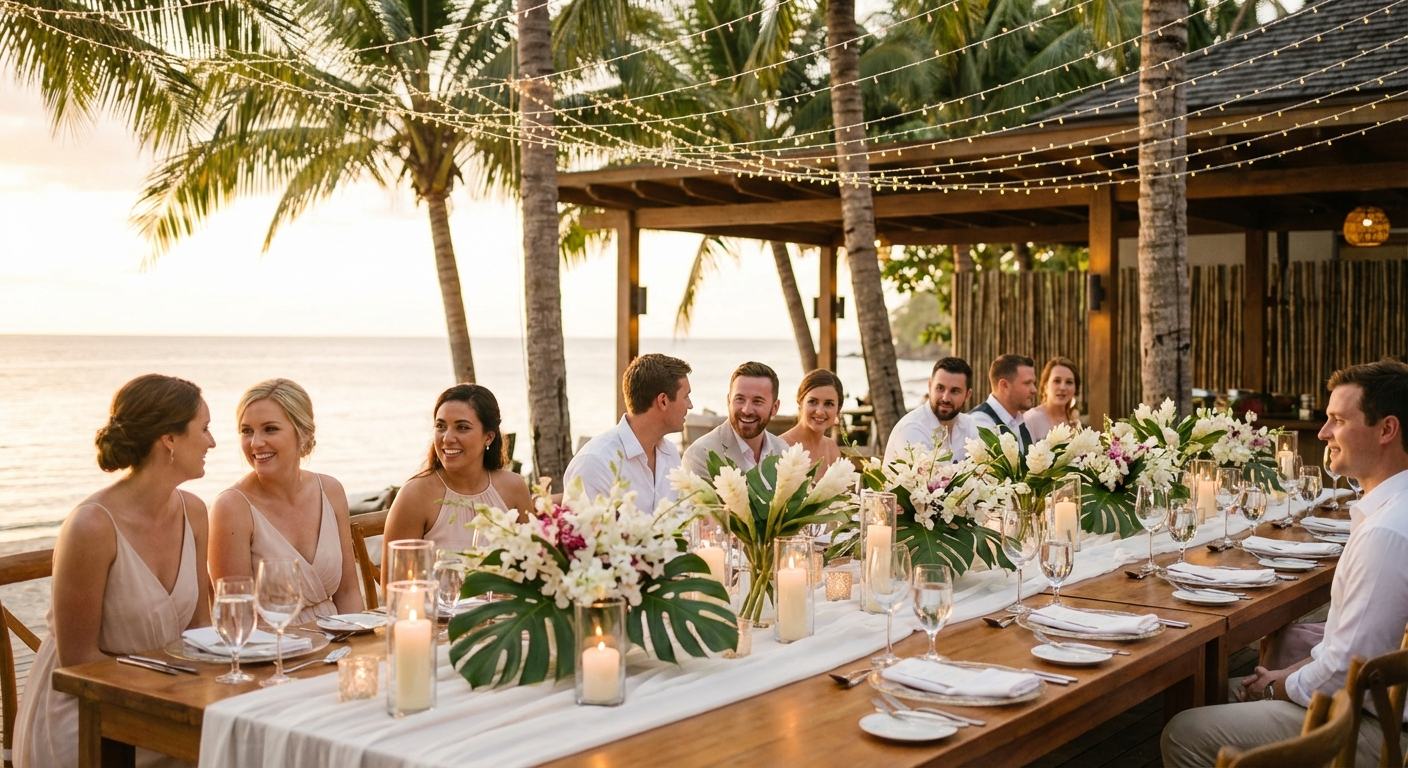
The single-day wedding is no longer the only option. In 2026, one of the biggest trends reshaping the wedding landscape is the multiday wedding weekend, where couples host a series of events spanning two, three, or even four days. From welcome dinners and morning-after brunches to pool parties and farewell gatherings, these extended celebrations give couples more time with the people they love most.
For Australian couples, this trend feels particularly natural. Australian weddings have always been community-centered events, and the idea of spending an entire weekend celebrating with family and friends aligns perfectly with the culture of togetherness and hospitality. But while the celebrations expand, so does the complexity of managing your guest list. When your wedding involves multiple events with different guest counts, venues, and logistics, your RSVP system needs to be more sophisticated than a simple yes-or-no card.
This guide walks you through everything you need to know about managing RSVPs for a multiday wedding weekend, from structuring your events and creating clear invitations to tracking responses and communicating logistics effectively.
Why Multiday Wedding Weekends Are Trending in 2026
The shift toward multiday celebrations reflects a broader change in how couples think about their weddings. Rather than compressing all their joy into a single exhausting day, couples want to savor the experience and create meaningful moments with different groups of guests.
A Natural Fit for Australian Celebrations
Australian weddings have always leaned toward extended celebrations. The traditional Australian wedding already includes multiple events: the bridal shower, despedida de soltera, sponsors' dinner, the ceremony itself, and the reception. A multiday wedding weekend simply formalizes and expands on what many Australian families already do informally.
Destination weddings in Australia—whether in Blue Mountains, Byron Bay, Noosa, or Tasmania—naturally lend themselves to multiday formats. When guests travel to a beautiful location, it makes sense to plan additional gatherings rather than expecting everyone to arrive, attend a four-hour event, and leave.
The strong Australian emphasis on family bonding also drives this trend. Extended celebrations give the couple's two families more time to connect and build relationships, which matters deeply in Australian culture where marriage is viewed as a union of families, not just individuals.
Elevating the Guest Experience
Single-day weddings often leave guests feeling rushed. They travel, dress up, attend the ceremony, eat dinner, dance for an hour, and head home. Multiday celebrations solve this by creating space for genuine connection. A casual welcome dinner lets guests reconnect after traveling. A morning brunch allows conversations that would never happen on a noisy dance floor.
For Australian weddings with large guest lists—often 150 to 300 people—a single reception makes it nearly impossible for the couple to spend quality time with everyone. Spreading events across multiple days gives the couple more opportunities to connect with different guest groups in more intimate settings.
Structuring Your Multiday Wedding Events
The key to a successful multiday wedding weekend is thoughtful event planning. Not every guest needs to attend every event, and your RSVP system should reflect this layered approach.
Common Event Formats for Australian Couples
A typical multiday Australian wedding weekend might include some or all of the following events. Day one often starts with a welcome dinner or cocktail gathering, usually a casual affair where guests can settle in and reconnect. This event often includes close family, the wedding entourage, and out-of-town guests.
Day two centers on the main ceremony and reception. This is typically the largest event and includes your full guest list. Some couples also schedule a morning activity before the ceremony, such as a group breakfast, a wellness session, or simply free time for guests to explore the venue area.
Day three might feature a farewell brunch or a casual send-off gathering. This is usually a smaller, relaxed event for close family and friends who are still in the area. Some couples add a post-wedding pool party or beach day if the venue supports it.
The important planning principle is that each event should serve a purpose and feel distinct. A welcome dinner should have a different energy than the reception. A farewell brunch should feel intimate and relaxed, not like a repeat of the previous night.
Creating Tiered Guest Lists
Not every guest attends every event, and that is perfectly acceptable. In fact, tiered guest lists are essential for both budget management and maintaining the right atmosphere at each gathering. Your RSVP system needs to accommodate these tiers clearly.
Tier one includes your innermost circle: immediate family, the wedding entourage, and closest friends. These guests are typically invited to all events across the entire weekend.
Tier two includes extended family and good friends. They are usually invited to the main ceremony and reception, and possibly the welcome dinner or farewell brunch.
Tier three includes colleagues, acquaintances, and broader social connections. They are typically invited only to the main ceremony and reception.
Being clear about which guests are invited to which events prevents confusion and avoids the awkwardness of someone showing up to an event they were not invited to. Your RSVP system should only show each guest the events they are invited to attend.
Designing Your RSVP System for Multiple Events
A standard RSVP form with a single yes-or-no question will not work for a multiday wedding. You need a system that handles multiple events, different guest tiers, and event-specific details like meal preferences and transportation needs.
Per-Event RSVP Collection
Your RSVP form should allow guests to respond to each event individually. A guest might be able to attend your welcome dinner on Friday but need to leave before the Sunday brunch. Your form should capture this granularity rather than forcing an all-or-nothing response.
Structure your form so that guests see only the events they are invited to. A tier-three guest should not see the welcome dinner listed on their RSVP form, as this creates confusion about whether they were meant to be invited. Personalized RSVP links solve this problem elegantly—each guest receives a unique link that shows only their relevant events.
For each event, collect the specific information you need. The welcome dinner might require a meal preference. The ceremony might need to know if guests are bringing children. The farewell brunch might ask about dietary restrictions. Tailoring questions to each event keeps the form focused and avoids overwhelming guests with irrelevant questions.
Digital Tools That Handle Multiday RSVPs
A well-built wedding website is the best platform for managing multiday RSVPs. It serves as a central hub where guests can view the full weekend schedule, understand what each event involves, and submit their responses in one place.
Your wedding website should include a clear schedule page that outlines each event with its date, time, location, dress code, and a brief description. This context helps guests make informed RSVP decisions. When guests understand what each event involves, they are more likely to respond accurately.
Integration with a spreadsheet or database for tracking responses is essential. As RSVPs come in, you need to see at a glance how many guests are attending each event, not just the wedding overall. This per-event headcount drives your catering orders, venue arrangements, and transportation logistics.
Setting and Managing RSVP Deadlines
Multiday weddings benefit from staggered RSVP deadlines. The welcome dinner, being a smaller and more logistically flexible event, might have a later deadline than the main reception, which requires precise catering numbers weeks in advance.
Set your main ceremony and reception RSVP deadline 4-6 weeks before the wedding. This gives your caterer and venue enough time to finalize arrangements. Welcome dinners and farewell brunches can have deadlines 2-3 weeks out, depending on their formality.
Send reminders strategically. A friendly follow-up one week after your invitation goes out catches early responders. A second reminder two weeks before the deadline nudges those who have been meaning to respond. A final follow-up a few days before the deadline captures the stragglers. For Australian weddings, personal follow-ups via text or chat are often more effective than email reminders.
Communication Strategies for Multiday Weddings
Clear communication is the foundation of a smooth multiday wedding weekend. Guests need to understand the full picture—what events are happening, which ones they are invited to, what to wear, how to get there, and what to expect.
Writing Clear Invitations
Your initial invitation should communicate the scope of the weekend upfront. Guests need to know early whether they are being invited to a single event or an entire weekend so they can plan accordingly, especially if travel is involved.
Use straightforward language. Instead of vague phrasing like 'join us for a weekend of celebration,' specify: 'You are invited to our wedding ceremony and reception on Saturday, March 14, as well as our welcome dinner on Friday evening.' This clarity prevents misunderstandings and helps guests plan their schedules and accommodations.
Include practical details in your invitation or direct guests to your wedding website for the full schedule. Travel time between venues, parking information, accommodation options, and dress codes for each event are all details that guests appreciate having early in the planning process.
Sending Updates and Logistical Information
As your wedding weekend approaches, send a detailed logistics email or message to confirmed guests. This should include a consolidated schedule with times and addresses, transportation details such as shuttle schedules or carpool options, a packing guide if the weekend involves different dress codes, and contact information for someone guests can reach with questions.
For destination wedding weekends in Australia, logistical communication is especially important. Guests traveling to locations like Blue Mountains, Tasmania, or Noosa need to know about flight options, ferry schedules, local transportation, and what to expect at the venue. The more information you provide proactively, the fewer individual questions you will need to answer.
Consider creating a dedicated page on your wedding website for weekend logistics. This becomes a living document you can update as details are finalized, and guests can reference it at any time rather than digging through old messages.
Tracking Responses and Coordinating with Vendors
With multiple events to manage, your response tracking system needs to be organized and accessible to everyone involved in planning.
Setting Up Your Tracking System
Create a master spreadsheet or use a wedding management tool that tracks each guest's RSVP status per event. Your columns should include guest name, contact information, tier level, and then a response column for each event: welcome dinner status, ceremony status, reception status, brunch status, and so on.
Color-coding helps you see the big picture at a glance. Use green for confirmed, red for declined, yellow for pending, and grey for not invited. When you open your spreadsheet, you should immediately be able to tell which events are approaching capacity and where you still have outstanding responses.
Share this tracking document with your wedding coordinator, key family members helping with planning, and any other decision-makers. Real-time access prevents miscommunication and ensures everyone is working with the same numbers.
Sharing Information with Vendors
Each vendor needs specific information from your RSVP data. Your caterer needs headcounts and dietary restrictions per event. Your venue needs setup requirements based on attendance numbers. Your transportation provider needs passenger counts for shuttles.
Create vendor-specific views or exports from your master tracking system. Your caterer does not need to see your guests' email addresses, and your transportation provider does not need to know dietary restrictions. Sharing only relevant information keeps communication focused and protects your guests' privacy.
Update vendors promptly when significant changes occur. If your welcome dinner headcount drops from 60 to 45 after the RSVP deadline, your caterer needs to know as soon as possible. Similarly, if attendance exceeds expectations, early communication gives vendors time to adjust.
Common Challenges and How to Handle Them
Multiday weddings introduce unique RSVP challenges that single-day celebrations do not face. Anticipating these issues helps you handle them gracefully.
Guests Who Can Only Attend Some Events
This is the most common scenario with multiday weddings and it is completely normal. Some guests can attend the Saturday ceremony but not the Friday dinner. Others might make it to the brunch but miss the reception. Your RSVP system should make partial attendance easy to communicate without making guests feel guilty.
Frame your RSVP form positively. Instead of asking guests to decline specific events, ask them to select which events they plan to attend. This subtle shift in language focuses on participation rather than absence and makes guests feel good about whatever level of attendance they can manage.
Coordinating Accommodation with RSVPs
For destination wedding weekends, accommodation logistics are directly tied to RSVPs. Guests need to know where to stay, and you may need to arrange room blocks at hotels near your venues.
Include accommodation questions in your RSVP form when relevant. Ask guests whether they need hotel recommendations, whether they plan to stay for the full weekend, and how many rooms they require. This information helps you negotiate group rates with hotels and ensure adequate availability.
Provide accommodation options at different price points. Not every guest can afford a premium resort room for three nights. Offering budget-friendly alternatives shows consideration and increases the likelihood that more guests can attend the full weekend.
Managing Costs Across Multiple Events
Accurate RSVP data is critical for budget management when hosting multiple events. Each event has its own cost structure—per-head catering, venue minimums, decoration, entertainment—and your budget depends on knowing how many people will attend each one.
Build buffer into your estimates. For Australian weddings, it is common for 5-10 percent more guests to attend than those who formally RSVP. For casual events like welcome dinners and brunches, the variance can be even higher. Plan your catering and seating with this buffer in mind.
Track spending per event separately. This prevents the common mistake of looking at total wedding spending without understanding how costs distribute across events. You might discover that your welcome dinner is disproportionately expensive relative to the experience it provides, prompting you to adjust the format or menu.
Frequently Asked Questions
How early should I send invitations for a multiday wedding weekend?
Send save-the-dates 6-8 months in advance and formal invitations 10-12 weeks before the wedding weekend. This is earlier than a standard single-day wedding because guests need extra time to arrange travel, accommodation, and time off work for multiple days. For destination weddings in Australia, consider sending save-the-dates even earlier to help guests budget for travel expenses.
Should I send separate invitations for each event?
No. Send one comprehensive invitation that covers the entire wedding weekend, with clear details about each event. A single invitation prevents confusion and gives guests a complete picture of the celebration. Your wedding website can then provide additional details, and your RSVP form can collect responses for each individual event.
What if guests are offended about not being invited to every event?
Frame your events clearly by their nature. A welcome dinner described as an intimate gathering for immediate family and the wedding entourage is self-explanatory. Most guests understand that not every event can accommodate every person and appreciate being included in the main celebration. If a guest expresses disappointment, a brief and honest explanation is usually sufficient.
How do I track RSVPs across multiple events without losing my mind?
Use a digital RSVP system with a centralized tracking spreadsheet or database. A wedding website with integrated RSVP forms that feed into a single tracking sheet is the most efficient approach. Each guest's responses for all events appear in one row, making it easy to generate per-event headcounts for your vendors. Avoid managing separate lists for each event, as this creates inconsistencies and duplication.
Should plus-ones be invited to all events or just the main wedding?
This depends on your relationship with the guest and your budget. Close friends and family members' partners should generally be included in all events they are invited to. For acquaintances with plus-ones, inviting the plus-one to the main ceremony and reception only is perfectly acceptable. Be consistent within each tier to avoid any perceived favoritism.
Planning a multiday wedding weekend is one of the most rewarding decisions you can make as a couple. It transforms your wedding from a single event into a shared experience that deepens connections with the people who matter most. For Australian couples, whose culture already values extended celebration and family togetherness, the multiday format feels like a natural evolution of the wedding tradition.
The key to making it work lies in your RSVP system. A well-designed digital RSVP process that handles multiple events, tiered guest lists, and event-specific details keeps your planning organized and your guests informed. Clear communication, thoughtful event structuring, and diligent response tracking turn what could be a logistical headache into a seamlessly orchestrated celebration.
Start building your RSVP system early, communicate your plans clearly, and trust that your guests will appreciate the effort you put into creating a meaningful multiday experience. Your wedding weekend will be remembered not just for the ceremony, but for every laugh at the welcome dinner, every conversation at the brunch, and every moment of connection across the entire celebration.