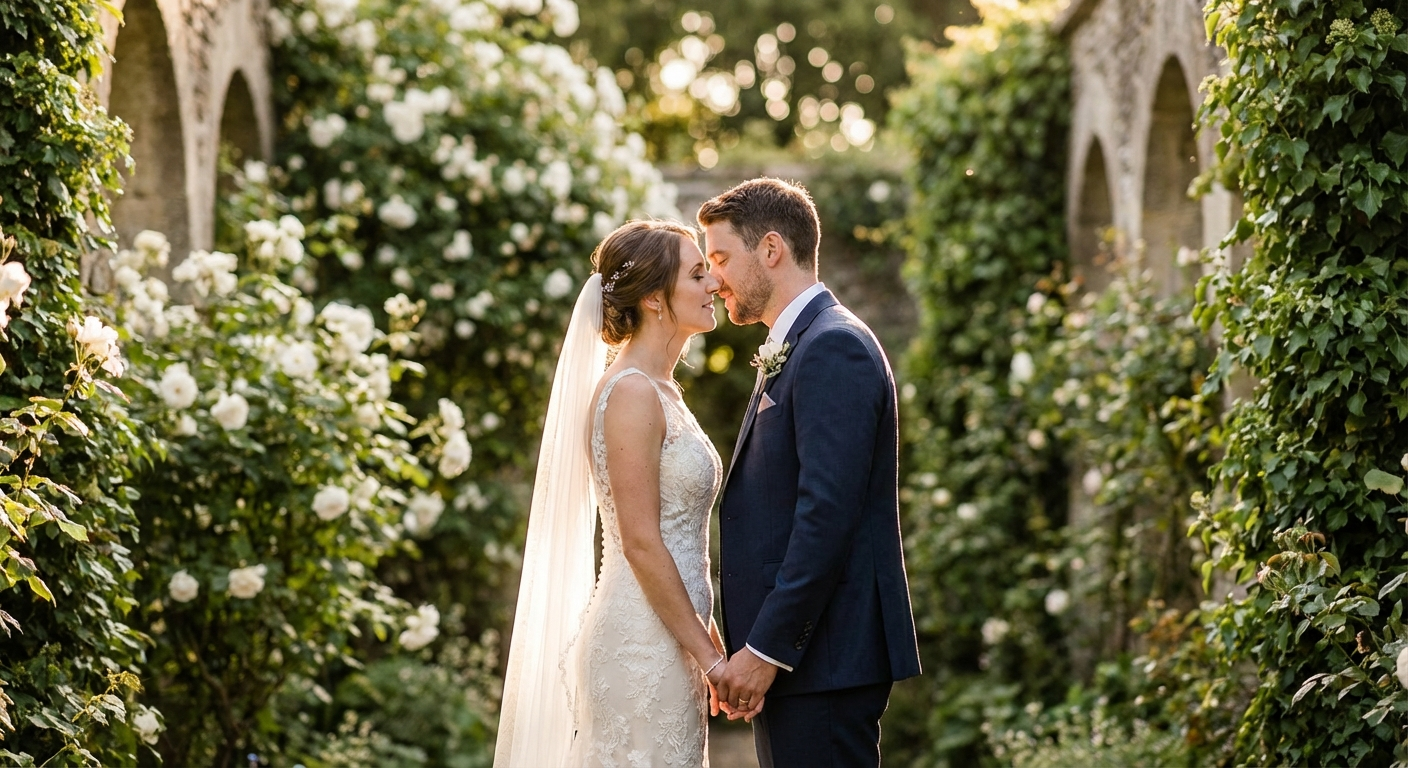
A quiet shift is reshaping how couples approach their wedding day in 2026. Instead of combining the deeply personal act of exchanging vows with the social spectacle of a reception, more couples are splitting them into two distinct events. The private ceremony happens on their terms, in a place that holds meaning, with only the people closest to their hearts present. The public celebration follows, sometimes the same day, sometimes weeks later, designed purely for joy, connection, and dancing until the venue closes.
This two-part format is not about exclusion. It is about intention. Couples who choose private vows followed by a public party are making a deliberate decision to protect the emotional weight of their promises from the performance pressure of a large audience. They want to cry without worrying about mascara running in front of 200 people. They want to stumble over their words without a crowd shifting uncomfortably. They want the moment to belong entirely to them.
The trend has been building for years, but 2026 is the year it goes mainstream. Wedding planners across Australia, the United States, and Europe report a sharp increase in couples requesting this format. If you are considering separating your vows from your party, this guide covers everything you need to know, from planning the logistics to managing your guest list and RSVPs across two events.
Why More Couples Are Choosing Private Vows in 2026
The appeal of private vows comes down to a single word: authenticity. Modern couples, particularly millennials and Gen Z, have watched enough wedding content online to know the difference between a ceremony performed for guests and one experienced between two people. They want the latter.
There is a growing awareness that the traditional ceremony format places enormous pressure on a deeply vulnerable moment. Standing before hundreds of guests, reciting words that carry the weight of a lifetime commitment, while a photographer hovers and guests crane their necks, can transform what should be the most intimate exchange of your life into a performance. Couples in 2026 are rejecting that pressure.
Private vow exchanges also solve a practical problem that many couples struggle to articulate. When your guest list includes everyone from your college roommate to your parents' business associates, the ceremony becomes a diplomatic exercise rather than a personal one. By separating the vows from the celebration, couples can honor their most important relationships during the ceremony and welcome their broader community at the party.
The rise of elopement culture over the past five years laid the groundwork for this trend. Couples who eloped during the pandemic and later hosted celebrations for family and friends proved that the two-part model works beautifully. Now, couples who never considered eloping are adopting a similar structure, keeping the intimate ceremony while building a full-scale reception around it.
Popular Formats for the Two-Part Wedding
There is no single blueprint for the private-vows-public-party model. Couples are adapting it to suit their relationships, budgets, and cultural contexts. Here are the most popular formats emerging in 2026.
Same-Day Split: Morning Vows, Evening Party
The most common format keeps everything on the same day. The couple exchanges vows in a private setting, often a garden, chapel, or meaningful location, with fewer than 20 guests present. The ceremony happens in the morning or early afternoon, allowing time for intimate photos and a private lunch. The evening reception then opens to the full guest list, with cocktails, dinner, and dancing. Guests at the reception may see a highlight video or photo slideshow from the earlier ceremony, creating a bridge between the two events without requiring their presence at both.
Separate Weekend: Friday Ceremony, Saturday Celebration
Some couples extend the format across a weekend, holding a private Friday ceremony with immediate family and a Saturday reception for the full guest list. This approach works particularly well for destination weddings, where close family arrives early and other guests join for the main event. The Friday ceremony can be followed by an intimate dinner, turning the weekend into a layered celebration with distinct emotional registers for each day.
Delayed Celebration: Weeks or Months Apart
Increasingly popular among Australian couples with families spread across multiple countries, the delayed model separates the ceremony and party by weeks or even months. The couple holds a legal ceremony and private vow exchange at home, then hosts a larger celebration when extended family can gather. This format is especially practical for couples navigating visa timelines, travel logistics, or seasonal venue availability. The reception becomes less about witnessing the marriage and more about celebrating the couple's new chapter together.
Elopement Plus Reception
For adventurous couples, the elopement-plus-reception model takes private vows to an extreme. The couple exchanges vows at a remote or deeply personal location, perhaps a mountaintop, a beach at sunrise, or the restaurant where they had their first date, with no guests or only a photographer present. The reception happens later, designed as a pure celebration with no ceremony component at all. This format gives the couple complete ownership of their vow moment while ensuring that their community still gets to celebrate with them.
How to Plan the Private Ceremony
The beauty of a private ceremony lies in its simplicity, but simplicity still requires intentional planning. Here is how to create a private vow exchange that feels meaningful without the infrastructure of a traditional wedding ceremony.
Choosing the Right Location
Without the constraints of seating 200 guests, your location options expand dramatically. Private ceremonies have been held in living rooms, gardens, rooftops, hotel suites, parks, chapels, art galleries, and even boats. The best location is one that holds personal significance. Maybe it is the park where you had your first date, the family home where you grew up, or a quiet beach you discovered on a trip together. The location should feel like yours, not like a venue you booked from a catalog.
Deciding Who Attends
This is the most sensitive decision in the two-part wedding model. The guest list for the private ceremony typically ranges from 2 people (just the couple) to 20 people (immediate family and closest friends). The key is setting a clear boundary and applying it consistently. If you invite one set of parents, invite the other. If you include siblings, include all of them. The more consistent your criteria, the easier it is to explain to anyone who asks why they were not at the ceremony but are invited to the celebration.
Writing Vows for a Private Setting
Private vows give you permission to be raw, specific, and vulnerable in ways that a public ceremony rarely allows. Without an audience, you can reference inside jokes, difficult seasons you weathered together, and promises that are too personal for a crowd. Many couples who exchange private vows report that the absence of performance pressure allowed them to be fully present and emotionally honest in a way they did not expect. Write your vows for an audience of one. That is the entire point.
Designing the Public Celebration
When the ceremony pressure is removed from the reception, something remarkable happens: the party gets better. Without the need for a processional, a formal ceremony segment, or the emotional weight of vows, the celebration becomes pure social energy.
What a Reception Without a Ceremony Looks Like
A ceremony-free reception starts differently than a traditional one. Instead of guests waiting for the couple to appear after a processional, the couple is often already present when guests arrive, greeting people at cocktail hour like hosts at a dinner party. The evening flows more like a milestone birthday celebration or an engagement party with elevated production value. There is no formal transition from serious to celebratory because the entire event exists in celebration mode from the first moment.
Creative Ways to Connect the Two Events
While the ceremony and party are separate, they should feel like chapters of the same story. Many couples achieve this by sharing a highlight reel or photo slideshow from the private ceremony during the reception dinner. Others display framed prints from the ceremony on a dedicated table. Some couples read abbreviated versions of their vows to reception guests, or the officiant offers a brief toast describing the ceremony for those who were not there. The goal is to let reception guests feel included in the full narrative without requiring their presence at the ceremony itself.
Entertainment and Flow Without a Ceremony Anchor
Without a ceremony to anchor the timeline, the reception needs its own rhythm. Most couples create flow through a series of intentional moments: a welcome toast, a first dance, speeches, a surprise performance, or a late-night food station that signals the party is shifting into its final gear. The absence of a ceremony actually frees up 30 to 45 minutes in the traditional timeline, which couples typically reallocate to extended cocktail hours, longer dance sets, or interactive experiences like live food stations or photo activations.
Managing RSVPs Across Two Events
The logistical backbone of a two-part wedding is its RSVP system. With two separate events, potentially with different guest lists, locations, and dates, your RSVP process needs to be clear, organized, and easy for guests to navigate.
Tiered Invitations and Communication
Guests attending only the reception should receive an invitation that clearly communicates what they are being invited to. Avoid ambiguity. Use language like 'Join us for a celebration of our marriage' rather than 'You are invited to our wedding,' which implies a ceremony. For guests attending both events, a separate insert or a dedicated section on your wedding website should outline the ceremony details, including time, location, dress code, and any special instructions. Digital RSVP platforms make this tiered communication significantly easier than paper invitations.
Using Digital RSVPs for Multi-Event Management
A digital RSVP system is nearly essential for the two-part wedding model. Paper RSVPs struggle to handle the complexity of multiple events with different guest lists. A well-designed digital platform allows you to create separate RSVP forms for each event, send targeted invitations to specific guest tiers, track responses across both events in a single dashboard, and send follow-up reminders to non-respondents without accidentally revealing which event they were invited to. The efficiency of digital RSVPs becomes a genuine planning advantage when you are managing two guest lists simultaneously.
Handling the Inevitable Questions
Some guests will ask why they were not invited to the ceremony. Prepare a gracious response in advance. Something like: 'We wanted our vow exchange to be a very small, private moment with just our immediate family. The celebration is where we get to share our joy with everyone we love, and we are so excited to have you there.' Most guests will understand, especially as the two-part model becomes more normalized. The key is consistency. If one friend asks and you explain your reasoning, the same explanation should work for anyone else who inquires.
Invitation Wording and Website Communication
The language you use to communicate your two-part wedding sets the tone for how guests perceive it. Clear, warm wording prevents confusion and preempts questions.
For Ceremony-Only Guests (Immediate Family)
Keep ceremony invitations simple and intimate: 'We would be honored to have you witness our private exchange of vows.' Include the date, time, location, and a note about the reception to follow: 'A celebration with family and friends will follow that evening at [venue].' This lets ceremony guests know that the day continues without them needing to RSVP separately for the party they are already attending.
For Reception-Only Guests
Reception invitations should feel celebratory, not secondary: 'After exchanging private vows with our families, we invite you to join us for an evening of dinner, dancing, and celebration.' This wording acknowledges the private ceremony without excluding anyone. It frames the reception as the main event for these guests, which it genuinely is. Avoid phrases like 'reception only' or 'party only,' which can feel dismissive. Instead, position the celebration as the culmination of the day.
Wedding Website Best Practices
Your wedding website should include a clear explanation of your two-part format. A dedicated section titled something like 'Our Day' or 'How We Are Celebrating' can explain the private ceremony and public party in a warm, personal tone. Include a brief paragraph about why you chose this format, logistics for each event, and a FAQ section addressing common questions. Your RSVP page should route guests to the correct form based on their invitation tier, ideally using a code or guest-list lookup to prevent confusion.
Cultural Considerations for Australian Couples
The two-part wedding model carries unique considerations for Australian couples, where family expectations, religious traditions, and community celebration play significant roles in wedding culture.
Australian weddings have always been communal events. The expectation that extended family, family and friends, and family friends will witness the ceremony is deeply ingrained. Couples choosing private vows should be prepared for initial surprise or even pushback from older relatives who view the ceremony as a community event. Open, early communication is essential. Explain your reasoning to parents and grandparents before sending invitations, and emphasize that the reception is designed to honor and include the broader family.
For Catholic couples, the church ceremony carries sacramental significance that a private vow exchange does not replace. Many Australian couples who adopt the two-part model hold a small church ceremony with immediate family as their private event, then host a larger reception separately. This approach honors the religious tradition while still achieving the intimacy they desire. Couples should consult with their parish priest early, as some churches have specific requirements about guest attendance and ceremony format.
The concept of sponsors (ninong and ninang) also requires thoughtful navigation. In the traditional format, sponsors play a visible ceremonial role. In the two-part model, couples can honor their sponsors at the reception through a dedicated introduction, a toast, or a ceremonial candle lighting that echoes the church tradition without replicating the full ceremony. The goal is to make sponsors feel valued and included, even if the format looks different from what they expected.
Budget Implications of the Two-Part Format
One of the practical advantages of the two-part model is its budget flexibility. A private ceremony with fewer than 20 guests costs a fraction of a traditional ceremony with full production, and the savings can be redirected to the reception experience.
The private ceremony typically requires only an officiant, a small floral arrangement, and a photographer. Venue costs are minimal or nonexistent when the ceremony takes place in a private home, garden, or public space. Without the need for ceremony chairs, a sound system, programs, or a processional musician, the savings can be substantial.
On the reception side, removing the ceremony segment eliminates the need for a ceremony venue (if it would have been separate from the reception), ceremony decor, and the additional rental time required for a ceremony-to-reception transition. The reception itself can focus its budget entirely on food, entertainment, and guest experience.
However, couples should be aware that the two-part model can also increase costs if not managed carefully. Hosting two separate events, even when one is small, means two sets of logistics, potentially two venues, and two sets of vendor coordination. The delayed celebration format, where weeks separate the events, can also mean paying for two rounds of florals, two cakes, and two photographer bookings. Careful budgeting and vendor negotiation are essential to keeping the two-part model financially efficient.
Frequently Asked Questions
Is a Private Vow Exchange Legally Binding?
It depends on your jurisdiction. In Australia, a marriage requires a licensed officiant, two witnesses of legal age, and a valid marriage license. A private vow exchange with only the couple present is not legally binding unless these requirements are met. Most couples who choose private vows either include the minimum legal requirements in their private ceremony or handle the legal paperwork separately at a civil ceremony. The private vow exchange is about the emotional and spiritual commitment, while the legal marriage may happen at the same time or at a different point entirely.
Will Guests Be Offended If They Are Not Invited to the Ceremony?
Some may initially feel surprised, but offense is rare when the reasoning is communicated clearly and warmly. The two-part wedding model is becoming increasingly common, and most guests understand the desire for an intimate ceremony. Frame the reception as the event designed specifically for them, the moment where you get to celebrate with the people you love. Emphasize inclusion rather than exclusion. If specific family members express concern, a personal phone call explaining your decision goes a long way.
Do We Need a Photographer for Both Events?
Yes, if your budget allows. The private ceremony will produce some of your most emotional and authentic wedding photos, and these moments are impossible to recreate. Many couples book their primary photographer for the ceremony and a second photographer or a shorter coverage package for the reception. If budget is a constraint, prioritize ceremony photography, as the reception is typically well-documented by guests' phones and can be supplemented with a shorter professional coverage window during key moments like speeches and the first dance.
Should We Wear the Same Outfit to Both Events?
This is entirely a matter of personal preference, and there is no wrong answer. Some couples wear their full wedding attire to the private ceremony and change into something different for the reception party. Others save their formal attire for the reception and wear something more relaxed for the private vows. A growing number of couples are commissioning two outfits, one for each event, treating the format as an opportunity to express two sides of their personal style. Whatever you choose, make sure both outfits make you feel like yourselves.
How Do We Handle RSVPs for Two Separate Events?
Use a digital RSVP platform that supports multi-event management. Create separate RSVP forms for each event and send targeted invitations based on your guest tiers. Your wedding website should include clear instructions for each group, with a code or guest-list lookup directing them to the correct form. Track responses in a single dashboard so you can monitor both guest lists simultaneously. Follow up with non-respondents individually, being mindful of which event each guest was invited to. A well-organized digital system makes this process manageable even with complex guest logistics.
The private vows, public party model is more than a trend. It is a recalibration of what a wedding day is supposed to feel like. By separating the ceremony from the celebration, couples give themselves permission to be fully present in both moments, vulnerable and honest during their vows, joyful and social during their party.
For Australian couples navigating the intersection of tradition and personal desire, the two-part format offers a thoughtful middle ground. It honors the communal spirit of Australian wedding culture through a full reception while protecting the intimacy of the vow exchange. With clear communication, intentional planning, and a robust digital RSVP system, this format creates space for the best of both worlds.
Whether you choose the same-day split, the separate weekend, or the delayed celebration, the key is intentionality. Design each event with purpose, communicate clearly with your guests, and let go of the idea that a wedding has to follow a single template. Your marriage begins with your vows. Your celebration begins with your community. Both deserve to be extraordinary.