For as long as most wedding planners can remember, reception seating has followed a predictable pattern. Round tables scattered across a ballroom. Long rectangular banquet rows in parallel lines. Occasionally a U-shape or an L-shape for the head table. The arrangement varied slightly from wedding to wedding, but the underlying logic remained the same: fill the room efficiently, give everyone a seat, and move on to the next planning decision.
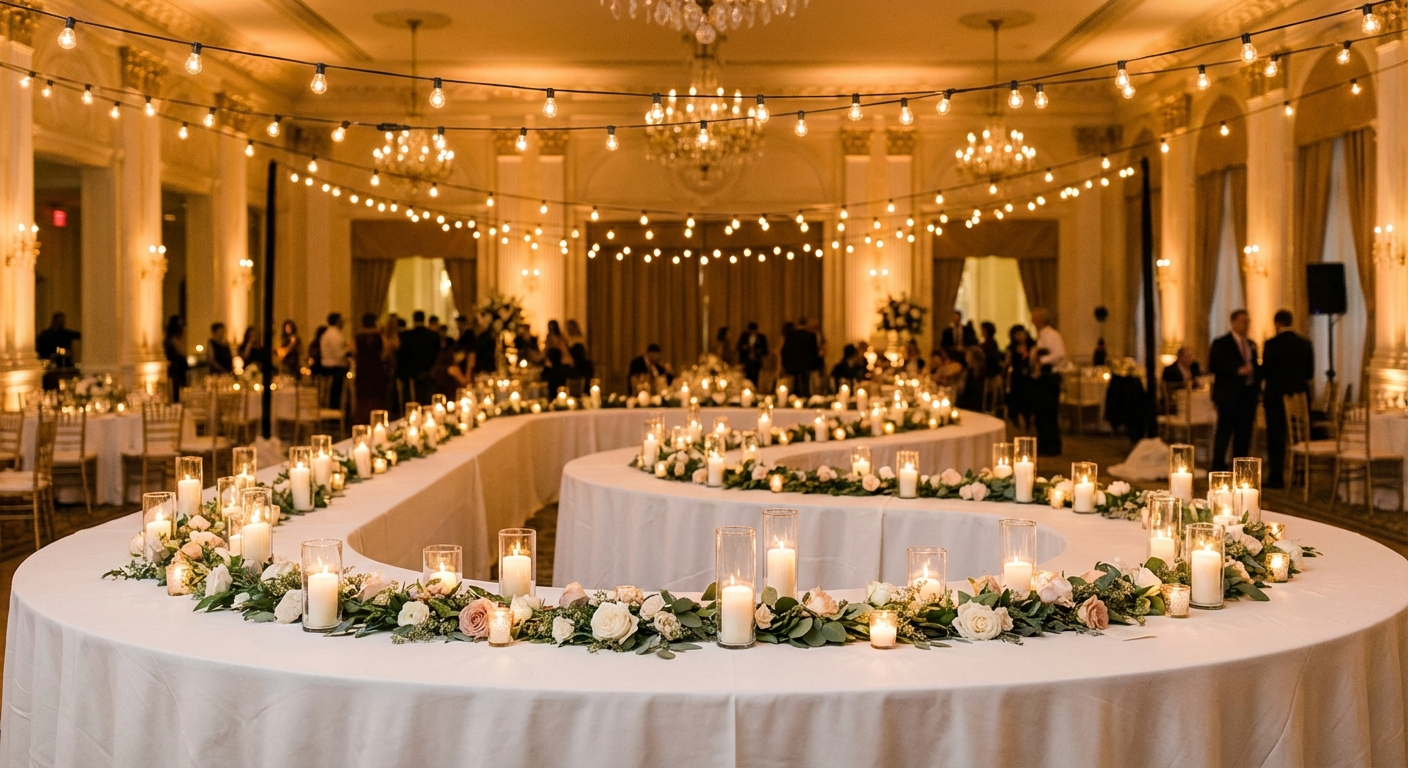
In 2026, that logic is being challenged by couples and designers who see the table layout not as a logistical necessity but as a design element with the power to transform the entire reception experience. Serpentine tables, those long, gracefully curving S-shaped formations that wind through a venue like a river, have emerged as the most visible expression of this shift. But the trend extends far beyond a single shape. Spiral arrangements, radial layouts, mixed-format configurations, and asymmetric organic formations are all gaining ground as couples reject the grid and embrace layouts that create intimacy, movement, and visual drama.
The Knot's 2026 wedding trend report identifies serpentine tables as one of the defining reception elements of the year, and the reasons go deeper than aesthetics. Non-traditional layouts change how guests interact, how food is experienced, and how the space itself feels. This guide walks through every major layout option, the practical considerations that make each one work, and how to choose the arrangement that fits your venue, guest count, and vision.
Why Non-Traditional Table Layouts Are Defining 2026 Weddings
The move away from conventional table arrangements reflects a broader shift in how couples think about their reception space. A room full of round tables creates distinct social islands. Each table becomes its own micro-party, with guests interacting primarily with the seven or nine people seated immediately around them. For some celebrations, that works perfectly. But for couples who want their reception to feel like a single, unified gathering rather than a collection of separate dinner parties, traditional layouts create exactly the wrong dynamic.
Serpentine and non-traditional layouts solve this by creating physical continuity. When guests sit along a curving table that winds through the entire room, they share the experience with everyone. Conversations flow naturally between neighbors. The visual sightlines connect one end of the space to the other. The couple, seated at the center curve, can see and be seen by every guest without the isolation of a raised head table or the distance of a separate sweetheart table across the room.
There is also a powerful design dimension. A serpentine table transforms the room into something that feels curated and intentional rather than functional. The flowing lines, continuous floral arrangements, and unbroken candlelight create a visual impact that individual round tables simply cannot achieve. In an era where couples are investing heavily in the aesthetic experience of their reception, the table layout has become one of the highest-impact design decisions available.
Social media has accelerated this trend significantly. Serpentine layouts photograph exceptionally well from above, creating dramatic drone and balcony shots that have become some of the most shared wedding images on Instagram and TikTok. The visual appeal is undeniable, but planners and designers caution that choosing a layout purely for its photographic potential, without considering the practical implications, leads to problems that no filter can fix.
The Serpentine Table Layout: Anatomy of the S-Curve
A serpentine table arrangement uses a continuous series of curved table segments that connect to form a winding, river-like formation through the venue. The individual segments are typically six to eight feet long and gently angled, creating smooth curves rather than sharp turns. When assembled, the effect is a single flowing table that seats anywhere from forty to two hundred guests depending on the length and the number of curves.
The standard serpentine setup uses tables that are thirty inches wide, the same as a standard banquet table, with seating on both sides. This means guests seated on the outside of a curve have slightly more elbow room than those on the inside, a detail that experienced planners account for by adjusting place settings and centerpiece placement along each curve. The inside of each curve is typically where larger floral installations or candle groupings are placed, taking advantage of the natural focal point created by the inward sweep.
Most serpentine layouts include two to four major curves, depending on the room dimensions and guest count. A single S-curve works well for sixty to eighty guests. A double serpentine with four curves can accommodate one hundred twenty to one hundred sixty guests while maintaining the intimate, connected feel that defines the format. Beyond that, the table can become unwieldy, and planners often recommend splitting into two parallel serpentine formations with a shared dance floor between them.
Beyond the Serpentine: Other Non-Traditional Layout Options
The Spiral Formation
A spiral layout places the couple at the center of a table that winds outward in a gradually expanding curve, like a nautilus shell viewed from above. This arrangement creates a striking visual hierarchy with the couple at the focal point and guests radiating outward. The spiral works best in circular or square rooms where the geometry allows the table to expand naturally without hitting walls at awkward angles. Guest capacity is typically limited to eighty or fewer, making this an ideal choice for intimate celebrations that want maximum visual impact.
Mixed-Format Arrangements
Mixed-format layouts combine different table shapes and sizes in a single room to create visual variety and accommodate different social dynamics. A long communal table for the wedding party might anchor the center of the room, flanked by clusters of round tables for family groups and intimate square four-tops for couples. This approach gives the reception a restaurant-like feel where the seating itself signals different types of dining experiences within a single celebration.
The practical advantage of mixed formats is flexibility. Not every guest group benefits from the same seating arrangement. A boisterous table of college friends might thrive at a long communal table, while elderly relatives may prefer the contained intimacy of a round table. Mixed layouts let you match the furniture to the social dynamics rather than forcing every group into the same configuration.
The Radial Layout
Radial arrangements position tables like spokes of a wheel emanating from a central point, which is typically the dance floor or the couple's table. This layout creates clear sightlines from every seat to the center of the action and distributes guests evenly around the focal point. It works particularly well in round or tent venues where a central anchor makes geometric sense. The spaces between the spokes serve as natural pathways for guest movement and server circulation, solving one of the most common complaints about traditional grid layouts: that getting from one side of the room to the other requires squeezing between tightly packed chairs.
Organic and Asymmetric Formations
The most adventurous layout trend in 2026 is the fully organic arrangement, where tables are placed in deliberately irregular patterns that respond to the architecture and landscape of the venue rather than imposing a geometric order on the space. In an outdoor setting, tables might follow the natural curve of a garden path. In a loft space, they might cluster around architectural columns and windows. The effect is that the reception feels like it grew naturally from the space rather than being imposed upon it.
Organic layouts require the most planning precision because the absence of a grid means every table placement is a deliberate design decision. Spacing must be carefully managed to prevent some areas from feeling cramped while others feel empty. But when executed well, organic arrangements create the most immersive and memorable reception environments because they feel genuinely unique rather than adapted from a template.
Practical Planning Considerations for Non-Traditional Layouts
Non-traditional layouts deliver extraordinary visual and social results, but they come with practical requirements that standard arrangements do not. Understanding these requirements before committing to a layout prevents the costly surprises that can derail an otherwise well-planned reception.
Venue dimensions are the first and most important constraint. Serpentine tables require significantly more floor space than the equivalent number of round tables because the curves create dead space on either side that cannot be used for seating. A room that comfortably fits twenty round tables of eight might only accommodate a serpentine layout for one hundred guests instead of one hundred sixty. Before falling in love with a layout on Pinterest, get your venue's exact floor plan with measurements and work with your planner or rental company to mock up the arrangement to scale.
Rental costs increase with non-traditional layouts. Standard round and rectangular tables are the least expensive to rent because every event company has hundreds of them in stock. Serpentine table segments, custom curved pieces, and specialty shapes cost more per unit and may need to be sourced from specialty vendors. Budget an additional twenty to thirty-five percent for table rentals when planning a non-traditional layout compared to standard rounds.
Catering logistics change as well. Servers accustomed to working round tables follow predictable circular paths that allow them to serve eight guests without backtracking. A serpentine table requires servers to walk the length of the curve, which takes longer and requires more staff to maintain the same service speed. Discuss your layout with your caterer early in the planning process to ensure they can staff appropriately and that their kitchen timeline accounts for the different service flow.
Sound and acoustics behave differently in non-traditional layouts. A room full of round tables creates natural sound absorption as conversations distribute evenly across the space. A single long table concentrates conversation along a narrow corridor, which can become surprisingly loud at the center curves where sound reflects off the table surface and nearby guests on both sides. Your DJ or band should be positioned with this acoustic reality in mind, and you may need to adjust speaker placement to ensure music reaches the ends of the table without overwhelming the center.
Florals and Decor for Serpentine and Curved Tables
The continuous surface of a serpentine table creates an opportunity for floral design that individual tables cannot match. Instead of repeated centerpiece arrangements on each table, a serpentine layout allows for a flowing, evolving floral installation that changes character along the length of the table. A designer might start with low, dense garden-style arrangements at one end, transition through medium-height candelabra sections in the middle, and finish with dramatic tall installations at the curves where they create the most visual impact.
This continuous approach to floral design is one of the most compelling arguments for the serpentine format. The unbroken line of flowers, greenery, and candlelight creates a visual richness that would require significantly more material to achieve across individual round tables. Paradoxically, serpentine floral installations can be more cost-effective than traditional centerpieces because the continuous format allows designers to use greenery runners and filler elements that would look sparse on isolated round tables but create lush abundance when stretched along a flowing surface.
Candle placement takes on particular importance in serpentine layouts. A mix of taper candles in holders of varying heights, votive clusters at irregular intervals, and pillar candles nestled among the greenery creates a warm, dynamic lighting effect that evolves as you look down the length of the table. The gentle curves of the serpentine formation mean that candlelight catches and reflects at different angles throughout the room, producing a warm glow that flat, straight arrangements cannot replicate.
Height variation matters more on serpentine tables than on rounds. Because every guest can see a long stretch of the table surface, a flat, uniform arrangement becomes visually monotonous. Alternating between low, medium, and tall elements along the curves keeps the eye moving and creates the layered, abundant aesthetic that makes serpentine layouts so photogenic.
How Non-Traditional Layouts Change the Guest Experience
The social dynamics of a serpentine or non-traditional layout differ meaningfully from conventional arrangements, and understanding these differences helps you decide whether the format is right for your guest list. At a round table, each guest has two immediate neighbors and five or six people directly across from them. Conversation naturally stays within the table, and a guest who does not click with their immediate neighbors has limited options for social escape without physically leaving the table.
At a serpentine table, each guest has two immediate neighbors but also easy conversational access to the two or three people directly across the narrower table width. More importantly, the open ends of each curve and the continuous format make it natural for guests to shift their attention up or down the table as the evening progresses. The result is more fluid, dynamic social interaction with a wider range of people throughout the night.
This fluidity is particularly valuable for weddings that bring together multiple social groups who do not know each other. The continuous table creates more opportunities for cross-group interaction than isolated round tables, where strangers placed together often struggle to find common ground. Along a serpentine table, the constant flow of conversation, food, and drink creates a communal atmosphere that naturally breaks down social barriers.
The trade-off is that serpentine layouts offer less privacy and fewer quiet corners than round-table arrangements. Guests who prefer intimate conversation with a small group may find the openness of a long communal table less comfortable than the contained environment of a round table. For guest lists that skew toward introverted or elderly attendees, a mixed-format layout that includes some round tables alongside the serpentine can offer the best of both dynamics.
Frequently Asked Questions About Serpentine Wedding Table Layouts
What Is the Minimum Guest Count for a Serpentine Table?
A single serpentine curve works well with as few as thirty guests, though the visual impact increases significantly at forty or more. Below thirty, the table can feel sparse and the curves too gentle to create the signature flowing effect. For very small weddings under thirty guests, a single long straight farm table or a U-shaped arrangement may deliver a similar communal feel without requiring the floor space that serpentine curves demand.
Do Serpentine Tables Work for Outdoor Weddings?
Serpentine tables work beautifully outdoors, and some of the most stunning examples of the trend come from garden, vineyard, and estate weddings where the curving table mirrors the organic lines of the landscape. The key consideration is ground levelness. Curved table segments are less forgiving of uneven ground than individual round tables because a slight wobble at one segment affects the alignment of the entire formation. If your outdoor venue has uneven terrain, budget for professional leveling or choose a paved area for the table placement.
How Much More Do Serpentine Layouts Cost Compared to Standard Tables?
Expect to pay twenty to thirty-five percent more for table rentals alone compared to standard rounds. However, the total reception cost difference is often smaller because serpentine layouts can reduce floral costs through the continuous runner format and may require fewer individual centerpiece arrangements. The net increase for most couples is ten to twenty percent above what they would spend on a standard round-table setup, with the difference concentrated in rental fees and additional setup labor.
Where Does the Wedding Party Sit at a Serpentine Table?
The couple typically sits at the center of the most prominent curve, with the wedding party extending on either side. This placement puts the couple at the visual and social heart of the table, visible from almost every seat. Some couples prefer to sit at the beginning of the serpentine where they can see the entire table stretching before them. There is no single correct answer, but the center curve position is the most popular choice because it maximizes the number of guests within easy conversational reach of the couple.
How Do You Position the Dance Floor with a Serpentine Layout?
The dance floor is typically placed in the largest open area created by the serpentine curves, usually the interior of one of the major S-bends. This position means guests can watch the first dance from their seats without anyone's view being blocked, and the transition from dinner to dancing is seamless because the floor is already surrounded by the table. For larger serpentine setups with multiple curves, the dance floor often occupies the center of the room with the table winding around it, creating an amphitheater-like effect where the celebration happens at the heart of the gathering.
The serpentine table and its non-traditional cousins represent more than a design trend. They reflect a fundamental reconsideration of what a wedding reception table is supposed to do. Traditional layouts prioritize efficiency and convention. Non-traditional layouts prioritize connection, beauty, and the idea that the physical arrangement of a room shapes the emotional experience of everyone in it.
The practical requirements are real and should not be underestimated. Venue dimensions, rental budgets, catering logistics, and acoustic planning all need more attention with a non-traditional layout than with standard rounds. But for couples willing to invest that planning energy, the payoff is a reception that feels genuinely different from every other wedding their guests have attended.
In 2026, the table layout has joined the venue, the menu, and the dress as one of the defining design decisions of a wedding. The couples choosing serpentine curves, spiral formations, and organic arrangements are not following a passing trend. They are embracing a philosophy that every element of a celebration should be intentional, beautiful, and designed to bring people together. The straight rows and scattered rounds are not going away, but they are no longer the only option. And for a growing number of couples, they are no longer the best one.