Choosing a color palette is one of the earliest and most consequential decisions in the wedding planning process. It influences everything that follows: the invitations your guests first hold in their hands, the florals that frame your ceremony, the bridesmaid dresses that line the aisle, and the table settings where your loved ones gather. For spring 2026 weddings, the palette conversation has evolved well beyond simply picking two colors that look nice together.
This season's most compelling palettes reflect a broader shift in wedding aesthetics. Couples are gravitating toward combinations that feel organic and layered rather than rigid and matched. The influence of garden-inspired design, documentary-style photography that rewards tonal depth, and a Gen Z preference for personalized celebrations over cookie-cutter perfection has produced a crop of color stories that are more nuanced than anything the wedding industry has seen in the past decade.
Whether you are drawn to the timeless romance of soft pastels, the grounded warmth of earth tones, or the confident energy of saturated jewel accents, this guide walks through twelve carefully curated palettes that define the spring 2026 wedding season. For each, you will find guidance on how to carry the palette through your invitations, RSVP cards, florals, attire, and reception design so that every element feels intentionally connected.
Why Your Color Palette Is the Foundation of Wedding Design
A color palette does more than make your wedding look pretty. It creates visual coherence, the invisible thread that connects your save-the-date card to your ceremony arch to your dinner table to your dance floor. When guests move through your celebration, a well-executed palette produces a feeling of intentionality and care that they may not consciously identify but absolutely feel.
From a practical standpoint, establishing your palette early simplifies every subsequent decision. Florists can source blooms in the right tonal range. Stationers can design invitation suites that preview the aesthetic your guests will experience in person. Your RSVP cards, often the first physical touchpoint of your wedding, become an introduction to the visual world you are building. Even your wedding website benefits from palette alignment, creating a seamless experience from the first digital interaction to the last dance.
The most successful palettes in 2026 are built in layers. Rather than two flat colors, think of a primary tone, a secondary complement, a neutral base, and one or two metallic or textural accents. This layered approach gives your vendors creative flexibility while maintaining the cohesion that makes a celebration feel designed rather than decorated.
Soft and Romantic Palettes for Garden-Inspired Celebrations
The romantic garden aesthetic dominates spring 2026 weddings, and these palettes capture that sensibility with warmth and subtlety. Each combination works beautifully with the organic floral arrangements and airy, light-filled venues that define the season.
Blush Pink and Sage Green
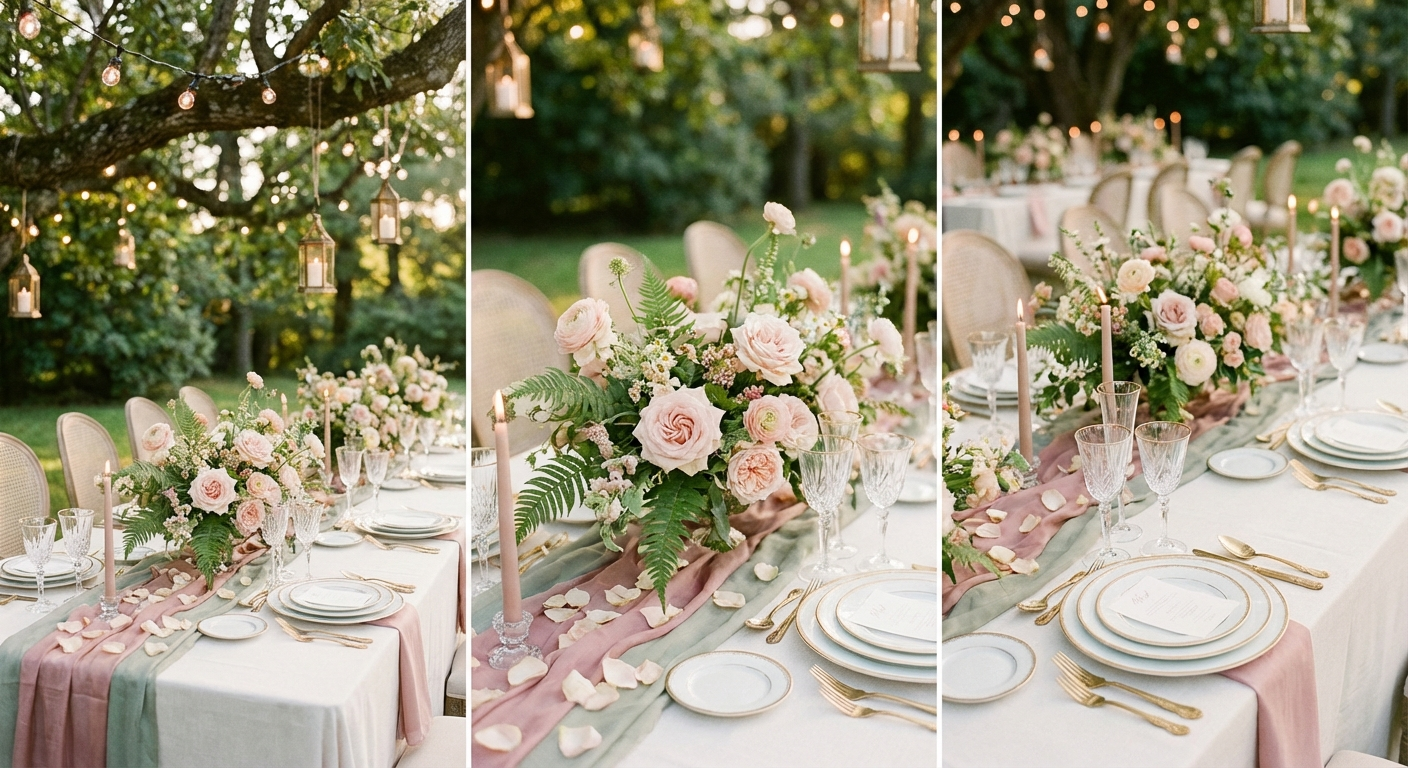
This pairing has emerged as the defining palette of spring 2026, and its popularity is well earned. Blush pink brings warmth and femininity without veering into saccharine territory, while sage green grounds the combination with an organic, botanical quality. Together they evoke an English garden at golden hour.
For your invitation suite and RSVP cards, consider sage green envelopes with blush card stock and warm gray typography. The contrast is subtle enough to feel sophisticated but distinct enough to be visually interesting. Florals in this palette shine with garden roses, ranunculus, and peonies in blush tones arranged alongside eucalyptus, dusty miller, and fern fronds. The greenery does double duty as both structural element and color contributor.
Bridesmaids in sage green dresses with blush bouquets create a soft, painterly effect in photographs. For reception design, consider sage green table runners on white linen with blush taper candles and gold flatware as your metallic accent. The combination photographs beautifully in both natural light and candlelight, which is an important consideration for celebrations that transition from afternoon ceremony to evening reception.
Lavender and Cream with Gold Accents
Lavender has cycled in and out of wedding popularity for decades, but its 2026 iteration feels distinctly modern. Paired with warm cream rather than stark white, and accented with brushed gold rather than silver, this palette strikes a balance between romantic tradition and contemporary sophistication.
The key to making lavender work in 2026 is choosing the right shade. Avoid the bright, saturated purple-lavender that dominated the early 2010s. Instead, look for dusty, muted lavender with gray undertones. This quieter version pairs beautifully with cream tones and feels organic rather than artificial.
For RSVP cards and invitations, a lavender watercolor wash behind cream card stock creates an ethereal first impression. Calligraphy in a warm bronze ink ties the metallic accent into the stationery. Floral options include lavender stems themselves, along with sweet peas, lisianthus, and pale purple clematis. Cream-colored garden roses and white peonies provide the lighter counterpoint.
Soft Peach and Ivory
Building on the Peach Fuzz Pantone influence that remains strong in 2026, this palette wraps an entire celebration in warmth. Peach is inherently flattering, both in photographs and in the way it makes skin tones glow in ambient light. Paired with ivory rather than white, the combination feels rich and dimensional.
This palette excels in stationery design. Peach envelope liners, ivory card stock, and terracotta-toned ink create an invitation suite that feels like holding a sunset. For florals, the peach spectrum is remarkably diverse: juliet roses, ranunculus, dahlias, and tulips all offer peach varieties that range from barely-there blush to deep coral-peach, allowing your florist to create arrangements with tonal movement.
Table settings in this palette benefit from textural contrast. Consider raw linen table runners in a natural oat tone, ivory ceramic plates, peach taper candles, and copper or rose gold accent pieces. The warmth of the metals reinforces the warmth of the peach tones, creating a glow that intensifies as the sun sets and candles become the primary light source.
Earth-Toned Palettes for Organic and Rustic Celebrations
Earth tones have evolved far beyond the burlap-and-mason-jar rustic aesthetic of the 2010s. In 2026, earth-inspired palettes feel refined, warm, and deeply connected to the natural world. These combinations work particularly well for vineyard weddings, barn venues with modern renovations, and outdoor celebrations in desert or mountain settings.
Terracotta and Dusty Mauve
Terracotta brings the warmth of sun-baked clay into your palette, while dusty mauve provides a soft, romantic counterpoint that prevents the combination from feeling too heavy. This pairing reads as both grounded and elegant, making it versatile across venue types from converted warehouses to garden estates.
In stationery, terracotta pairs beautifully with handmade paper textures. Consider a torn-edge invitation in warm white with terracotta hand-lettering and a dusty mauve envelope. Your RSVP card might reverse the combination, with mauve card stock and terracotta accents. Wax seals in either tone add a tactile element that reinforces the organic, artisanal quality of the palette.
Florals for this combination are showstoppers. Terracotta-toned roses, dried palm leaves, and pampas grass provide the warm earth tones, while mauve-toned scabiosa, sweet peas, and astilbe contribute the softer counterpoint. The dried and fresh flower combination is a hallmark of 2026 floral design, and this palette showcases it beautifully.
Olive Green and Champagne Gold
This Mediterranean-inspired combination feels both timeless and of-the-moment. Olive green carries more depth and sophistication than brighter greens, while champagne gold adds warmth without the ostentation of bright metallics. Together they create an atmosphere of understated luxury.
For invitations, olive green envelopes with champagne-toned inserts and dark green typography create a package that feels like it arrived from a Tuscan villa. Letterpress printing on thick cotton stock amplifies the tactile quality. Olive branches, which have appeared in wedding design for years, find their most natural home in this palette alongside white ranunculus, champagne roses, and trailing jasmine.
Reception tables in olive and champagne practically style themselves. Green glass vessels, cream linens, gold-rimmed glassware, and olive branch garlands running the length of farm tables create the kind of effortless elegance that social media algorithms reward and guests genuinely enjoy experiencing.
Warm Mushroom and Dusty Rose
This unexpected pairing is gaining significant traction in 2026. Mushroom, a warm taupe-gray, serves as a sophisticated neutral that flatters every skin tone and pairs remarkably well with dusty rose. The combination feels simultaneously modern and vintage, as though it belongs in both a contemporary art gallery and a restored Victorian greenhouse.
Stationery in mushroom and dusty rose benefits from matte finishes. The absence of gloss reinforces the organic, understated quality of both colors. Consider mushroom-toned card stock with dusty rose ink and a natural linen envelope. The effect is quiet but unmistakable.
Bridesmaids in either shade photograph beautifully. Mushroom-toned dresses with dusty rose bouquets create a portrait that feels editorial. For table design, the palette invites layering: mushroom linen napkins, rose-toned ceramic plates, taupe taper candles, and antique brass accents. Fresh flowers in dusty rose, including garden roses, carnations in their current high-fashion moment, and dried pink pepper berries, complete the picture.
Bold and Modern Palettes for Statement Celebrations
Not every spring wedding aspires to soft romance. A growing number of 2026 couples, particularly those influenced by Gen Z aesthetics and contemporary art, are choosing palettes with genuine chromatic energy. These combinations make an unapologetic statement while still maintaining the sophistication that distinguishes a wedding from a casual event.
Cobalt Blue and Citrus Yellow
This high-contrast combination is fearless and joyful. Cobalt blue provides depth and richness while citrus yellow injects an energy that is impossible to ignore. The pairing works because the two colors sit across from each other on the color wheel, creating natural visual tension that feels dynamic rather than discordant.
In stationery design, this palette benefits from generous white space. A clean white invitation with cobalt typography and a citrus yellow envelope liner creates impact through restraint. Your RSVP cards might feature a bold cobalt border with yellow accent details. The key is letting each color breathe rather than competing for attention on every piece.
Florals for this palette lean into intentional color blocking rather than mixed arrangements. Consider ceremony arrangements with dense clusters of blue delphinium, hydrangea, and thistle alongside separate arrangements of yellow ranunculus, craspedia, and forsythia branches. The separation maintains the crispness of each color rather than muddying them together.
Emerald Green and Deep Burgundy
This combination carries the richness of a Renaissance painting into a spring context. While it might seem more suited to autumn, the freshness of spring light transforms emerald and burgundy from heavy and dark to lush and vibrant. The key is using both colors at full saturation rather than muting them.
Invitation suites in this palette make an immediate impression. Deep emerald envelopes with burgundy wax seals and gold foil text on ivory card stock create a sense of occasion that sets expectations for a significant celebration. Velvet ribbon in either shade adds a textural element that reinforces the luxurious quality of the palette.
For florals, burgundy dahlias, ranunculus, and garden roses provide the warm tones while emerald foliage, including magnolia leaves, ruscus, and fern fronds, contributes the cooler element. Gold accents in candelabras, charger plates, and flatware prevent the palette from feeling too dark for a spring celebration.
Burnt Orange and Navy with Copper Accents
Burnt orange has graduated from a niche bohemian choice to a mainstream wedding color, and its partnership with navy blue creates a palette that feels both warm and authoritative. Copper metallic accents bridge the two colors, sharing warmth with the orange while complementing the depth of the navy.
This combination produces particularly striking RSVP cards and invitations. Navy card stock with burnt orange letterpress text and copper foil details creates a tactile, visually rich piece that guests are likely to display rather than discard. The dark base color makes the warmer tones appear to glow, an effect that carries through to the reception when candlelight catches copper vessels and burnt orange floral arrangements against navy table runners.
Floral designers love this palette for its versatility. Burnt orange chrysanthemums, protea, marigolds, and calla lilies provide the warm anchor, while navy is achieved through dried thistle, deep blue delphiniums, and privet berries. The combination feels abundant and celebratory, perfectly suited to a spring gathering that carries just a hint of the season transitioning toward summer warmth.
How to Carry Your Palette Through Every Element of Your Wedding
Selecting a palette is only the beginning. The real design work lies in translating those colors across the dozens of touchpoints that make up a wedding celebration. Consistency creates the immersive quality that distinguishes a beautifully designed wedding from one that merely has nice decorations.
Stationery, Invitations, and RSVP Cards
Your stationery suite is the first physical manifestation of your palette, and it sets the tone for everything that follows. The invitation, RSVP card, details card, and envelope should work together as a cohesive package while allowing each piece to feature different expressions of your chosen colors.
A common approach is to anchor one piece in your primary color and another in your secondary. For example, in a blush and sage palette, your invitation might feature sage green calligraphy on blush card stock while your RSVP card reverses the combination. Envelope color, liner pattern, and stamp selection all offer additional opportunities to reinforce the palette without repeating the same exact application.
Digital elements deserve the same attention. Your wedding website and online RSVP portal should reflect the palette established in your physical stationery. When guests move from holding your invitation to visiting your website, the color continuity creates a polished, intentional experience that builds anticipation for the celebration itself.
Florals, Venue Styling, and Table Design
Florals are where your palette becomes three-dimensional and alive. Share your color palette with your florist as early as possible, including specific references, paint swatches, fabric samples, or digital mood boards that communicate not just the colors but the tonal quality you envision. A sage green can range from silvery and cool to warm and yellow-tinged, and the distinction matters.
Venue styling should support rather than compete with your palette. If your chosen colors are soft and muted, avoid venues with strong competing color elements like bright red carpet or intensely colored walls. When possible, visit your venue at the time of day your celebration will take place. Natural light at noon produces very different color rendering than golden hour light at sunset, and both are dramatically different from candlelight.
Table design is where the palette reaches its most detailed expression. Linens, napkins, plates, chargers, glassware, candles, and centerpieces each contribute to the overall color story. The most sophisticated table designs use the neutral component of the palette for the largest surfaces, like tablecloths and plates, and reserve the primary and accent colors for smaller elements where they create punctuation rather than overwhelm.
Attire, Accessories, and Personal Details
Bridesmaid dresses are the most visible application of your palette in photographs, and the trend in 2026 continues to favor either a unified color in varied dress styles or a tonal range within the same color family. Both approaches work with any of the palettes discussed here. The tonal range approach, where bridesmaids wear different shades from blush to mauve or sage to forest, adds depth and visual interest to group photographs.
Personal details offer opportunities for palette expression that guests may not consciously notice but that contribute to the overall sense of intentionality. Consider your palette when selecting shoes, jewelry, pocket squares, boutonnieres, hair accessories, and even the ribbon on your bouquet. These small touches, visible in close-up photographs and appreciated by detail-oriented guests, demonstrate the comprehensive design thinking that elevates a wedding from pretty to truly remarkable.
Even your wedding favors and departure details can reinforce the palette. Custom packaging in your colors, ribbon in a palette shade, or a departure vehicle adorned with florals that match your ceremony arrangements create continuity from the first moment to the last.
Common Color Palette Mistakes and How to Avoid Them
The most frequent palette mistake is choosing colors based solely on how they appear on a screen. Digital displays render color differently than fabric, paper, flowers, and lighting. Always verify your palette against physical samples in the lighting conditions where they will be seen. Order fabric swatches, request paper samples from your stationer, and if possible, view floral varieties in person rather than relying on photographs.
Another common error is applying your palette too uniformly. If every element is exactly the same shade of blush and exactly the same shade of sage, the result feels flat and manufactured. Allow for tonal variation within your palette. A range of blush tones from barely pink to deep rose creates depth, while a sage that ranges from silvery to warm olive produces visual richness. Instruct your vendors to interpret your palette rather than match it precisely.
Overcomplicating the palette is equally problematic. While layered palettes are trending, adding too many distinct colors creates visual noise. Limit your palette to two primary colors, one neutral base, and one metallic or textural accent. Everything else should be a tonal variation of those core elements rather than an additional color.
Finally, do not forget to consider your photography style when selecting colors. If your photographer shoots in a warm, film-inspired style, cool-toned palettes may shift in unexpected ways. If your photographer favors bright, true-to-life editing, highly saturated colors will maintain their intensity. Request sample galleries from your photographer and evaluate how your chosen colors would render in their specific editing style.
Spring Flower Availability by Color for 2026 Weddings
Understanding what blooms are naturally available in spring helps you select a palette that your florist can execute affordably and beautifully. While modern supply chains make most flowers available year-round, in-season blooms are fresher, more affordable, and more sustainably sourced.
Pink and blush tones peak in spring with peonies, garden roses, ranunculus, tulips, sweet peas, and cherry blossoms. Lavender and purple options include lilac, wisteria, clematis, sweet peas, and iris. Green tones are available in hellebore, viburnum, lady's mantle, and the full range of eucalyptus and fern varieties. For warmer tones, spring offers parrot tulips in peach and coral, ranunculus in terracotta, and the first dahlias of the growing season.
Yellow and citrus tones are abundant in spring thanks to daffodils, forsythia, mimosa, craspedia, and yellow ranunculus. Blue remains the most challenging color in natural flowers, though delphinium, hyacinth, muscari, and cornflower provide genuine blue options. Deep burgundy and red are achievable with ranunculus, anemones, and garden roses.
Work with your florist to identify which specific varieties peak during your wedding month. A palette built around in-season blooms will not only save money but will result in arrangements that look effortlessly lush because the flowers are at their natural best.
Your spring wedding color palette is far more than an aesthetic choice. It is the visual language of your celebration, the thread that connects every element from the first save-the-date to the last sparkler exit. The palettes defining 2026 share a common quality: they feel organic, layered, and personal rather than prescribed.
As you evaluate the twelve combinations presented here, consider not just which colors you find beautiful but which ones reflect how you want your celebration to feel. A palette should tell your story, complement your venue, flatter your wedding party, and photograph beautifully across the changing light of your wedding day. When you find the right one, every subsequent decision becomes clearer, easier, and more exciting.
Begin by ordering physical samples of your top two or three palette options. Hold fabric swatches next to paper samples next to floral photographs in natural light. Share your finalists with your photographer, florist, and stationer for professional input. The right palette will feel instinctive, and once you see it materialize in physical form, you will know it is the one.