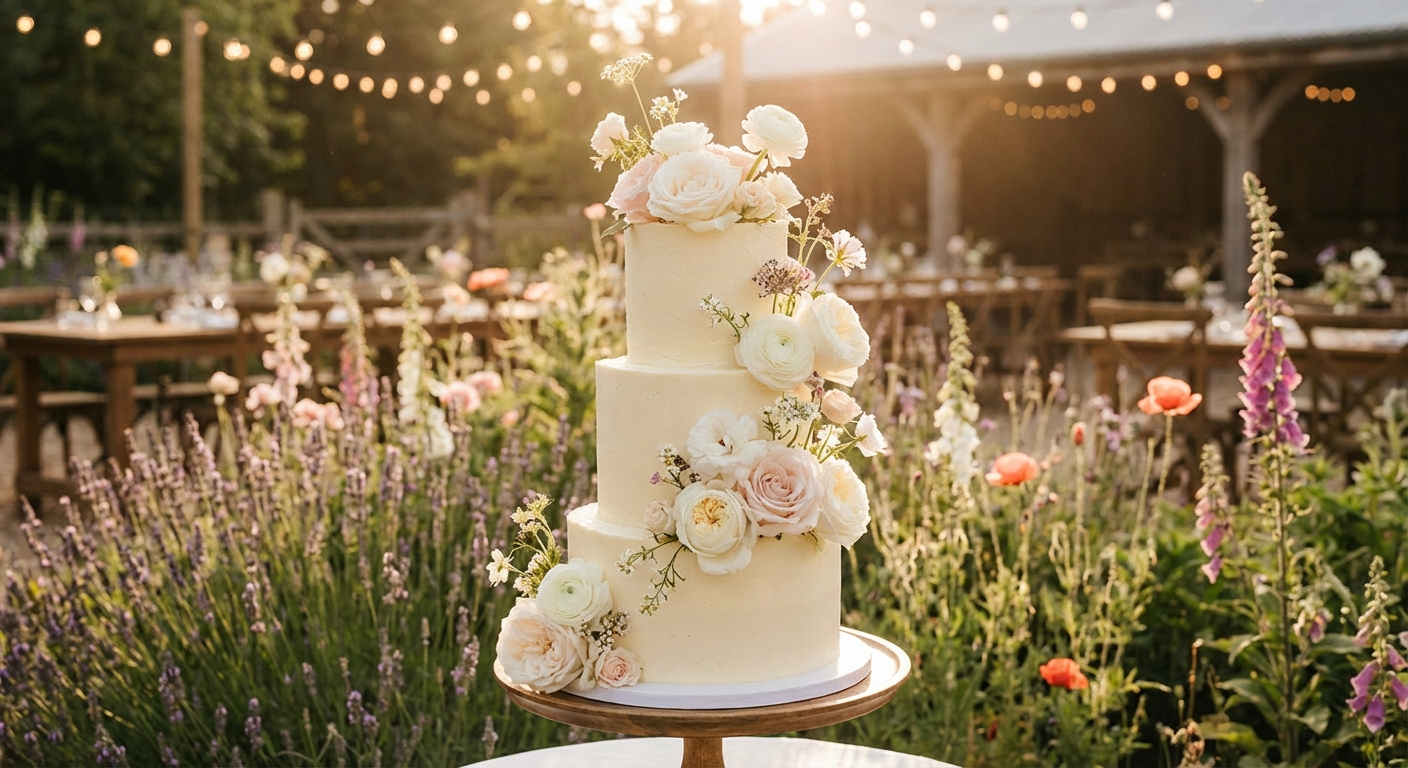
Every few years, a single wedding design element captures the collective imagination so completely that it redefines what couples expect from their reception. In 2026, that element is the cake meadow. The concept is deceptively simple: instead of displaying your wedding cake on a standard table with a linen and a few scattered petals, you place it on a low pedestal at or near ground level and surround it with a dense, organic floral installation designed to look like the cake is sitting in the middle of a wildflower garden.
The result is one of the most photogenic moments a wedding reception can produce. The cake appears to emerge from a sea of blooms, greenery, and trailing vines, creating a fairy-tale tableau that stops guests in their tracks and dominates social media feeds. The Knot's 2026 trend report identified cake meadows as a breakout reception element, and wedding florists across the country report a surge in requests that shows no sign of slowing down.
But a cake meadow is not just a pile of flowers around a cake. Executing one well requires coordination between your baker, your florist, and your venue, along with an understanding of structural, food-safety, and logistical details that most inspiration photos do not mention. This guide covers everything you need to know to plan a cake meadow that looks as stunning in person as it does on your Pinterest board.
What Exactly Is a Cake Meadow and Where Did It Come From
A cake meadow is a dessert display technique that positions the wedding cake at a low height, typically on a pedestal between six and eighteen inches off the ground, and surrounds it on all sides with a dense floral arrangement designed to mimic a natural garden or meadow. The flowers extend outward from the base of the cake in a roughly circular formation, usually three to five feet in diameter, creating the illusion that the cake is growing organically from the landscape rather than sitting on a piece of furniture.
The trend has roots in the broader movement toward organic, garden-inspired wedding design that has been building since the early 2020s. As couples moved away from the rigid symmetry and architectural precision of earlier wedding aesthetics, they embraced looser, more naturalistic approaches to florals and decor. The cake meadow is the logical extension of that philosophy applied to the dessert display, a space that had remained largely unchanged for decades while every other element of the reception evolved.
The earliest examples appeared at high-end editorial weddings in late 2024 and early 2025, where adventurous florists experimented with ground-level installations that enveloped the cake in greenery. By mid-2025, the concept had filtered into mainstream wedding media, and by early 2026, it had become one of the most requested design elements at floral consultations nationwide. The speed of adoption reflects both the visual power of the concept and the relatively accessible price point compared to other high-impact design choices like full ceiling installations or custom lighting rigs.
Which Cake Styles Look Best in a Meadow Setting
Not every cake design translates well to the meadow format. The surrounding floral installation creates a rich, textured, organic frame, and the cake needs to either complement that aesthetic or provide deliberate contrast. Understanding which styles work and which clash helps you and your baker make decisions that serve the overall vision.
Naked and semi-naked cakes are the most natural partners for a meadow display. Their exposed layers, rustic frosting, and visible cake texture echo the organic, unpolished quality of the surrounding flowers. A three-tier naked cake with fresh berry accents, placed on a simple wooden slice and surrounded by wildflowers and trailing ivy, creates a cohesive scene that looks effortlessly beautiful. The informality of the cake matches the informality of the ground-level presentation, and the overall effect reads as intentional rather than mismatched.
Buttercream cakes with pressed or applied fresh flowers work exceptionally well because they create visual continuity between the cake surface and the meadow. When the same flower varieties appear both on the cake and in the surrounding arrangement, the boundary between cake and garden blurs in a way that amplifies the magical quality of the display. Coordinate with your florist and baker to select shared botanicals, keeping in mind that only food-safe flowers should touch the cake directly.
Clean, modern fondant cakes offer a striking contrast approach. A perfectly smooth white or ivory cake with minimal decoration becomes a sculptural focal point rising from the organic chaos of the meadow. This juxtaposition of precision and wildness creates visual tension that can be more arresting than a cake that blends seamlessly with its surroundings. The contrast approach works particularly well for couples whose overall aesthetic leans contemporary but who want the meadow element as a single romantic gesture within a more structured design.
Heavily decorated cakes with elaborate sugar flowers, multiple metallic tiers, or busy piping patterns tend to compete with the meadow rather than complement it. The visual density of the cake fights with the visual density of the flowers, and neither element gets the attention it deserves. If your heart is set on a maximalist cake, consider a modified meadow with lower, simpler greenery that frames the cake without overwhelming it.
Working with Your Florist to Design the Meadow
The floral installation is the heart of the cake meadow, and the design conversation with your florist deserves more time and specificity than a typical centerpiece discussion. Unlike arrangements that sit on tables with defined edges, a meadow installation occupies open floor space and needs to look intentionally wild rather than accidentally messy. The difference between the two is entirely in the planning.
Start the conversation with your overall wedding palette and the specific mood you want the meadow to evoke. A cottage garden meadow with roses, ranunculus, sweet peas, and trailing jasmine creates a romantic, English-countryside feel. A wildflower meadow with cosmos, daisies, dried grasses, and Queen Anne's lace reads as bohemian and free-spirited. A modern meadow with monochromatic white blooms, sculptural branches, and architectural greenery achieves elegance without sacrificing the organic quality of the format.
Discuss the footprint early. A meadow that extends three feet from the cake base in all directions creates a roughly six-foot-diameter installation that makes a strong visual statement without dominating the room. Going larger, up to eight or ten feet in diameter, creates a showstopping centerpiece that can serve as the focal point of the entire reception space. Going smaller risks looking like a conventional cake table with extra flowers rather than a true meadow installation.
Height variation within the meadow is what separates professional results from amateur attempts. A flat ring of flowers at a uniform height reads as a wreath laid on the ground. A properly designed meadow includes low groundcover elements, medium-height blooms, and taller accent stems that create the layered, dimensional quality of an actual garden. Grasses, ferns, and trailing elements like clematis or smilax add movement and prevent the arrangement from looking static.
Your florist should also plan the installation in sections rather than as a single unit. Assembling the meadow on-site around the cake pedestal, working outward from the center, allows for precise placement and adjustment. Most professional florists build the base layer of greenery first, then add focal blooms, then finish with accent elements and trailing details. This layered approach produces the most natural-looking result and allows the florist to adjust density and height in real time.
Structural Requirements and Food Safety Considerations
A cake meadow introduces structural and food safety considerations that do not exist with a traditional elevated cake table. Addressing these details during the planning phase prevents problems that are difficult or impossible to fix on the wedding day.
The pedestal or platform that supports the cake must be absolutely level and stable. Because the surrounding flowers hide the base from view, guests and even the couple may not realize the cake is sitting on a low platform rather than a table. Any wobble or tilt risks the cake sliding or collapsing, and at ground level, there is no clearance to catch a tipping tier. Use a solid, flat-topped pedestal made from wood, stone, or sturdy acrylic rather than a decorative column that might shift under the cake's weight. Your baker can advise on the minimum platform dimensions based on the cake size and tier count.
Food safety requires careful attention to the boundary between decorative flowers and the edible cake. Not all flowers are food-safe, and even food-safe varieties may have been treated with pesticides or preservatives that should not contact a cake surface. Establish a clear physical separation between the floral installation and the cake itself. A ring of food-safe greenery, such as lemon leaf or salal, can serve as a buffer zone between the decorative meadow and the cake base, preventing accidental contact while maintaining the seamless visual effect.
Temperature and timing matter more at ground level than on a raised table. Heat rises, which means the floor level of a venue is typically cooler than tabletop height, a potential advantage for buttercream cakes in warm conditions. However, ground-level placement also increases exposure to foot traffic, accidental kicks, curious children, and pets if the venue allows them. Position the meadow in a protected area of the reception space, ideally against a wall or in a corner where it is visible but not in a traffic path. Consider a low decorative barrier, such as a ring of lanterns or candles, that signals guests to admire from a short distance.
Discuss the cutting logistics with your caterer before the wedding day. Cutting a cake at ground level is awkward for most people, and your caterer may need to lift the cake onto a prep table before slicing. Plan the transition so it happens smoothly and does not require dismantling the floral installation in front of guests. Some couples choose to do the ceremonial cake cutting at the meadow for photos, then have the caterer remove the cake to a back-of-house area for actual slicing and plating.
What a Cake Meadow Costs and How to Budget for One
The cost of a cake meadow varies significantly based on the size of the installation, the flower varieties chosen, and your region's floral pricing. Understanding the cost components helps you budget accurately and identify areas where you can adjust without compromising the overall effect.
The floral installation itself typically ranges from eight hundred to twenty-five hundred dollars for a standard three-to-five-foot-diameter meadow using a mix of seasonal flowers and greenery. Premium blooms like garden roses, peonies, and ranunculus push costs toward the higher end, while seasonal wildflowers, dahlias, and locally grown varieties can achieve a beautiful result closer to the lower range. Dried elements, grasses, and foraged greenery can reduce costs further while adding textural variety that enhances the natural aesthetic.
The pedestal or platform adds fifty to three hundred dollars depending on whether you use a simple wooden round, a rented stone slab, or a custom-built acrylic platform. Many florists include a basic pedestal in their installation price, so ask before purchasing one separately.
Setup labor for a cake meadow typically requires thirty to sixty minutes of on-site work by your florist or a member of their team, which may be included in the installation fee or charged separately at fifty to one hundred dollars per hour. The installation should happen after the cake is placed and stable, which means coordinating delivery timing between your baker and florist.
In total, expect a cake meadow to add one thousand to three thousand dollars to your reception budget, depending on your choices. For context, this is roughly equivalent to what many couples spend on a photobooth rental or a late-night food station, making it a competitive option among high-impact reception upgrades. Couples looking to minimize costs should focus on seasonal flower selection, moderate the footprint to three feet in diameter, and use abundant greenery to fill volume without the per-stem cost of premium blooms.
How to Photograph a Cake Meadow for Maximum Impact
A cake meadow is one of the most photogenic elements you can add to your reception, but capturing it well requires some planning with your photographer. The low placement and surrounding florals create opportunities for angles and compositions that standard cake photos cannot achieve.
The most iconic cake meadow shot is the low-angle perspective taken from ground level, looking slightly upward at the cake rising from the flowers. This angle emphasizes the height of the cake against the lush meadow and creates a dreamy, almost miniature-world quality. Your photographer should plan to get on the ground for this shot, ideally during a quiet moment before guests arrive or during a planned break in the reception schedule.
Overhead shots from directly above capture the full circular footprint of the meadow and show the relationship between the cake and the surrounding flowers in a way that ground-level shots cannot. If your venue has a balcony, mezzanine, or second-floor vantage point, flag it for your photographer during the venue walkthrough. Drone photography also produces stunning overhead cake meadow images at outdoor receptions.
Detail shots that focus on the transition between cake and flowers, where frosting meets petals and the boundary between dessert and garden dissolves, are the images most likely to be shared and saved on social media. These require a macro or close-up lens and benefit from soft, directional lighting that highlights the texture of both the cake surface and the flower petals.
Timing the photos matters. The meadow looks freshest in the first hour after installation, before the heat of the room and the natural wilting cycle begin to affect the flowers. Schedule your photographer to capture dedicated cake meadow shots as soon as the installation is complete, even if the reception has not yet started. You can always take additional candid shots during the cake cutting later, but the pristine detail shots need to happen early.
Which Venues Work Best for Cake Meadows
While a cake meadow can theoretically work in any reception space, certain venue types amplify the effect while others create logistical challenges that diminish it. Choosing the right placement within your venue is as important as the floral design itself.
Garden and outdoor venues are the most natural setting for a cake meadow because the installation extends the existing landscape into the reception space. A cake meadow placed on a stone patio adjacent to a garden, or on a level patch of lawn under a tree canopy, blurs the line between designed arrangement and natural environment in a way that indoor venues cannot fully replicate. The ambient greenery and natural light enhance the meadow effect without additional effort.
Barn and rustic venues provide warm, textured backdrops that complement the organic quality of the meadow. The contrast between rough wood walls and delicate flowers creates visual interest, and the typically generous floor space of barn venues accommodates larger installations without crowding the room. Position the meadow where it catches natural light from doors or windows if possible.
Modern loft and gallery spaces work well with the contrast approach, where a lush, organic meadow provides a striking counterpoint to clean lines and minimal architecture. In these settings, the meadow becomes the statement piece of the room precisely because it differs so dramatically from the surrounding environment.
Venues with carpeted floors or uneven surfaces require extra preparation. The pedestal must sit perfectly level, and the floral installation needs a protective base layer to prevent moisture damage to carpeting. A clear plastic sheet beneath the greenery layer, invisible once the installation is complete, protects the venue floor and makes cleanup significantly easier. Discuss floor protection requirements with both your florist and your venue coordinator before finalizing the plan.
Frequently Asked Questions About Wedding Cake Meadows
Will the Cake Melt or the Flowers Wilt in Outdoor Heat?
Both are legitimate concerns for outdoor installations. Buttercream cakes begin to soften above seventy-five degrees Fahrenheit, and most fresh flowers wilt faster in direct sun and heat. If your reception is outdoors in warm weather, position the meadow in shade, use a fondant-covered cake that handles heat better, and have your florist select heat-tolerant varieties like succulents, protea, and tropical greenery. Time the installation as close to the reception start as possible to minimize exposure, and plan to cut the cake within the first ninety minutes.
Is There a Maximum Cake Size That Works in a Meadow?
Cakes up to five tiers work well in meadow installations, though the pedestal requirements increase significantly above three tiers. The key is proportionality: the meadow should extend at least as far from the cake base as the cake is tall. A four-foot-tall, five-tier cake surrounded by a two-foot-diameter ring of flowers looks perched rather than nestled. That same cake with a five-to-six-foot meadow diameter achieves the immersive, garden-grown effect that defines the trend.
Can I Combine a Cake Meadow with a Dessert Table?
Yes, and many couples do. The most effective approach positions the cake meadow as the centerpiece of a broader dessert area, with a traditional-height dessert table nearby holding cupcakes, macarons, or other sweets. The contrast between the elevated dessert table and the ground-level cake meadow creates visual dynamism and gives guests two distinct experiences within the same area. Avoid placing dessert items within the meadow itself, as it complicates both food safety and the clean visual effect of the floral installation.
Can I Create a Cake Meadow Without a Professional Florist?
A simplified version is achievable for confident DIY planners, though the results typically lack the layered dimensionality that professional florists achieve. Start with a stable low pedestal, lay a base of greenery such as eucalyptus or fern, then add grocery-store flowers in graduated heights around the base. Trailing ivy or similar vines soften the edges and hide the mechanics. The key is density: a meadow that looks sparse reads as a failed arrangement rather than a wild garden. Budget extra flowers beyond what you think you need, and practice the assembly at least once before the wedding day.
How Is the Meadow Cleaned Up After the Reception?
Most florists include breakdown in their installation fee. The process takes fifteen to twenty minutes and involves removing the flowers in reverse order of installation, starting with accent elements and ending with the greenery base. The pedestal and any protective floor covering are removed last. If your venue has a strict end-of-event timeline, schedule the cake cutting and meadow breakdown early enough that your florist can clear the installation before the venue's cleanup deadline.
The cake meadow is one of those rare wedding trends that delivers on every front. It is visually spectacular, photographs beautifully, creates a genuine moment of surprise and delight for guests, and can be executed at a range of budgets from modest to lavish. Unlike some design trends that require a complete aesthetic overhaul to incorporate, a cake meadow works as a standalone statement piece within almost any reception style.
The practical considerations are real but manageable. Coordinating between your baker and florist, choosing a stable and level display surface, respecting food safety boundaries, and planning for photography timing and cake cutting logistics all require advance planning. None of them are difficult once you know what to ask and whom to ask it of.
If your 2026 wedding reception needs a single element that will make guests pause, pull out their phones, and remember your celebration as the one with that incredible cake display, the meadow delivers. It transforms a functional moment, presenting the wedding cake, into an emotional one. And in a year where couples are investing more thoughtfully in fewer, higher-impact design choices, the cake meadow earns its place as one of the smartest investments you can make.