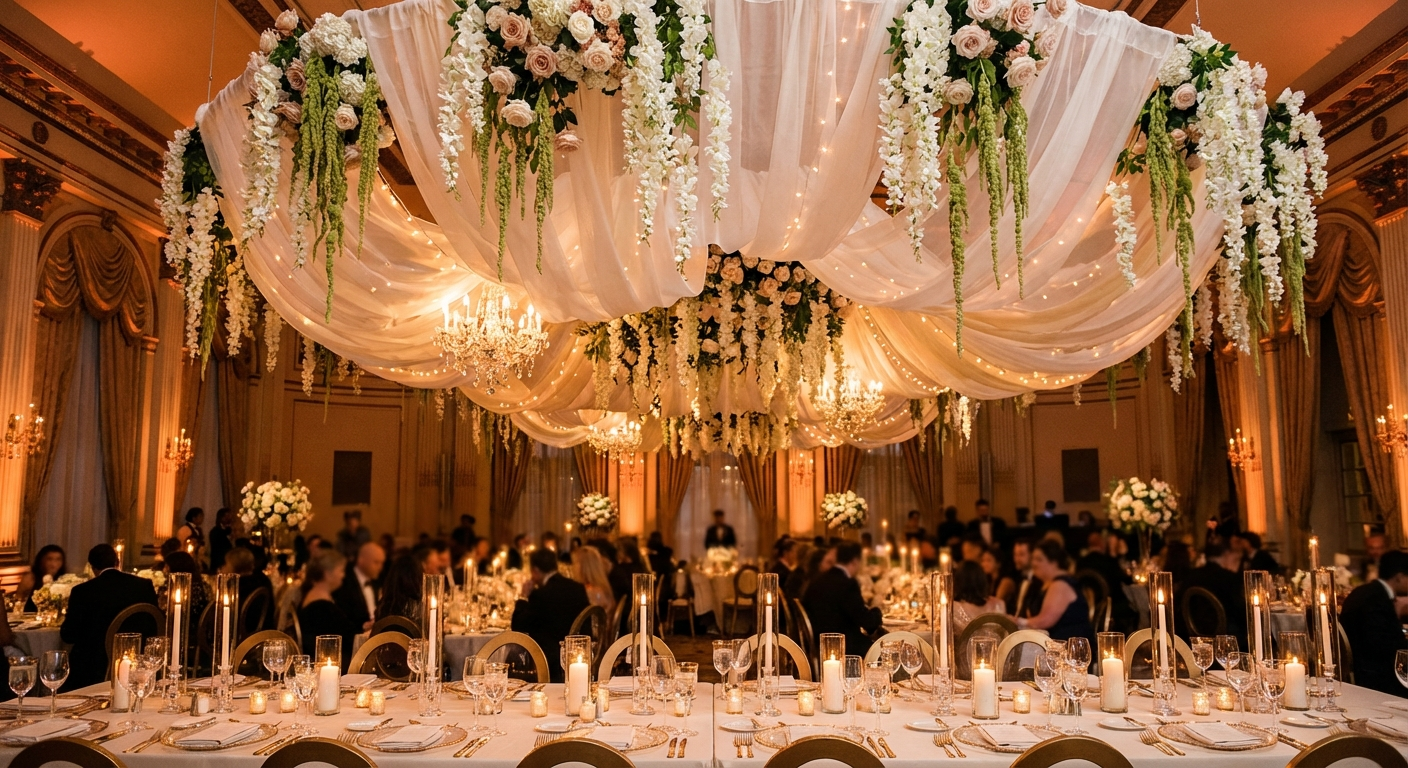
For years, wedding decor focused on what guests could see at eye level: the centerpieces, the table linens, the ceremony arch. The ceiling was an afterthought, a blank expanse of plaster or tent fabric that nobody thought to design. That era is over. In 2026, the ceiling has become the main character in wedding event design, and the results are nothing short of transformative.
Top wedding planners across the globe are reporting a surge in requests for overhead installations that turn reception spaces into immersive environments. Hanging gardens that cascade from rafters. Geometric structures wrapped in greenery. Thousands of suspended candles creating a galaxy of warm light above the dance floor. These installations do not just decorate a room. They redefine it entirely, altering how guests perceive the space, the atmosphere, and the scale of the celebration.
Whether you are planning an intimate dinner for forty or a grand reception for three hundred, the ceiling offers design real estate that most couples overlook. This guide covers everything you need to know about incorporating ceiling decor into your 2026 wedding, from choosing the right installation type to managing logistics, budgets, and vendor coordination.
Why Ceiling Decor Is Dominating Wedding Design in 2026
The rise of ceiling-focused wedding design reflects several converging trends in the event industry. Social media has trained couples to think about their wedding from every angle, including above. Drone photography and wide-angle shots captured from elevated positions have made overhead installations some of the most shared and admired images on wedding platforms. A stunning ceiling installation photographs beautifully from multiple perspectives and gives your event a signature visual identity that centerpieces alone cannot achieve.
There is also a practical dimension. As intimate weddings continue to grow in popularity, couples are investing more per guest in the overall experience. Smaller guest counts free up budget that might otherwise go toward feeding two hundred people, and that surplus increasingly flows into design elements that transform a space. Ceiling installations deliver an outsized visual impact relative to their footprint. They fill the vertical dimension of a room without consuming valuable floor space, making them ideal for venues where square footage is limited.
The influence of immersive dining experiences and experiential art installations has also shaped expectations. Couples who have dined beneath living canopies of flowers at trendy restaurants or walked through illuminated art exhibits want their wedding to evoke that same sense of wonder. The ceiling is where that magic happens. It creates atmosphere that wraps around guests rather than sitting passively on tables in front of them.
Types of Wedding Ceiling Installations
The range of ceiling decor options has expanded dramatically as florists, lighting designers, and event fabricators push creative boundaries. Understanding the major categories helps you narrow your vision and communicate effectively with vendors.
Cascading Floral Installations
Floral ceiling installations are the most popular and visually dramatic option in 2026. These range from a single statement piece suspended above the head table to full-ceiling gardens that cover the entire reception space with blooms, trailing greenery, and organic textures. The best floral ceiling designs create a sense of abundance without feeling heavy. They use a mix of large focal flowers, trailing vines, and airy fillers to build depth and movement. Baby's breath clouds remain popular for their ethereal quality, while lush tropical installations featuring orchids, anthuriums, and monstera leaves bring bold personality to modern celebrations. Dried flower and pampas grass installations offer a warm, textured alternative that costs less and can be assembled further in advance.
Fabric Draping and Canopy Designs
Fabric draping transforms the geometry of any ceiling, softening industrial spaces, adding warmth to stark modern venues, and creating intimacy in rooms with very high ceilings. Sheer fabrics like chiffon and organza filter light beautifully, casting a soft glow across the room. Heavier fabrics like velvet and silk create a more luxurious, cocoon-like atmosphere. The trend in 2026 is layering multiple fabric types and colors to create dimensional overhead landscapes. Think a base layer of soft ivory chiffon with gathered swags of dusty rose silk and tendrils of raw linen. The effect is romantic without being predictable.
Suspended Lighting Installations
Lighting installations turn the ceiling into a living element that shifts in mood throughout the evening. Clusters of Edison bulbs at varying heights create a warm, industrial-romantic atmosphere. Chandeliers grouped in asymmetric arrangements add grandeur without the formality of a single fixture. Candle installations using suspended taper candles in glass holders create an unforgettable floating flame effect that draws audible gasps from guests. LED installations offer color-changing capabilities that can match your palette during dinner and shift to energetic tones when dancing begins. The most impactful lighting installations combine multiple light sources at different levels to create a layered, three-dimensional glow.
Geometric and Sculptural Structures
For couples drawn to modern aesthetics, geometric ceiling installations offer clean lines and architectural interest. Metal frames in circular, hexagonal, or irregular organic shapes serve as armatures for greenery, flowers, or lighting. These structures can be powder-coated in gold, matte black, copper, or white to match your color palette. The beauty of geometric installations is their versatility. A single large ring suspended above the dance floor creates a dramatic focal point with relatively simple logistics. Multiple smaller structures at varying heights create a kinetic, gallery-like atmosphere. Some couples commission custom shapes that hold personal meaning, from constellations to interlinked rings.
How to Choose the Right Ceiling Installation for Your Venue
The most important factor in ceiling decor is the venue itself. Not every installation works in every space, and the wrong choice can overwhelm a room or, worse, prove structurally impossible to execute. Start by assessing three things: ceiling height, structural capacity, and the existing aesthetic of the space.
Ceiling height determines the visual impact and the types of installations that work. Low ceilings under three meters benefit from flat or shallow installations like fabric canopies, greenery garlands, or flush-mounted lighting. These treatments add visual interest without making the space feel cramped. Medium-height ceilings between three and five meters are the sweet spot for most installations, offering enough vertical space for cascading elements while keeping the design within an intimate range. High ceilings above five meters can support the most dramatic installations, including full hanging gardens and multi-level lighting rigs, but they also require larger-scale designs to avoid looking lost in the vertical expanse.
Structural capacity is non-negotiable. Every venue has load-bearing limits, and ceiling installations can be surprisingly heavy. A full floral installation can weigh several hundred kilograms. Your vendor needs to assess the rigging points, weight capacity, and attachment options well before the wedding day. Purpose-built event venues typically have rigging infrastructure already in place. Historic buildings, restaurants, and non-traditional venues may require creative engineering solutions or limit you to lighter installations.
Finally, consider the existing aesthetic. A rustic barn with exposed wooden beams calls for organic installations that complement the natural materials. A sleek modern gallery with clean white walls and concrete floors suits geometric structures and statement lighting. A grand ballroom with ornate moldings and crystal chandeliers may need only strategic additions rather than a complete overhead transformation. The best ceiling decor enhances what is already there rather than fighting against it.
Budgeting for Wedding Ceiling Installations
Ceiling installations represent a significant investment, and understanding the cost landscape helps you plan realistically. Prices vary enormously based on the type of installation, the scale, the materials, and the complexity of the rigging.
Fabric draping is generally the most budget-friendly option, ranging from $500 to $3,000 for a full ceiling treatment depending on the fabric quality and the size of the space. Simple swag draping at the lower end can still transform a room dramatically.
Lighting installations range from $1,000 for a curated arrangement of string lights and Edison bulbs to $10,000 or more for custom-designed chandelier clusters with dimming controls and color capabilities. Rental options for high-end lighting can reduce costs significantly compared to purchasing.
Floral ceiling installations carry the widest price range. A single statement piece above the head table might cost $1,500 to $4,000. A full-ceiling floral canopy covering an entire reception space can reach $15,000 to $30,000 or more depending on the flowers chosen, the density of the design, and the labor involved in installation and breakdown.
Geometric and sculptural installations typically fall between $2,000 and $8,000 for custom metalwork, with additional costs for any floral or lighting elements integrated into the structure. Many event rental companies now stock geometric frames that can be rented for a fraction of the custom fabrication cost.
To manage costs without sacrificing impact, consider concentrating your installation over one key area, such as the dance floor or head table, rather than covering the entire ceiling. A single breathtaking focal point often creates more visual drama than a modest treatment spread across the whole room.
DIY Ceiling Decor vs. Hiring a Professional
The appeal of DIY ceiling decor is understandable. Materials for simple installations like string lights, paper lanterns, or ribbon streamers are inexpensive and widely available. However, ceiling work introduces safety and logistical considerations that are fundamentally different from ground-level decor.
Working at height requires proper equipment. Ladders, scaffolding, and lifts add time and risk that most couples do not account for. Rigging heavy elements above a space where guests will gather demands structural knowledge and proper hardware. A floral installation that falls during a reception is not just embarrassing. It is dangerous.
DIY approaches work well for lightweight, low-risk installations. Paper lanterns and honeycomb balls suspended from fishing line. Ribbon or fabric streamers attached to existing hooks. Battery-operated fairy lights draped across exposed beams. These are manageable projects for a dedicated team with a day of setup time.
For anything involving significant weight, electrical work, or complex rigging, hire a professional. Event designers and florists who specialize in installations have the equipment, the insurance, and the experience to execute safely. They also handle teardown, which is a major consideration. Most venues require all decor to be removed within a strict window after the event, and dismantling a ceiling installation is considerably harder than putting it up.
Logistics and Planning Timeline
Ceiling installations require more advance planning than almost any other wedding decor element. The timeline below helps you stay on track.
Six to eight months before the wedding, discuss your ceiling decor vision with your venue coordinator and your florist or event designer. Confirm that the venue permits overhead installations and establish the structural limitations. Book your installation vendor during this period, as top designers fill their calendars quickly for peak wedding season.
Three to four months out, finalize the design, materials, and color palette. If fresh flowers are involved, your florist needs to confirm seasonal availability and potentially source specific varieties in advance. Approve the rigging plan and confirm all safety requirements with the venue.
One month before, conduct a site visit with your installation vendor. Walk through the setup timeline, access requirements, and any coordination needed with other vendors such as lighting, audio, and catering teams. Confirm the breakdown schedule and ensure it aligns with your venue contract.
On the wedding day, ceiling installations are typically among the first elements installed, often requiring four to eight hours depending on complexity. Plan your vendor access schedule accordingly and ensure the installation team has clear access before table settings, chair arrangements, and other ground-level decor begin.
Frequently Asked Questions About Wedding Ceiling Decor
Can You Do Ceiling Installations in Outdoor or Tent Weddings?
Absolutely. Tent weddings are actually ideal for ceiling installations because the tent structure provides built-in rigging points. Sailcloth tents with their translucent fabric and wooden poles are particularly popular canvases for floral and lighting installations. For outdoor weddings without a tent, consider installations suspended from existing structures like pergolas, trees, or custom-built frames. Wind and weather exposure require lighter materials and more secure attachment methods than indoor installations.
What Is the Minimum Ceiling Height for a Hanging Installation?
A minimum ceiling height of three meters is generally recommended for hanging installations to ensure guests can move comfortably beneath them without feeling crowded. For installations with cascading elements like trailing florals or suspended candles, you may need three and a half to four meters of clearance to allow the design to hang properly while maintaining headroom. Rooms with lower ceilings can still incorporate flat treatments like fabric draping or flush-mounted greenery garlands.
Will Ceiling Installations Damage the Venue?
Professional installation teams use methods designed to avoid damage, including clamps that attach to exposed beams, temporary rigging points secured with counterweights, and adhesive hooks rated for the appropriate weight. Always discuss attachment methods with both your vendor and your venue coordinator before the wedding day. Some venues prohibit any ceiling attachments and require freestanding structures instead, which is why early communication is essential. Reputable vendors carry liability insurance that covers any accidental damage during installation or removal.
How Does Guest Count Affect Ceiling Decor Planning?
Your guest count directly influences the scale and budget of ceiling installations. Smaller weddings with fewer than fifty guests can focus the installation over a single area, creating an intimate canopy effect above the dining space. Larger weddings may need to extend the installation across a broader area or create multiple focal points to ensure the design has proportional impact. Accurate RSVP tracking is essential for finalizing your floor plan, which in turn determines the footprint and scale of your ceiling installation. A reliable digital RSVP system helps you lock in your guest count early enough to finalize the design with your vendor.
The ceiling is no longer the forgotten surface of wedding design. In 2026, it has become the canvas where the most memorable transformations happen. Whether you choose a lush garden of suspended flowers, a canopy of soft fabric and warm light, or a bold geometric sculpture that redefines the architecture of your venue, the overhead space offers design possibilities that ground-level decor simply cannot match.
Start planning your ceiling installation early, communicate clearly with your venue about structural requirements, and invest in a professional who understands the engineering and artistry involved. The reward is a reception space that envelops your guests in beauty from every angle, creating the kind of immersive atmosphere that lingers in memory long after the last dance.