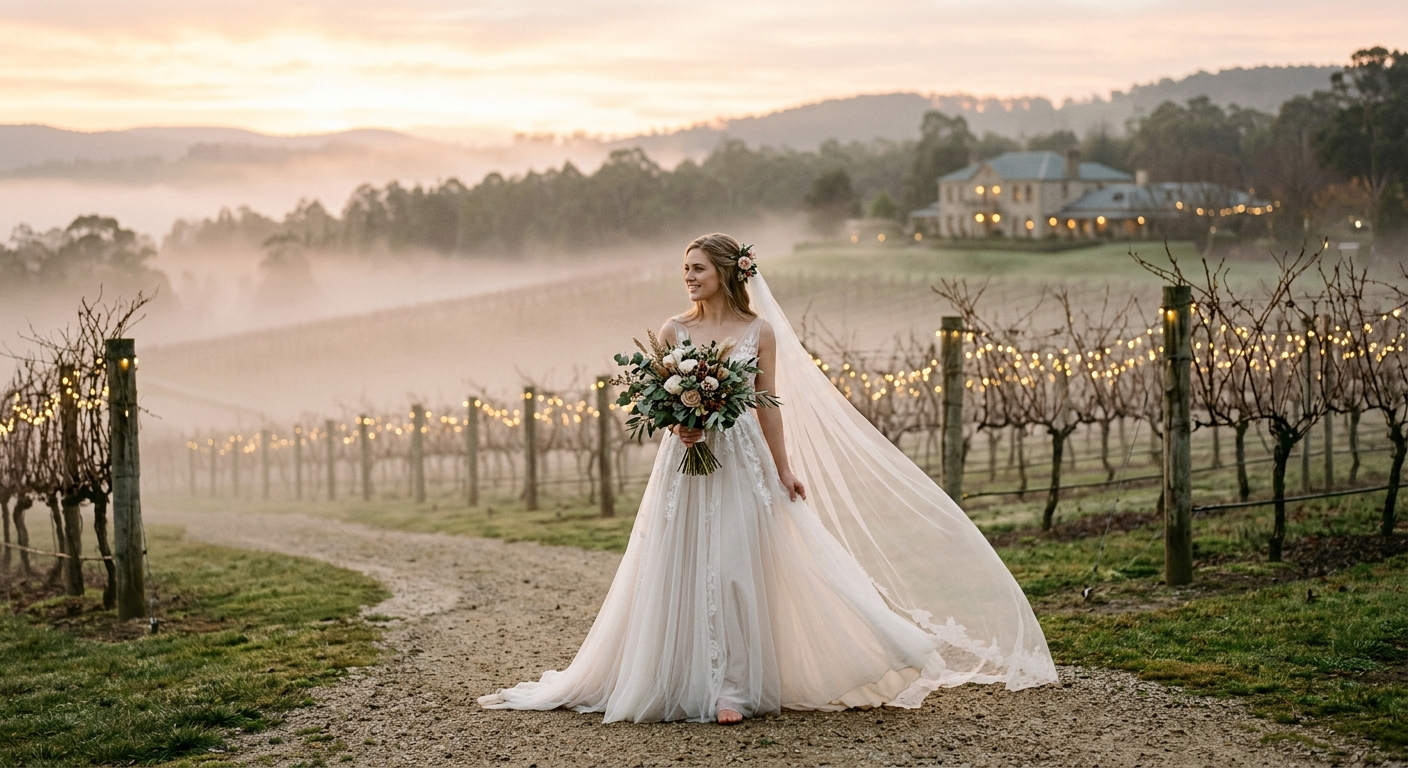
Winter weddings in Australia occupy a unique position in the wedding calendar. While much of the Western world associates June, July, and August with peak summer wedding season, Australian couples have increasingly recognised the distinct advantages of a cold-season celebration. The off-peak period from June through August offers significant cost savings, greater venue availability, and a styling palette that is distinctly elegant and romantic. For couples who have always envisioned a cosy, candlelit ceremony or a dramatic vineyard celebration with misty mornings, winter in Australia presents an opportunity that summer simply cannot match.
The appeal of Australian winter weddings extends beyond aesthetics. Venue costs during the off-peak season (May through September in Australia) are typically 15 to 30 percent lower than during the spring and summer peak. Vendors are more available, meaning couples have access to their first-choice photographer, celebrant, and caterer rather than settling for second options. The weather, while cooler, is generally predictable and mild in most Australian regions during winter — particularly in the eastern states where frosts are rare outside of mountainous areas. This combination of financial benefits, logistical ease, and atmospheric appeal has driven a steady increase in winter wedding bookings across Australia.
This guide is designed to help Australian couples navigate every dimension of winter wedding planning. Whether you are drawn to the dramatic beauty of a Yarra Valley vineyard in July, the contemporary elegance of a Melbourne CBD venue, or the coastal charm of a Northern NSW beachside celebration, the principles of winter wedding planning apply across contexts. We cover venue selection, seasonal styling, catering considerations, guest comfort strategies, and the specific advantages that winter offers for photography and atmosphere. By the end of this guide, you will have a clear framework for planning a winter wedding that is beautiful, logistically sound, and reflective of your personal vision.
It is worth noting that Australian winter weddings are not defined by the same constraints as weddings in colder Northern Hemisphere climates. The Australian winter is mild in most regions — day-time temperatures in Sydney and Brisbane typically range from 15 to 22 degrees Celsius, making outdoor ceremonies comfortable and practical. This climate advantage means that Australian winter weddings can fully embrace outdoor elements without the logistical complexity that winter weddings entail in Europe or North America. The result is a wedding style that is distinctly Australian: outdoor ceremonies in comfortable temperatures, followed by warm, cosy receptions that make the most of the cooler evening air.
Why Australian Couples Are Choosing Winter Weddings
The financial case for a winter wedding in Australia is compelling and well-documented. Venue hire fees during the off-peak season represent the most significant saving. Premium venues in the Hunter Valley, Yarra Valley, Mornington Peninsula, and Adelaide Hills frequently offer 20 to 30 percent reductions on their peak-season pricing during the winter months. For a venue that charges $8,000 to $15,000 per event during spring and summer, the winter saving can amount to $2,000 to $4,500 — a sum that can be redirected toward higher-quality photography, entertainment, or floral design.
Vendor availability is the second major advantage. The concentration of Australian weddings in the October to March window means that the best vendors — photographers, videographers, celebrants, hair and makeup artists — are booked 12 to 18 months in advance for peak dates. A winter wedding booked six to nine months out can secure a top-tier vendor at peak quality, whereas the same couple planning a summer wedding would need to book 12 to 18 months in advance to access the same level of talent. This expanded vendor pool is particularly valuable for couples who are planning their wedding within a tighter timeline.
The atmospheric and aesthetic advantages of winter weddings are substantial and unique to the season. The low light quality of winter — softer, more golden, more directional — creates photography conditions that are consistently beautiful without the harsh contrast of summer midday light. The landscape itself offers styling opportunities that summer cannot replicate: bare vines, morning frost, fog layers, open fires, candlelight, rich jewel tones, and textured fabrics. Winter wedding styling in Australia has developed its own visual language — warm, romantic, layered, and distinctly seasonal — that is fundamentally different from the bright, floral aesthetic of spring and summer weddings.
Cost Comparison: Winter vs Summer Wedding in Australia
Industry data from wedding planning platforms indicates that the average cost savings for a winter wedding in Australia range from 15 to 30 percent on venue hire, 10 to 20 percent on photography and videography, and 10 to 15 percent on floristry, compared to peak-season pricing. These savings compound across the full vendor budget, resulting in a total wedding cost that is significantly lower for a winter wedding compared to a summer wedding of equivalent scope. For couples working within a fixed budget, a winter wedding can deliver a higher overall quality of vendors and production without exceeding the budget ceiling.
The cost comparison is most favourable in regional and rural venues, where the winter discount is typically more pronounced than in city venues. A winery wedding in the Margaret River region or a hilltop venue in the Adelaide Hills can offer savings of 25 to 35 percent on venue hire alone during the winter months. These regional venues also offer the dramatic landscape and atmospheric beauty that winter amplifies — frost-covered vines, misty mornings, warm afternoon light — making the financial saving inseparable from an aesthetic advantage.
Choosing the Right Winter Wedding Venue in Australia
The venue is the single most important decision in winter wedding planning, and the criteria for a great winter venue differ meaningfully from those for a summer wedding. The key considerations are: indoor space availability (for comfort if temperatures drop), heating infrastructure (outdoor heating, indoor climate control), backup options for outdoor ceremonies (canopy, marquee, indoor alternative), lighting quality (winter light is different and must be planned for), and accessibility for guests in all weather conditions. A venue that offers beautiful outdoor spaces but no covered alternatives is a risk for a winter wedding if weather turns.
Australia's most popular winter wedding regions each offer distinct advantages. The Yarra Valley in Victoria offers dramatic vineyard landscapes, world-class wineries with dedicated event infrastructure, and the cool, misty atmosphere that makes winter weddings there feel cinematic. The Hunter Valley in NSW provides similar vineyard beauty with the advantage of proximity to Sydney (approximately two hours' drive), making it accessible for guests who may be travelling from the city. The Mornington Peninsula offers coastal drama combined with winery infrastructure, and its sheltered bays provide more protection from wind than more exposed regional areas.
In South Australia, the Adelaide Hills and Barossa Valley provide exceptional winter venue options with historic estates, working wineries, and catering infrastructure that handles cold-weather menus well. The Barossa in particular is known for its rich, warming cuisine — slow-cooked meats, hearty soups, robust wines — which aligns naturally with winter wedding catering. In Western Australia, the Margaret River region offers stunning winter wedding venues with the coastal landscape at its most dramatic, and the added benefit of being in Australia's spring during the Northern Hemisphere winter, making it an attractive destination for international guests.
For couples who prefer city venues, Melbourne and Sydney offer excellent winter wedding options. Melbourne's event infrastructure is extensive and well-adapted to cold weather, with many venues featuring fireplaces, heated courtyards, and enclosed spaces that can accommodate large guest lists in comfort. Sydney's waterfront venues and harbor-side locations, while associated with summer events, have infrastructure for year-round celebrations and offer the city's iconic scenery in the softer winter light.
The Indoor-Outdoor Blend: Planning for Australian Winter Weather
Australian winter weather is generally mild enough that outdoor ceremonies and spaces can be used comfortably with the right preparation. The key is to design an event flow that allows guests to transition between indoor and outdoor spaces according to the temperature and their own comfort. A ceremony on an outdoor terrace followed by a reception in a glass-enclosed marquee or a heated indoor space creates variety and ensures that guests can choose their comfort level throughout the evening.
Heating infrastructure is an essential question to ask any potential venue. Look for venues with outdoor gas heaters, fire pits, heated terrace options, or marquee capability. The cost of hiring outdoor heating equipment can be significant — typically from $500 to $2,000 depending on the size of the space and the equipment required — but it transforms an uncomfortable winter space into a genuinely inviting one. Some venues include outdoor heating in their hire fee; others charge separately. Clarify this early in the venue selection process to ensure accurate cost comparisons.
Winter Wedding Styling: Colours, Textures, and Atmosphere
Winter wedding styling in Australia has developed a distinct aesthetic vocabulary that draws on the season's natural palette: deep greens, burgundy, navy, charcoal, gold, and cream, combined with textural elements like velvet, wool, dried grasses, timber, and candlelight. The overall effect is warm, romantic, and atmospheric in a way that spring and summer weddings cannot replicate. Where summer weddings lean into brightness and freshness, winter weddings lean into depth, texture, and warmth.
The floral palette for a winter wedding should incorporate seasonal flowers that are at their best during Australian winter (June through August). Think: roses in deep burgundy, plum, and cream tones; ranunculus in warm shades; anemones with their striking dark centres; tulips in rich colours; and foliages like eucalyptus, ruscus, and bear grass that provide texture and volume. Australian native flowers — banksia, waratah, golden wattle, and kowhai — offer additional options that feel distinctly Australian and are at their best during winter. Dried flowers and grasses are particularly appropriate for winter weddings, adding a textural quality that pairs beautifully with the warm, candlelit atmosphere of the season.
Lighting design is arguably more important for a winter wedding than for any other season. The shorter days mean that ceremonies and receptions occur in lower natural light, and the artificial lighting design must compensate. Candlelight is the foundational element of winter wedding lighting — its warmth, movement, and intimacy cannot be replicated by other light sources. Combine candles with festoon lights, uplighting in warm amber tones, and feature lighting on key design elements (the wedding party table, the dance floor, the entry statement). The goal is a layered lighting scheme that feels natural, warm, and celebratory.
Trending Winter Wedding Colour Palettes for 2026
The most striking winter wedding colour palettes for 2026 draw on deep, saturated tones combined with warm metallics and neutral foundations. The leading palette for 2026 is deep emerald green paired with champagne gold and ivory — a combination that reads as luxurious, romantic, and distinctly winter. A second popular option is charcoal grey combined with blush pink and white — a softer, more romantic palette that works well for daytime winter weddings in particular.
A third trending palette for 2026 is rich burgundy and navy combined with cream and gold — a more dramatic combination that suits evening celebrations and wine-region weddings particularly well. This palette draws naturally from the colours of the Australian landscape in winter: the deep reds of gum leaves, the blue-grey of distant hills, the cream of morning frost. Couples choosing this palette should incorporate these natural references into their stationery, floristry, and venue styling to create a cohesive visual narrative.
Winter Wedding Photography: Why the Season Produces the Best Images
Experienced wedding photographers consistently rate winter as the most reliable season for high-quality wedding photography in Australia. The reasons are both technical and atmospheric. The winter light in Australia — particularly in the two to three hours before sunset, which is typically between 5:00 and 5:30 pm during Australian winter — is consistently golden, directional, and flattering. Unlike summer light, which can be harsh and high-contrast during the middle of the day, winter light is softer and more diffuse, creating a natural glow around subjects that reduces the need for artificial lighting and creates more natural-looking images.
The atmospheric conditions that winter provides — morning mist in vineyards, frost on grass, overcast skies that act as a natural diffuser — create photographic conditions that are impossible to manufacture. A misty morning in the Yarra Valley or Hunter Valley produces images that guests and couples describe as 'cinematic' and 'unforgettable'. These conditions are specific to winter and cannot be replicated in other seasons, making winter photography a genuinely unique offering.
The scheduling of a winter wedding requires consideration of the earlier sunset and the shorter daylight hours. The optimal time for a first-look photography session and outdoor portrait series is between 10:00 am and 2:00 pm, when natural light is at its brightest and warmest. The ceremony should ideally be scheduled for 3:30 to 4:00 pm to allow time for portraits in the golden hour light that begins around 4:30 pm in most Australian regions during winter. Reception photography then extends into the evening, capturing the candlelight, fairy lights, and indoor atmosphere that define the celebration after dark. This timing is different from a summer wedding schedule, where the ceremony is typically later (5:00 to 6:00 pm) to avoid harsh midday light. Couples planning a winter wedding should discuss timing with their photographer at the earliest stage of planning.
Guest Comfort Strategies for Australian Winter Weddings
Guest comfort is the practical dimension of winter wedding planning that separates good events from great ones. The primary concerns are temperature management across indoor and outdoor spaces, wet weather contingency, and the practical reality that guests who are cold or uncomfortable will not enjoy the celebration regardless of how beautiful it is. Addressing these concerns proactively is an expression of hospitality, not just logistics.
The most effective comfort strategy is layering. Provide guests with information before the event that helps them dress appropriately — a note on the invitation or wedding website indicating that the ceremony will be outdoors and that layering is recommended (a jacket, closed shoes, a warm layer). This guidance is especially important for guests who may be travelling from warmer climates or who are unfamiliar with Australian winter conditions. Many Australian couples now provide pashminas or wraps for female guests as a welcome gesture — this is both a comfort provision and a photo opportunity, as the images of guests wrapped in soft blankets against a vineyard backdrop are among the most memorable winter wedding photographs.
Heated shuttle transport between ceremony and reception venues eliminates the discomfort of guests walking between outdoor and indoor spaces in cold temperatures. This is a significant but often overlooked investment. A shuttle that departs from the ceremony venue and arrives directly at the reception entrance — with heated interior and protection from wind and rain — makes a meaningful difference to guest experience, particularly for evening events in cooler regions. The cost is typically $800 to $2,500 depending on guest numbers and distance, and it is one of the highest-return investments in winter wedding guest comfort.
Winter Wedding Menu Design: Warming, Indulgent, Seasonal
Winter wedding catering should reflect the season's food traditions: warmer dishes, richer flavours, and more substantial courses than a summer wedding might offer. The trend in Australian winter wedding catering is towards family-style sharing plates — slow-cooked meats, hearty braises, roasted vegetables, warm salads, and crusty bread — presented in a way that feels celebratory and abundant. This approach suits the social, communal nature of wedding dining and allows the meal to function as a centrepiece of the reception experience.
The beverage program should emphasise warming drinks alongside the standard cocktail and wine service. Mulled wine served on arrival is a winter wedding staple that guests consistently remember — it is warming, festive, and immediately signals the season. Hot chocolate or espresso martini stations are contemporary alternatives that younger wedding guests respond to particularly well. For the wine list, focus on fuller-bodied reds (shiraz, cabernet sauvignon, malbec) and richer white wines (oaked chardonnay, viognier) that pair with the season's richer dishes.
A Winter Wedding Is an Investment in Atmosphere
The decision to hold your wedding in Australian winter is a decision to invest in atmosphere. The cooler temperatures, the softer light, the richer styling palette, the greater venue and vendor availability, and the significant cost savings combine to create a wedding experience that is fundamentally different from — and in many ways superior to — a summer celebration. The constraints of winter (earlier sunsets, the need for heating, the possibility of rain) are manageable with thoughtful planning, and they are far outweighed by the unique advantages the season offers.
The key to successful winter wedding planning is treating the season's characteristics as assets rather than obstacles. The misty morning is not a logistical challenge for your photographer — it is the setting that produces the most memorable images of your day. The cooler evening temperature is not a comfort risk for your guests — it is the atmosphere that makes candlelight and firelight feel magical and festive. The possibility of rain is not a contingency to fear — it is a chance to see your venue transformed by the particular beauty of a winter storm.
For more guidance on planning your Australian wedding, explore the WeddingRSVP blog. From seasonal styling guides to vendor selection strategies, we provide the information Australian couples need to plan a wedding that reflects their vision and runs smoothly from invitation to celebration.
Australian winter weddings represent a growing trend that is grounded in genuine advantages rather than novelty. The combination of financial savings, vendor availability, atmospheric beauty, and logistical flexibility makes winter an increasingly attractive season for couples who are planning their wedding in 2026 and beyond. With thoughtful planning — focused on venue infrastructure, heating, lighting, and guest comfort — a winter wedding can be one of the most memorable and beautiful celebrations a couple experiences.
To explore more Australian wedding planning resources, visit the WeddingRSVP blog. Our guides cover every aspect of the planning process, from selecting the perfect venue to managing your RSVP timeline, all written with the Australian couple in mind.