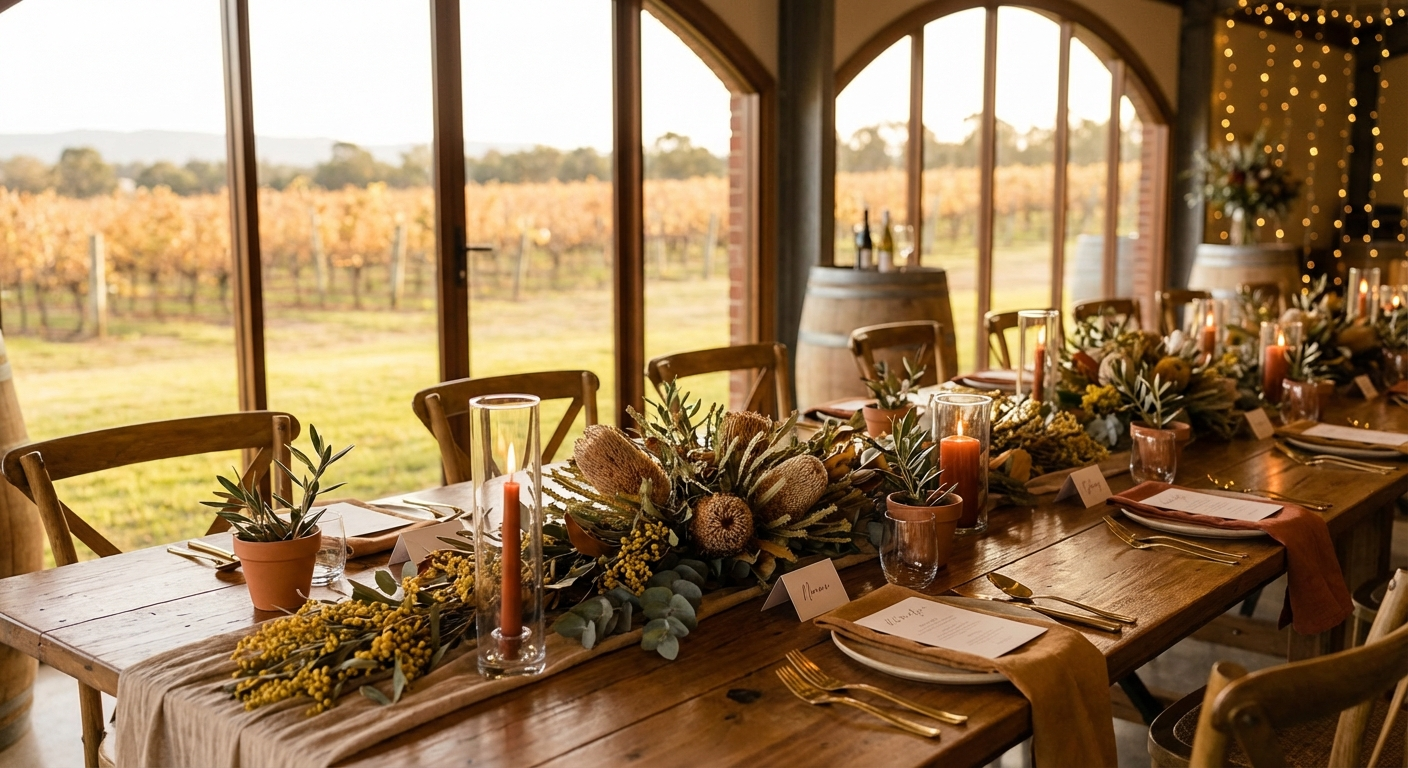
There is a reason autumn has quietly become one of Australia's most beloved wedding seasons. From March through May, the harsh intensity of summer fades into something altogether more forgiving: softer light, milder temperatures, and a landscape that shifts into a palette of burnished gold, deep amber, and rich burgundy. For couples who have spent months imagining their perfect day, autumn offers a natural elegance that requires less effort to achieve and photographs beautifully from every angle.
The 2026 autumn wedding season is shaping up to be particularly exciting. Australian couples are embracing a wave of styling trends that lean into warmth, texture, and sensory richness. Vintage-inspired details are making a strong comeback. Earthy colour palettes are replacing the stark whites and pastels that dominated previous years. Dried and native Australian florals are being celebrated rather than treated as a budget alternative. And the overall mood has shifted toward immersive, atmospheric celebrations that engage every sense.
Whether you are planning an intimate gathering in a Yarra Valley winery, a garden ceremony in the Adelaide Hills, or a coastal celebration along the NSW South Coast, this guide will walk you through the styling decisions that matter most. From choosing a colour palette that works with autumn's natural backdrop to selecting florals, table settings, lighting, and stationery that bring your vision together, consider this your complete resource for creating a cohesive and stunning autumn wedding in Australia.
Why Autumn Is the Smart Choice for Australian Weddings
The practical advantages of an autumn wedding in Australia are substantial, and they extend well beyond the aesthetic appeal. Understanding these benefits can help couples make confident decisions about their timeline and budget.
Temperature is perhaps the most immediate factor. Summer weddings in Australia frequently contend with extreme heat, particularly in regions like the Hunter Valley, the Barossa Valley, and inland Queensland, where temperatures can exceed 38 degrees Celsius. Autumn brings average highs between 20 and 26 degrees across most popular wedding regions, which is comfortable for outdoor ceremonies, photographs in natural light, and receptions that transition between indoor and outdoor spaces. Guests are more relaxed when they are not battling heat, and that comfort translates directly into a better atmosphere.
Pricing is another compelling consideration. The peak wedding season in Australia runs from October through April, with the absolute highest demand concentrated in the spring months of October and November. By choosing March, April, or May, couples are still within the broader peak season but often find slightly more flexibility in venue availability and, in some cases, reduced rates. Some venues offer shoulder-season pricing for May weddings, which can represent savings of 10 to 20 per cent compared to a November date.
The quality of natural light during autumn is something photographers consistently highlight. The sun sits lower in the sky, producing a warm, diffused glow that flatters skin tones and creates depth in landscape photographs. The so-called golden hour lasts longer in autumn, giving couples and their photographers more time to capture portraits without the harsh midday shadows that plague summer shoots. For couples investing $3,000 to $6,000 AUD in professional photography, this lighting advantage is worth factoring into the seasonal decision.
Finally, there is the question of guest experience. Autumn weddings benefit from the fact that the school holiday calendar is largely clear between mid-February and early April, making it easier for guests with families to attend. The Easter period in late March or April can provide a convenient long weekend for destination weddings, allowing interstate guests to travel without taking additional leave from work.
Colour Palettes That Define Autumn Weddings in 2026
The colour story of an autumn wedding sets the tone for every other styling decision, from florals and table linens to bridesmaid dresses and stationery. In 2026, Australian couples are moving away from predictable autumn cliches and embracing more nuanced, sophisticated palettes that feel contemporary while still honouring the warmth of the season.
Terracotta, Olive, and Warm Neutrals
This palette has emerged as the defining combination of the 2026 autumn season. Terracotta brings an earthy warmth without veering into orange, while olive green adds a grounding natural element that connects the celebration to the Australian landscape. Warm neutrals such as sand, oatmeal, and soft clay tie the palette together and provide visual breathing room. This combination works exceptionally well in winery venues across the Yarra Valley and McLaren Vale, where the tones echo the surrounding vineyards and soil.
In practice, this palette might translate to terracotta bridesmaid dresses from Australian designers like Shona Joy or Bec and Bridge, olive-toned table runners in raw linen, sandstone-coloured taper candles, and neutral-toned stationery with terracotta ink. The key to making this palette feel elevated rather than rustic is to introduce texture through the materials rather than adding more colour.
Burgundy, Navy, and Antique Gold
For couples seeking a richer, more dramatic palette, the combination of burgundy, navy, and antique gold delivers a sense of occasion that feels entirely appropriate for autumn. This is a palette that suits heritage venues, historic homesteads, and formal garden settings. Think Bendooley Estate in the Southern Highlands, Werribee Mansion in Victoria, or Entally Estate in Tasmania.
Burgundy and navy work beautifully in combination without competing for attention, and antique gold accents, whether through cutlery, candle holders, or metallic details in the stationery suite, add a layer of warmth that prevents the palette from feeling too dark. Floral arrangements in this palette might combine deep burgundy dahlias, navy-toned thistles, and golden-toned dried elements like banksia pods or preserved eucalyptus.
Sage Green, Blush, and Ivory
Not every autumn palette needs to lean into deep, moody tones. Sage green paired with soft blush and ivory creates an atmosphere that is gentle, romantic, and perfectly suited to garden weddings and marquee receptions in the Adelaide Hills, the Blue Mountains, or the Mornington Peninsula. This palette has gained significant traction among couples who want to honour the season without committing to a dramatically warm colour scheme.
Sage green bridesmaid dresses have become one of the most requested styles from Australian bridal boutiques, and the colour pairs naturally with the eucalyptus-rich landscapes that characterise so many Australian wedding venues. Blush and ivory soften the palette, and when combined with natural timber, white linen, and simple greenery, the result is a celebration that feels effortlessly beautiful.
Autumn Floral Trends: Native Blooms and Textured Arrangements
The floral landscape for autumn weddings in 2026 has shifted decisively toward texture, movement, and native Australian species. The tightly packed, perfectly symmetrical bouquets of previous years are giving way to arrangements that feel organic, layered, and deeply connected to the Australian bush. This shift is both aesthetic and practical, as native flowers tend to be hardier, longer-lasting, and more affordable than imported varieties.
Banksias have become a centrepiece species for autumn wedding florals. Their sculptural form and warm tones, ranging from pale cream to deep amber, make them a natural fit for the season. Paired with native grasses like kangaroo paw and pampas grass, they create arrangements that are dramatic without being fussy. Florists across Sydney, Melbourne, and Brisbane report that banksia-dominant arrangements are among their most requested styles for autumn 2026 weddings.
Dried and preserved elements continue to grow in popularity, and autumn is the season where they truly come into their own. Dried palm fans, preserved eucalyptus in muted green and copper tones, bunny tails, and dried amaranth in deep burgundy all add texture and depth to arrangements while requiring no water and lasting indefinitely as keepsakes. Many couples are incorporating dried elements into their ceremony arches, table centrepieces, and even their bridal bouquets, either exclusively or in combination with fresh blooms.
For couples working with a floral budget of $2,000 to $5,000 AUD, a combination of native fresh flowers and dried elements is the most cost-effective approach to achieving a lush, full look. Fully fresh arrangements using premium imported varieties like garden roses and ranunculus can push budgets significantly higher, while a primarily dried palette can bring costs down to the $1,200 to $2,500 AUD range without sacrificing visual impact.
When briefing your florist, consider requesting a palette that reflects the specific autumn landscape of your venue location. A Hunter Valley winery wedding might call for warm golds and earthy tones that mirror the changing vine leaves. A Dandenong Ranges ceremony might draw on deeper greens, burgundies, and the misty atmosphere of the forest. The most successful autumn wedding florals in 2026 are those that feel site-specific rather than generic.
Table Styling and Reception Decor for Autumn Celebrations
The reception table is where your colour palette, floral choices, and overall styling vision converge into a single, cohesive experience. For autumn weddings in 2026, the emphasis is on warmth, layering, and a sense of abundance that makes guests feel welcomed into something special.
Linens, Textures, and Layering
Textured linens are having a major moment. Raw linen tablecloths in natural or warm-toned shades have replaced the smooth, crisp white linen that dominated Australian wedding receptions for years. Layering is key: a neutral linen base, topped with a textured runner in a complementary tone, creates visual interest without over-complicating the table design. Cheesecloth runners in terracotta, sage, or dusty rose drape beautifully and add a soft, romantic quality that catches candlelight.
Napkins are another opportunity to introduce colour and texture. Linen napkins tied with a sprig of dried eucalyptus or a small banksia pod double as a place setting and a miniature favour. Australian hire companies like The Establishment Studios, Style My Celebration, and Table Art offer extensive linen libraries in autumn-appropriate tones, with hire prices typically ranging from $3 to $8 AUD per napkin and $30 to $80 AUD per tablecloth.
Candlelight and Ambient Lighting
If there is one element that defines the atmosphere of an autumn wedding reception, it is candlelight. As the days shorten and evening arrives earlier, candles become both functional and deeply atmospheric. Taper candles in clusters of varying heights create a sense of elegance and movement along the table. Pillar candles in hurricane vases add warmth without the risk of open flames near dried floral arrangements.
The trend in 2026 is toward warm-toned candles rather than classic white. Beeswax tapers in natural honey tones, terracotta-coloured pillar candles, and even deep burgundy tapers are all being used to reinforce the autumn colour palette. Pair candlelight with overhead festoon lighting or Edison bulbs to create a layered lighting scheme that feels intimate without being dark. Many winery and barn venues across Victoria, New South Wales, and South Australia already have festoon infrastructure in place, which can reduce your lighting hire costs.
Place Settings, Menus, and Personal Touches
The details at each place setting are what transform a beautifully styled table into something that feels personal and considered. Handwritten place cards on textured card stock, menu cards printed on recycled paper with autumn-toned typography, and small favours that reflect the season all contribute to the guest experience.
Popular autumn wedding favours in Australia include small jars of local honey from producers like Beechworth Honey in Victoria, miniature bottles of olive oil from regional producers, or sachets of native Australian tea blends. These favours double as place setting decor and give guests something meaningful to take home. Budget between $4 and $12 AUD per guest for favours of this quality.
Vintage and antique tableware is another strong trend for 2026. Mismatched antique plates, coloured glassware in amber or sage tones, and brass or antique gold cutlery create a collected, curated look that feels personal rather than hired. Several Australian styling companies now offer curated vintage tableware packages specifically designed for autumn weddings, with per-setting hire costs typically between $15 and $35 AUD.
Ceremony Styling for Autumn Weddings
The ceremony space sets the emotional tone for the entire day, and autumn offers unique opportunities to create a setting that feels both dramatic and intimate. The key principle for autumn ceremony styling in 2026 is restraint: let the landscape do the work and use styling to enhance rather than compete with the natural setting.
Ceremony arches and arbours continue to be the focal point of outdoor ceremonies, but the style has evolved. The geometric metal arches that were ubiquitous in 2022 and 2023 have been largely replaced by organic timber structures, woven willow frames, and asymmetrical floral installations that feel less structured and more natural. For autumn ceremonies, these structures are typically dressed with a combination of fresh and dried florals, trailing greenery, and textured elements like pampas grass plumes or dried palm fronds.
Ground florals, where arrangements are placed at the base of the ceremony arch and along the aisle rather than elevated on stands, have become increasingly popular. This styling approach creates a garden-like atmosphere and works particularly well in outdoor settings where the surrounding landscape provides the vertical elements. A pair of substantial ground arrangements flanking the ceremony point can cost between $400 and $1,200 AUD depending on the scale and species selected.
For indoor ceremonies, whether in a chapel, a barn, or a function space, autumn styling in 2026 leans heavily on lighting and textural elements. Rows of taper candles along the aisle, draped fabric in warm tones along the ceiling or behind the ceremony point, and large-scale dried floral installations all contribute to an atmosphere that feels warm and enveloping. Many couples are also incorporating scent into their ceremony styling, with diffusers or candles in warm, autumn-appropriate fragrances like sandalwood, fig, or native Australian botanicals.
Stationery Design and Digital RSVPs for Autumn Weddings
Your stationery suite is often the first tangible expression of your wedding's visual identity, and autumn weddings offer rich opportunities for distinctive design. The trend in 2026 is toward stationery that feels tactile and artisanal, with an emphasis on paper quality, printing techniques, and colour palettes that preview the wedding day experience.
Letterpress and blind embossing on thick, textured card stock in warm natural tones have become the premium choice for autumn wedding invitations. Printing costs for letterpress typically range from $5 to $12 AUD per invitation, with total stationery suites (save the dates, invitations, details cards, menus, and place cards) costing between $800 and $2,500 AUD for a wedding of 100 guests. Digital printing on quality card stock offers a more budget-friendly alternative at $2 to $5 AUD per piece without sacrificing design sophistication.
Colour choices for autumn stationery lean toward warm neutrals with accent colours drawn from your broader palette. Terracotta ink on cream card stock, olive green text on warm white, or burgundy details on a sand-toned base all communicate the autumn theme without resorting to literal seasonal imagery. Illustrated botanical motifs featuring native Australian species such as gum leaves, banksia flowers, or wattle sprigs add a distinctly Australian character to the suite.
Digital RSVPs have become the standard complement to physical invitations, and for good reason. A digital RSVP system eliminates the cost of reply cards and return postage, simplifies guest list management, and allows couples to collect meal preferences, dietary requirements, and song requests in a single form. Platforms like WeddingRSVP.org provide customisable RSVP pages that can be styled to match your stationery design, creating a seamless experience from the moment guests receive their invitation to the moment they confirm their attendance.
For autumn weddings specifically, consider timing your invitations to land eight to ten weeks before the date. If your wedding falls on an Easter long weekend or close to Anzac Day, extend this to twelve weeks to give interstate guests adequate time to book travel and accommodation. Include your digital RSVP link prominently on the details card and set a response deadline three to four weeks before the wedding to allow time for final catering numbers and seating arrangements.
Best Venue Types for Autumn Wedding Styling in Australia
The venue you choose will significantly influence your styling approach, and certain venue types are particularly well-suited to the autumn aesthetic. Here are the top venue categories for autumn weddings in 2026, along with styling considerations for each.
Wineries and Vineyards
Wineries remain the quintessential autumn wedding venue in Australia, and for good reason. The changing vine leaves provide a spectacular natural backdrop in shades of gold, amber, and crimson, reducing the need for elaborate floral installations. Venues like Stones of the Yarra Valley, Centennial Vineyards in Bowral, and Howard Park in Margaret River each offer distinct character while sharing the common advantage of an autumn landscape that essentially styles itself. Focus your budget on table styling and lighting rather than ceremony florals, and let the vineyard do the rest.
Historic Homesteads and Country Estates
Heritage properties gain a particular magic in autumn. The combination of established gardens, mature trees showing their seasonal colours, and architecture with patina creates an atmosphere that is difficult to replicate in newer venues. Properties like Burnham Grove in Camden, Collingwood Children's Farm in Melbourne, and Gabbinbar Homestead in Toowoomba offer the kind of character that pairs naturally with vintage-inspired styling. Mismatched antique furniture, candlelight, and loose, organic floral arrangements suit these spaces perfectly.
Barns, Sheds, and Rural Spaces
The rustic venue category continues to evolve in 2026, with a move toward more refined interpretations of rural aesthetics. Converted barns and farm sheds across regions like the Southern Highlands, the Sunshine Coast Hinterland, and the Swan Valley offer a warm, enclosed atmosphere that is ideal for autumn celebrations. The natural timber, exposed beams, and industrial lighting fixtures that characterise these venues provide a ready-made styling foundation. Layer in your chosen colour palette through linens, florals, and candles, and the result is a celebration that feels both grounded and elegant.
Practical Styling Tips for Autumn Weddings
Beyond the aesthetic considerations, there are several practical factors that can make or break your autumn wedding styling. These tips reflect the real-world experience of Australian wedding planners and stylists working in the current market.
Plan for variable weather. Autumn in Australia can deliver warm, sunny days, cool evenings, and unexpected rain, sometimes all in a single afternoon. If your ceremony is outdoors, ensure your venue has a wet-weather backup that can accommodate your ceremony styling. Discuss contingency plans with your florist and stylist at the planning stage rather than scrambling on the day. Investing in a clear-roof marquee or having an indoor option at the ready is not pessimism; it is good planning.
Embrace the early sunset. In most Australian states, daylight saving ends in early April, which means the sun sets noticeably earlier as autumn progresses. Rather than fighting this, plan your timeline to take advantage of the golden hour for photographs and transition into a candlelit reception as darkness falls. A ceremony starting at 3:00 to 3:30 PM gives you ample time for photos before the light fades, with the reception beginning as the candles come into their own.
Coordinate with your photographer. Share your styling plans, colour palette, and decor details with your photographer well before the day. An experienced photographer can advise on how certain colours and textures will read in autumn light and may suggest adjustments that enhance the photographic outcome. Many Australian wedding photographers offer styling consultations as part of their premium packages, and the input is worth seeking even if it is not formally included.
Budget for heating. If your reception is in a marquee, barn, or open-sided venue, factor in the cost of heating for the evening. Outdoor gas heaters range from $80 to $150 AUD per unit to hire, while enclosed marquee heating systems can cost $500 to $1,500 AUD depending on the space. Guests who are warm and comfortable will stay longer, dance more, and remember the evening more fondly.
Consider a welcome drink that sets the mood. Autumn invites warm, spiced, and comforting flavours. A mulled wine station, a hot cider bar, or espresso martinis served as guests arrive sets the seasonal tone from the first moment and gives guests something to hold and enjoy while the wedding party completes their photographs. Budget approximately $8 to $15 AUD per guest for a welcome drink station with one to two options.
Autumn weddings in Australia offer a rare combination of natural beauty, comfortable conditions, and rich styling potential that is difficult to match in any other season. The 2026 trends point toward celebrations that are warmer, more textured, and more deeply connected to the Australian landscape than ever before. Whether your vision is a moody, candlelit winery reception or a sun-drenched garden ceremony beneath turning leaves, the season provides a foundation that elevates every styling decision you make.
The most important principle to carry through your planning is cohesion. Choose a colour palette that feels authentic to both the season and your venue, select florals and decor elements that reinforce that palette without overwhelming it, and invest in the atmospheric details, particularly lighting and table styling, that transform a beautiful space into an unforgettable one. Autumn does much of the work for you. Your job is to curate, refine, and let the season shine.