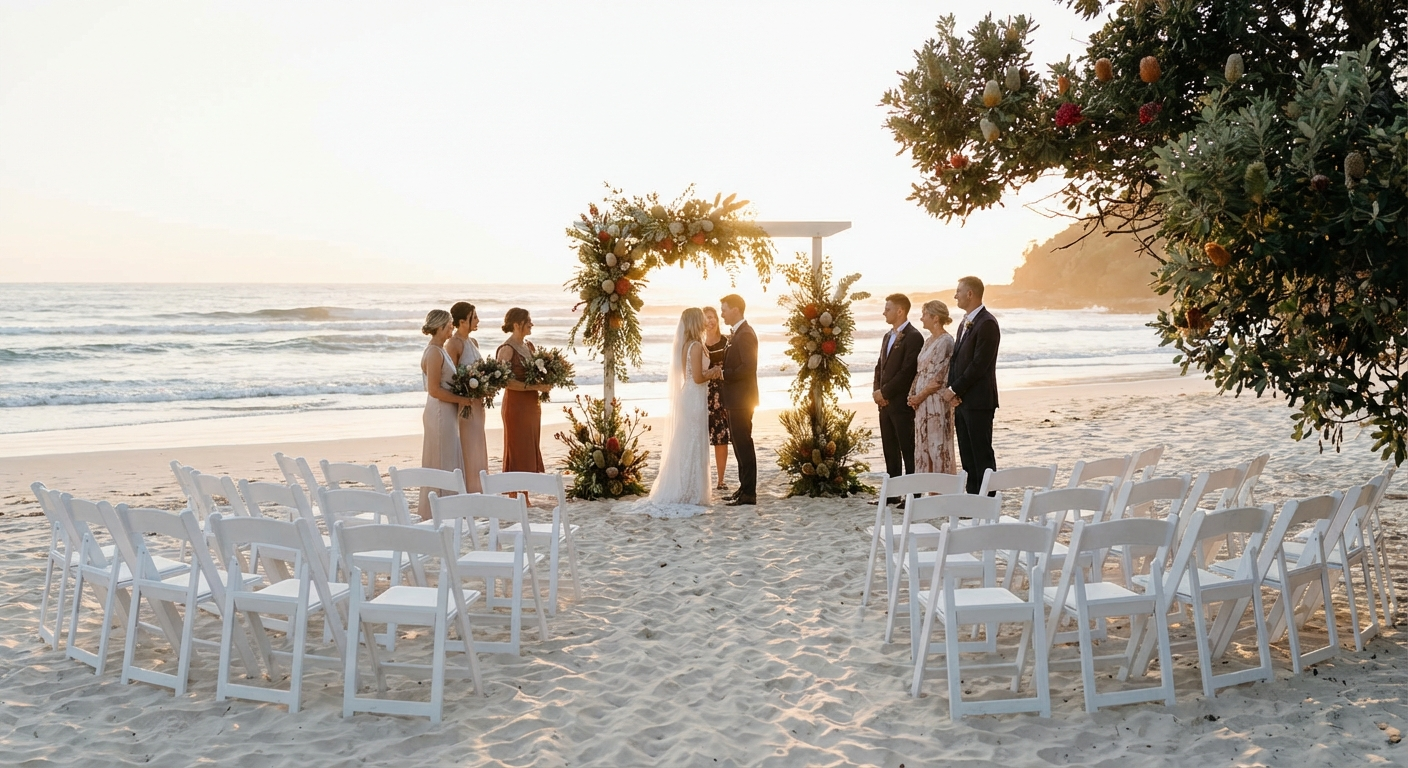
Few countries on earth are better suited to beach weddings than Australia. With over 25,000 kilometres of coastline stretching from the tropical shores of Far North Queensland to the dramatic cliffs of the Great Ocean Road, the rugged beauty of Western Australia's Margaret River region, and the pristine white sands of Tasmania's Bay of Fires, Australian couples have an extraordinary range of coastal settings to choose from when planning their ceremony.
Beach weddings have long been a cornerstone of Australian wedding culture, and in 2026 they remain one of the most popular choices for couples seeking a celebration that feels relaxed, natural, and distinctly Australian. According to the Easy Weddings 2026 Australian Wedding Industry Report, outdoor ceremonies now account for more than sixty per cent of all Australian weddings, with beach and coastal locations consistently ranking among the top three venue preferences across New South Wales, Queensland, and Western Australia.
However, planning a beach wedding involves considerably more logistical detail than booking a traditional indoor venue. Council permits, weather contingency plans, guest comfort, sound management, and environmental regulations all require careful attention. This guide walks you through every aspect of planning a beach wedding in Australia, from choosing the right location to managing your guest RSVPs for an outdoor celebration that runs without a hitch.
Why Australian Couples Choose Beach Weddings
The appeal of a beach wedding in Australia goes beyond aesthetics, though the visual impact of exchanging vows against a backdrop of turquoise water and golden sand is undeniable. For many couples, a beach ceremony represents a philosophical choice about the kind of celebration they want. It signals informality, warmth, connection to nature, and a rejection of the rigid formality that characterised previous generations of Australian weddings.
There is also a practical dimension. Beach weddings can be significantly more affordable than traditional venue-based celebrations. While a premium hotel or estate venue in Sydney or Melbourne might charge between $15,000 and $40,000 AUD for venue hire alone, a public beach ceremony permit typically costs between $150 and $800 AUD depending on the council. This frees up budget for other priorities like catering, photography, or a memorable honeymoon.
The rise of destination weddings within Australia has also fuelled the popularity of beach ceremonies. Couples based in Melbourne or Canberra might choose a beach wedding in Noosa, Byron Bay, or the Whitsundays as a way to combine their wedding with a holiday for their guests. This trend has created a thriving ecosystem of coastal wedding planners, stylists, and photographers who specialise in the unique demands of beachfront celebrations.
Best Beach Wedding Locations by State
Australia's coastline offers remarkably diverse settings, and the right beach for your wedding will depend on your guest numbers, aesthetic preferences, proximity to reception venues, and the time of year you plan to marry. Here is a state-by-state overview of the most popular and practical beach wedding locations in 2026.
New South Wales
Sydney's beaches are among the most iconic wedding locations in the country. Balmoral Beach on the lower North Shore offers sheltered harbour waters, established gardens for pre-ceremony photos, and easy access to nearby reception venues in Mosman and Neutral Bay. Palm Beach, at the northern tip of the Northern Beaches peninsula, provides a more secluded atmosphere with stunning headland views, though parking can be limited for larger guest lists.
Beyond Sydney, the South Coast towns of Jervis Bay, Hyams Beach, and Berry have become enormously popular for destination beach weddings. Jervis Bay in particular is known for its remarkably white sand and calm, clear water. The Hunter Valley region, while famous for its wineries, also offers access to Newcastle's beautiful coastline, where Merewether Beach and Bar Beach combine surf culture with excellent nearby dining options.
Byron Bay remains the gold standard for bohemian beach weddings in New South Wales. Wategos Beach and Tallow Beach provide intimate, nature-immersed settings, while the town itself offers a concentration of wedding vendors, stylists, and caterers who understand the specific requirements of outdoor coastal ceremonies.
Victoria
Victoria's coastline may lack the tropical warmth of Queensland, but it compensates with dramatic beauty. The Mornington Peninsula is the most popular beach wedding region in the state, with venues and beaches at Portsea, Sorrento, and Mount Martha offering a combination of coastal ceremony sites and nearby wineries or restaurants for receptions. Council permits through the Mornington Peninsula Shire are required for any ceremony on public land.
The Great Ocean Road corridor, particularly around Lorne, Apollo Bay, and Torquay, provides spectacular ceremony backdrops. The Surf Coast Shire processes a steady stream of wedding permit applications each year, and the region's boutique accommodation options make it ideal for weekend wedding celebrations where guests travel from Melbourne.
For couples seeking something closer to the city, Brighton Beach with its iconic bathing boxes and St Kilda Beach with views back to the Melbourne skyline offer urban beach wedding experiences within minutes of CBD reception venues.
Queensland
Queensland's warm climate and extensive coastline make it the most popular state for beach weddings in Australia. The Gold Coast offers Burleigh Heads, Currumbin, and Coolangatta as standout ceremony locations, with the Gold Coast hinterland providing lush rainforest reception venues just thirty minutes from the sand.
The Sunshine Coast delivers a slightly more relaxed atmosphere, with Noosa Main Beach, Mooloolaba, and Caloundra all hosting regular wedding ceremonies. Noosa's national park headland walks provide exceptional photography locations, and the town's dining scene ensures excellent catering options for receptions.
Further north, the Whitsundays and Port Douglas cater to the destination wedding market with world-class resorts that handle everything from ceremony permits to catering. Whitehaven Beach in the Whitsundays is regularly cited as one of the most beautiful wedding locations in the world, though its remote access requires careful logistical planning.
Western Australia, South Australia, and Tasmania
Western Australia's coastline is staggeringly beautiful and comparatively uncrowded. Cottesloe Beach in Perth offers a classic sunset ceremony setting with the Indian Ocean as a backdrop. Further south, Margaret River and Dunsborough combine beach access with the wine country's food and accommodation infrastructure. Cable Beach in Broome, famous for its 22 kilometres of unbroken sand and camel trains at sunset, is one of Australia's most dramatic destination wedding locations.
South Australia offers Glenelg and Henley Beach for Adelaide-based couples, while the Fleurieu Peninsula's Aldinga Beach and Second Valley provide more secluded coastal settings within an hour of the city. Victor Harbor and its surrounding beaches also see regular wedding ceremonies, particularly during the warmer months from October through April.
Tasmania's beach wedding scene is smaller but growing. The Bay of Fires on the east coast, with its striking orange lichen-covered boulders and crystal-clear water, offers a genuinely unique Australian beach wedding setting. Wineglass Bay in Freycinet National Park provides another world-class backdrop, though access is limited and permits are tightly managed by Parks and Wildlife.
Permits and Legal Requirements for Beach Weddings
One of the most common mistakes couples make when planning a beach wedding is assuming they can simply turn up, set up chairs, and hold their ceremony. In reality, almost every beach in Australia that is suitable for a wedding requires some form of permit or approval from the local council, national park authority, or land management body.
For public beaches managed by local councils, you will typically need to apply for an event or wedding permit. The application process varies by council but generally requires you to submit details including the date and time, expected guest numbers, any structures you plan to erect such as arches or marquees, and your plan for waste management and site restoration after the event. Permit fees range from $150 AUD for a simple ceremony in regional areas to $800 AUD or more for premium metropolitan beach locations.
Processing times vary significantly. Some councils, particularly those in popular wedding regions like Byron Shire, Noosa Shire, and the Mornington Peninsula, recommend applying twelve months in advance. Others process applications within four to six weeks. It is essential to check with your specific council early in the planning process to understand their requirements and timelines.
If your chosen beach falls within a national park or state reserve, you will need to apply to the relevant state parks authority instead. National park wedding permits often come with additional conditions around environmental protection, noise restrictions, and limits on guest numbers. In some parks, certain beaches are closed to wedding ceremonies during wildlife nesting seasons.
Regardless of the permit type, all beach wedding ceremonies in Australia must comply with the Marriage Act 1961. You need a registered marriage celebrant, a Notice of Intended Marriage lodged at least one month before the ceremony, and two witnesses aged eighteen or over. Your celebrant will handle the legal requirements of the ceremony itself, but the venue permit is your responsibility as the couple.
Weather and Seasonal Planning
Weather is the single biggest variable in any beach wedding, and smart planning is essential to ensure your day runs smoothly regardless of what nature delivers. The ideal beach wedding season varies significantly across Australia's climatic zones.
In Queensland and the tropical north, the dry season from May to October offers the most reliable conditions, with warm temperatures, low humidity, and minimal rainfall. The wet season from November to April brings higher temperatures and the risk of tropical storms, though many couples in South East Queensland still marry successfully during summer with appropriate contingency planning.
For New South Wales, the shoulder months of March to May and September to November typically offer the best combination of comfortable temperatures and lower wind speeds. Mid-summer in Sydney can bring extreme heat and strong afternoon sea breezes that make beach ceremonies challenging.
Victorian beach weddings work best from November through April, when temperatures are warm enough for outdoor comfort. Even in summer, Melbourne's famously changeable weather means a covered backup option is not optional but essential. The Mornington Peninsula can experience significant temperature swings within a single day.
Western Australia's southern coast is most suitable for beach weddings from October through April, while the Kimberley region around Broome has its best weather during the dry season from May to October.
Regardless of your location, a solid weather contingency plan is non-negotiable. This might include a nearby indoor venue on standby, a clear-span marquee that can be erected on the beach with appropriate permits, or a covered area within walking distance. Your RSVP communications should include information about the outdoor nature of the ceremony and any weather-related instructions for guests, such as footwear recommendations or backup location details.
Practical Considerations for Beach Ceremonies
Beach weddings present a unique set of practical challenges that indoor venues simply do not have. Addressing these proactively will ensure your guests are comfortable and your ceremony proceeds without unexpected problems.
Sound and Music
Ocean waves and coastal wind create significant background noise that can make it difficult for guests to hear your vows and your celebrant's words. A portable PA system with wireless microphones is essential for any beach ceremony with more than about twenty guests. Many professional celebrants include amplification as part of their service, but confirm this in advance.
If you plan to have live music or a DJ, check your council permit conditions carefully. Most beach permits include noise restrictions, particularly in residential areas. Battery-powered speakers or small acoustic ensembles are generally more practical than large amplified setups on the sand.
Guest Comfort and Access
Sand, heat, and sun exposure can make beach ceremonies uncomfortable if not properly managed. Consider providing shade structures such as umbrellas, a canopy, or positioning your ceremony under existing tree cover if available. Encourage guests to bring hats and sunglasses, and consider providing sunscreen and bottled water at the ceremony entrance.
Accessibility is a critical consideration. Many beaches involve stairs, uneven paths, or soft sand that can be extremely difficult for elderly guests, guests with mobility issues, or anyone using a wheelchair. Research beach access ramps, boardwalks, and accessible parking at your chosen location. If your beach is not accessible, you need to communicate this clearly and consider whether the location truly works for your guest list.
Footwear is another practical matter. Most guests will need to remove their shoes for a sand ceremony, so provide a designated area near the ceremony entrance where shoes can be stored. Some couples provide baskets of thongs for guests who arrive in heels.
Setup and Styling
Beach wedding styling has evolved dramatically in recent years. In 2026, the trend is toward natural, unfussy arrangements that complement the coastal setting rather than competing with it. Driftwood arches, native Australian flower arrangements featuring banksias, proteas, and eucalyptus, and simple timber or rattan seating are all popular choices.
When planning your setup, remember that beach conditions impose practical constraints. Anything lightweight will catch the wind, so secure all decorations with sand anchors or weighted bases. Avoid loose items like confetti, rice, or petals on public beaches as most council permits explicitly prohibit leaving any materials behind. Many couples opt for biodegradable bubble wands or native flower petal tosses that can be easily collected.
Timing your ceremony relative to the tide is essential. A rising tide can dramatically reduce your available space during a ceremony, so consult tide charts well in advance and schedule your ceremony for at least two hours before high tide. Most beach wedding photographers also recommend late afternoon ceremonies for the best natural light, with the golden hour before sunset providing the most flattering and dramatic photography conditions.
Managing RSVPs for a Beach Wedding
Beach weddings require more detailed RSVP communication than traditional indoor celebrations because guests need additional information to prepare appropriately. A digital RSVP system is particularly valuable for beach weddings because it allows you to communicate logistical details, collect important information, and send updates as your plans develop.
Your RSVP page or digital invitation should clearly communicate that the ceremony will be held outdoors on the beach. Include practical details such as footwear recommendations, shade availability, parking locations, and the walking distance from parking to the ceremony site. If your beach requires a significant walk from the car park, guests with mobility challenges need to know this before they accept.
Use your RSVP form to collect information that is specific to an outdoor event. Ask whether guests have any mobility or accessibility requirements that you should be aware of. If you are planning a beach reception or picnic-style gathering, dietary requirements become even more important because outdoor catering often involves different food safety considerations.
A digital RSVP platform also gives you the ability to send updates as your wedding approaches. This is invaluable for beach weddings where you might need to communicate a weather contingency plan, a change in ceremony time to align with tides, or updated parking instructions. Rather than chasing individual guests by phone or text, you can send a single update through your RSVP system that reaches everyone who has confirmed their attendance.
If your beach wedding is also a destination event where guests need to travel and arrange accommodation, your RSVP system becomes a central hub for all event information. Include details about nearby accommodation options, transport from airports or train stations, and any additional events such as a welcome dinner or morning-after brunch. The more information you provide upfront, the fewer individual enquiries you will need to field in the weeks before your wedding.
Reception Options for Beach Weddings
While the ceremony takes place on the sand, most beach wedding receptions move to a nearby venue. The logistics of serving a formal meal on an open beach, including electricity, refrigeration, food safety, and weather protection, make beachfront receptions impractical for all but the most casual celebrations.
The most popular reception format for Australian beach weddings is a nearby restaurant, surf club, or function venue with ocean views. Many coastal towns have venues that were specifically designed or renovated with wedding receptions in mind. Surf lifesaving clubs across Australia, from Bondi to Burleigh Heads to Cottesloe, have become surprisingly popular wedding reception venues, offering large function spaces, ocean views, and competitive pricing often starting from $100 AUD per head.
For couples wanting a more upscale experience, beachfront restaurants and boutique hotels offer curated reception packages. In Byron Bay, venues like Elements of Byron and Rae's on Wategos combine luxury accommodation with stunning beachfront dining. On the Gold Coast, Rick Shores and Social Eating House in Burleigh Heads offer private dining experiences metres from the sand.
Marquee receptions on private beachfront properties or adjacent parkland represent a middle ground between casual and formal. A clear-span marquee allows guests to enjoy views of the ocean while being protected from wind and weather. Expect to budget between $3,000 and $15,000 AUD for marquee hire depending on size, style, and the level of fit-out required. Some councils also allow marquees on public land adjacent to beaches with an extended permit.
For smaller, more relaxed celebrations, a beach picnic reception can work beautifully. Grazing boards, shared platters, and casual seating on rugs and cushions create an intimate, bohemian atmosphere that perfectly complements a barefoot ceremony. Several Australian caterers now specialise in this format, providing everything from gourmet hampers to fully styled picnic setups for groups of twenty to sixty guests.
Beach Wedding Budget Breakdown
One of the significant advantages of a beach wedding is the potential for cost savings on venue hire. However, other costs can add up quickly, and it is important to budget realistically. Here is a typical cost breakdown for an Australian beach wedding in 2026.
Council or park permit fees range from $150 to $800 AUD depending on location and council. Celebrant fees typically run between $800 and $2,000 AUD for a professional marriage celebrant experienced with outdoor ceremonies. Beach ceremony styling, including an arch, seating for fifty to one hundred guests, and aisle decorations, generally costs between $2,000 and $6,000 AUD through a professional stylist.
Photography is often the largest investment after catering, with experienced beach wedding photographers charging between $3,500 and $8,000 AUD for full-day coverage. Photographers who specialise in coastal ceremonies understand how to work with the challenging light conditions, reflections, and wind that beach locations present.
Portable sound equipment hire runs from $300 to $800 AUD, and a live musician or acoustic duo for a beach ceremony typically charges between $800 and $2,500 AUD. Reception costs will vary enormously depending on your format, from $2,000 AUD for a casual picnic to $25,000 AUD or more for a formal sit-down dinner at a premium coastal venue.
Transport and logistics can also add unexpected costs. If your beach is remote or requires special vehicle access, you may need to arrange shuttle transport for guests, hire portable amenities, or pay for additional setup and pack-down labour. Budget a contingency of ten to fifteen per cent above your planned total to cover these variable costs.
Environmental Responsibility at Beach Weddings
Holding your wedding on a beach comes with a responsibility to leave no trace. Australian beaches are ecologically sensitive environments, and councils and parks authorities take environmental compliance seriously. Failure to restore a beach to its original condition after a wedding can result in fines and jeopardise future couples' ability to hold ceremonies at the same location.
Plan your ceremony and any beach-based activities with environmental impact in mind. Use natural or biodegradable materials wherever possible and avoid anything that could blow into the ocean or sand dunes. Designate a member of your wedding party or hire a professional to conduct a thorough cleanup after the event, picking up every pin, petal, and piece of ribbon.
If your ceremony is near sand dunes, mangroves, or other sensitive habitats, keep guests and setup well away from these areas. Dune vegetation is critical to coastal stability and can take years to recover from trampling. Many councils specify buffer zones around sensitive areas as a condition of wedding permits.
Some couples choose to incorporate environmental values into their beach wedding by making a donation to a marine conservation organisation in lieu of wedding favours, using locally sourced and seasonal flowers, or offsetting the carbon footprint of guest travel. These gestures align with the growing sustainability focus in the Australian wedding industry and can be meaningfully communicated through your wedding website or RSVP platform.
Making Your Beach Wedding Unforgettable
The most memorable beach weddings succeed because they embrace the setting rather than fighting it. The wind, the waves, the sand between your toes, and the vast openness of the coastline are not obstacles to manage but features to celebrate. Couples who approach their beach wedding with flexibility, humour, and genuine love for the outdoors invariably create the most joyful and relaxed celebrations.
Consider incorporating the coastal setting into your ceremony itself. Sand ceremonies, where two colours of sand are blended into a single vessel, are a popular beach wedding ritual. Readings that reference the ocean, journeys, or natural landscapes resonate beautifully against a coastal backdrop. Even your exit can be memorable, with sparklers at sunset, a barefoot walk along the water's edge, or a departure by boat.
Finally, trust your vendors. An experienced beach wedding celebrant, photographer, and stylist will have navigated every possible challenge that coastal conditions can throw at a ceremony. They will know where to position the arch so the light falls perfectly, how to anchor decorations against the wind, and when to pause the ceremony for a passing wave. Their expertise is your greatest asset in creating a beach wedding that feels effortless, even though every beautiful detail was carefully planned.
A beach wedding in Australia is more than a venue choice. It is an expression of who you are as a couple and the values you want your marriage to begin with: openness, warmth, natural beauty, and a willingness to embrace whatever comes your way. With thorough planning, the right permits, a solid weather contingency, and a digital RSVP system that keeps your guests informed and prepared, your beach wedding can be the relaxed, beautiful, and deeply personal celebration you have always imagined.
Whether you choose the tropical shores of Port Douglas, the bohemian charm of Byron Bay, the dramatic coastline of the Great Ocean Road, or the pristine sands of your local beach, Australia's coastline offers a wedding backdrop that no indoor venue can replicate. Start your planning early, embrace the unique logistics that come with an outdoor celebration, and get ready to say your vows with the sound of the ocean as your soundtrack.