The economics of getting married have shifted dramatically. According to The Knot's 2026 Wedding Trends Report, roughly eight out of ten engaged couples say the rising cost of goods and inflationary pressures have influenced or are expected to influence their wedding planning. Six out of ten specifically cite vendor price increases as a primary concern. The average wedding cost continues to climb, and couples are being forced to make harder choices about where every dollar goes.
But here is what the data also reveals: couples who plan strategically are not settling for less. They are reallocating their budgets toward the elements that matter most to them and finding creative alternatives for everything else. The result is weddings that feel personal, intentional, and often more memorable than the bloated productions of previous generations.
This guide breaks down the practical, proven strategies that budget-conscious couples are using in 2026 to plan beautiful weddings without drowning in debt. From venue selection and catering hacks to digital invitation platforms and DIY decor that actually looks good, these are the approaches that deliver real savings without the telltale signs of cutting corners.
Understanding Where Wedding Money Actually Goes in 2026
Before you can cut costs intelligently, you need to understand the landscape. The typical wedding budget breaks down into predictable categories, and knowing which ones consume the largest share helps you identify where strategic changes yield the biggest savings.
Venue and catering together account for roughly half of the total wedding budget for most couples. This single line item is where the greatest opportunity for savings exists, but it is also where cuts are most visible if done carelessly. Photography typically claims ten to fifteen percent. Attire, flowers, entertainment, and stationery divide the remainder.
The key insight for 2026 is that vendor pricing has not increased uniformly across all categories. Catering costs have risen sharply due to food supply chain pressures. Floral costs have stabilized somewhat after years of increases. Photography and videography remain competitive because the market has expanded with skilled independent professionals entering the field. Understanding these dynamics lets you focus your negotiation energy where it will actually work.
Couples who approach budgeting with a clear priority list consistently report higher satisfaction with their wedding day, regardless of the total amount spent. The dissatisfaction comes not from spending less but from spending without intention, letting vendor upsells and social pressure drive decisions rather than personal values.
Venue Strategies That Save Thousands
The single most impactful budget decision you will make is your venue choice. A traditional wedding venue with in-house catering, mandatory vendor lists, and weekend-only availability can easily consume sixty percent of your total budget. Alternative venue strategies can cut that figure in half.
Off-peak timing remains the most reliable savings lever. Friday evening and Sunday afternoon weddings at the same venue can cost thirty to fifty percent less than Saturday events. Winter weddings outside of the holiday season offer similar discounts. Many couples in 2026 are discovering that a Friday evening wedding creates a more relaxed atmosphere anyway, with guests treating it as the start of a celebratory weekend rather than a single-day obligation.
Non-traditional venues offer dramatic cost advantages. Restaurants with private dining rooms eliminate the need for separate catering, rentals, and often even decor. Public parks and botanical gardens charge a fraction of dedicated event spaces. Art galleries, breweries, and community halls provide character and atmosphere that no amount of draping and lighting can replicate in a generic ballroom.
The all-inclusive venue model deserves careful analysis. While the headline price may seem high, venues that bundle catering, tables, chairs, linens, and basic decor often deliver better per-guest value than assembling those elements independently. Run the comparison both ways before deciding. Some couples save money going all-inclusive while others save by sourcing each element separately.
Backyard and Private Property Weddings
The backyard wedding has undergone a reputation transformation. Once viewed as the budget compromise, private property celebrations are now aspirational. The key is treating the space with the same design intentionality you would bring to any venue.
Budget realistically for a backyard wedding. You will need to account for tent or marquee rental, portable restroom facilities, power supply for catering and entertainment, lighting, and potentially ground preparation. These costs can add up quickly, but they typically still total less than a dedicated venue fee. The advantage is complete control over every vendor choice and timeline, with no mandatory minimums or restricted vendor lists.
Insurance is essential for private property events. Event liability policies are surprisingly affordable, typically ranging from one hundred to three hundred dollars for a single day, and they protect both you and the property owner from accident-related claims.
Catering Without Compromise: Feeding Your Guests Well for Less
Food is where guests form their strongest impressions, and it is also where creative thinking yields the best return on investment. The traditional plated three-course dinner is the most expensive catering format per head, but it is far from the only option that impresses.
Food stations and interactive dining experiences often cost twenty to thirty percent less than plated service while generating more guest engagement and conversation. A well-designed station layout with a carving station, a pasta bar, a build-your-own taco setup, and a dessert display creates variety and energy that a single plated entree cannot match. Guests eat what they want, waste decreases, and the experience feels more generous even though the per-person cost is lower.
Brunch and lunch receptions offer substantial savings over dinner events. The cost of proteins drops significantly when you are serving eggs benedict and chicken and waffles instead of filet mignon. Beverage costs plummet because guests drink less alcohol during daytime events, and a mimosa bar costs a fraction of a full open bar. The atmosphere is lighter, photography benefits from natural daylight, and the entire timeline shifts earlier, often eliminating the need for expensive lighting packages.
Local and seasonal sourcing is not just a sustainability trend. It is a budget strategy. Caterers who work with seasonal ingredients and local suppliers can offer better pricing because their procurement costs are lower. Ask potential caterers what is in season during your wedding month and let that guide menu development rather than insisting on specific dishes regardless of availability.
The Beverage Budget Trap and How to Avoid It
Alcohol is consistently the most underestimated wedding expense. An open bar for four hours at a wedding with one hundred and fifty guests can easily exceed five thousand dollars. Couples who want to offer alcohol without financial devastation have several proven alternatives.
Beer and wine only bars eliminate the cost of spirits and specialty cocktails while still providing a generous drinking experience. Signature cocktails, limited to two or three pre-batched options, offer a personal touch at a controlled cost. Consumption bars, where you pay only for what guests actually drink rather than a flat per-person rate, often save money at weddings where not everyone drinks heavily.
The rising mocktail trend in 2026 provides a natural opportunity to reduce alcohol costs without making it feel like a restriction. A beautiful mocktail station alongside a more limited alcohol selection reads as intentional and inclusive rather than budget-driven.
Digital Invitations and RSVP Platforms: The Easiest Money You Will Save
Traditional paper invitation suites represent one of the most straightforward areas for cost reduction. A full paper suite, including save-the-dates, formal invitations, RSVP cards, return envelopes, detail cards, and postage, typically costs between five hundred and two thousand dollars for a wedding of average size. Digital alternatives achieve the same functional purpose for a fraction of that cost.
Modern digital RSVP platforms have eliminated the aesthetic gap that once existed between paper and digital invitations. Customizable templates, animation, integrated wedding websites, and seamless mobile experiences mean that a digital invitation can be every bit as beautiful and personal as a printed one. The added functionality of real-time RSVP tracking, automated reminders, dietary preference collection, and guest communication tools makes digital platforms objectively superior in terms of planning utility.
The savings extend beyond the invitation itself. Digital RSVPs eliminate the back-and-forth of chasing responses by mail. Automated reminder emails reduce the percentage of guests who forget to respond, which in turn helps you finalize catering numbers earlier and avoid paying for phantom guests. The organizational benefits alone justify the switch, and the cost savings are a bonus.
For couples who want the tactile experience of paper without the full cost, a hybrid approach works well. Send a simple, elegant printed save-the-date card and direct guests to a digital platform for the formal invitation, RSVP, and all event details. This captures the best of both approaches while keeping costs manageable.
Flowers and Decor That Look Expensive but Are Not
Floral design is one of the most emotionally charged budget categories because flowers are central to the visual identity of a wedding. The good news is that the gap between a ten-thousand-dollar floral budget and a two-thousand-dollar one is far less visible than most couples expect, provided you make smart choices about varieties, arrangements, and placement.
Greenery-forward designs have become a dominant aesthetic in 2026, and they happen to be significantly less expensive than flower-heavy arrangements. Eucalyptus, Italian ruscus, ferns, and olive branches create lush, textured displays at a fraction of the cost of garden roses or peonies. A long greenery garland running down a reception table looks more impressive than individual centerpieces and often costs less to produce.
Seasonal flower selection is the single most important cost lever. Flowers that are in season during your wedding month cost less because they are abundant and do not need to be imported. Tulips and ranunculus in spring, dahlias and zinnias in summer, chrysanthemums and marigolds in fall, and amaryllis and anemones in winter all offer beauty at reasonable prices. The expensive flowers are the ones that need to be flown in from another hemisphere.
Repurposing ceremony flowers for the reception is standard practice among budget-savvy planners. Bridesmaid bouquets become table centerpieces. Ceremony arch arrangements move to the head table or dessert display. Aisle markers relocate to cocktail hour. With a fifteen-minute window and a couple of helpers, you effectively get two sets of florals for the price of one.
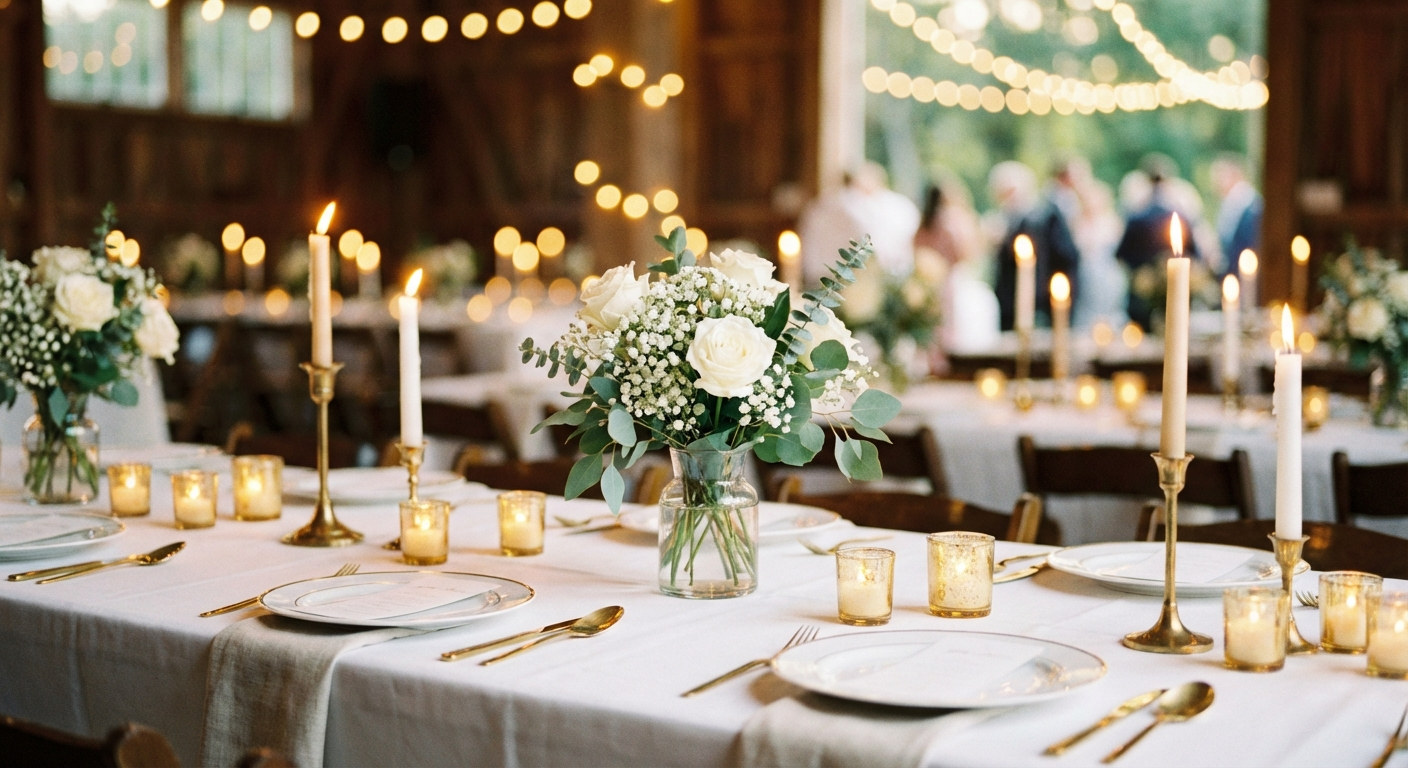
Candles remain the most cost-effective decor element available. A collection of pillar candles in varying heights, placed on mirrors or simple wooden platforms, creates warmth and atmosphere that no other element can match at that price point. Mixed with minimal greenery, candles transform any space.
Getting Great Photography and Videography Without the Premium Price Tag
Photography is the one budget category where most planners advise against aggressive cost-cutting, and the reasoning is sound: your photos are the only tangible artifact of the day that you will interact with for decades. However, there are ways to manage photography costs without sacrificing quality.
Coverage hours are the primary cost driver. A photographer who covers ten hours costs significantly more than one who covers six. Think carefully about which moments genuinely require professional documentation. Getting-ready photos, ceremony, family portraits, and the first two hours of the reception capture the vast majority of meaningful moments. Cutting the last two hours of dance floor coverage can save five hundred to a thousand dollars.
Second photographers add cost but are often unnecessary for weddings under one hundred guests. A skilled single photographer can cover a smaller wedding comprehensively. For larger weddings, a second shooter ensures nothing is missed during the ceremony when events happen simultaneously in different locations.
Emerging photographers offer extraordinary value. Photographers in their first two to three years of wedding work often charge half or less of what established professionals command, while producing work of comparable quality. Their portfolios may be smaller, but their skills, equipment, and editing abilities are often excellent. Look for photographers transitioning from portrait or editorial work into weddings as they bring technical skill and a fresh eye.
Videography costs can be managed by opting for highlight films rather than full-length edits. A five-to-eight-minute highlight reel captures the emotional arc of the day and is the version you will actually watch repeatedly. Full ceremony and reception edits are rarely rewatched after the first viewing but add significantly to the package price.
DIY Projects That Actually Work and Ones to Avoid
The internet is saturated with DIY wedding content, and not all of it is honest about the time, skill, and stress involved. Some DIY projects deliver genuine savings with minimal risk. Others consume hundreds of hours and produce results that look homemade in the worst sense of the word.
Projects worth doing yourself include welcome signs and signage, favor packaging and assembly, playlist curation for cocktail hour and dinner, ceremony programs, table numbers, and simple centerpiece assembly using purchased flowers and greenery. These are low-stakes, repeatable tasks that can be completed in advance and do not require artistic skill.
Projects to avoid doing yourself include anything structural like arches or backdrops unless you have genuine construction experience, elaborate floral arrangements that require professional technique, multi-tier cakes that demand precision engineering, and anything that needs to be assembled on the wedding day itself. The stress of DIY assembly on your wedding morning is never worth the savings.
A middle path that works well is purchasing materials wholesale and hiring a day-of helper to assemble. Buy flowers from a wholesale market two days before the wedding and have a friend with a good eye arrange them using simple tutorials. Purchase fabric and candles in bulk online and have your wedding party help set up the day before. This approach captures most of the cost savings of full DIY while distributing the labor and reducing your personal stress.
Vendor Negotiation and Timing Tactics That Work in 2026
The wedding industry in 2026 is experiencing a correction after years of post-pandemic demand surges. Many vendors have availability gaps, particularly for off-peak dates, and are more open to negotiation than they have been in years. Understanding this dynamic gives you leverage.
Book early for the best selection but negotiate pricing closer to the date if your timeline allows flexibility. Vendors with open dates three to four months out are often willing to offer discounts rather than leave those dates empty. This works particularly well for photographers, DJs, and florists whose time is their inventory.
Bundling services from a single vendor or venue saves money and simplifies coordination. A venue that includes catering, a DJ who also provides uplighting, or a photographer who bundles engagement and wedding sessions all offer better combined pricing than sourcing each element independently.
Payment timing matters. Vendors who offer discounts for upfront payment are giving you a genuine savings opportunity if you have the cash available. Conversely, vendors who charge for payment plans are adding cost. Understand the financial structure of each contract before signing.
Finally, be transparent about your budget. The best vendors would rather work with you to design a package that fits your means than lose the booking entirely. A florist who knows your budget can suggest varieties and arrangements that deliver the look you want within your constraints. Hiding your budget helps no one and often leads to proposals that exceed what you can afford, wasting everyone's time.
Where Not to Cut: The Budget Lines Worth Protecting
Strategic budget planning is as much about knowing where to hold firm as it is about knowing where to save. Certain wedding elements have an outsized impact on guest experience and your own satisfaction with the day, and cutting them aggressively tends to produce regret.
Music and entertainment set the emotional tone of the entire reception. A skilled DJ or live musician is worth the investment because they read the room, manage energy, and create moments that a playlist cannot. If live music is out of budget, invest in a good DJ rather than relying on a phone plugged into a speaker.
Guest comfort items like adequate seating, climate control, restroom facilities, and sufficient food and drink should never be cut. Uncomfortable guests leave early, and their discomfort is what they remember about your wedding. Better to have fewer guests who are well cared for than more guests who are standing, sweating, or hungry.
A day-of coordinator, even if you skip a full planner, is one of the highest-value investments in any wedding budget. A coordinator manages the timeline, handles vendor arrivals and setup, solves problems that arise, and ensures that you and your partner are never the ones troubleshooting logistics on your wedding day. This role pays for itself in stress reduction alone.
Your own experience matters. If there is one element of the wedding that you have always dreamed about, whether it is a specific dress, a particular band, a certain flavor of cake, or a dramatic exit, protect that line item. Cut elsewhere. The wedding should feel like yours, and the elements that make it personal are worth their cost.
Planning a wedding on a budget in 2026 is not about deprivation. It is about clarity. Couples who know what matters most to them and allocate their resources accordingly consistently create celebrations that feel generous, personal, and memorable. The weddings that disappoint are rarely the ones that cost less. They are the ones where money was spent without intention, where decisions were driven by expectation rather than desire.
The strategies in this guide are not theoretical. They are being used right now by couples navigating the same inflationary pressures and vendor price increases that you are facing. Digital RSVP platforms save hundreds on stationery while improving your planning workflow. Off-peak timing and alternative venues save thousands on your largest budget line. Smart catering choices, seasonal flowers, and targeted DIY projects close the gap between what you can afford and what you want your wedding to be.
Start with your priorities. Protect the elements that will make the day feel like yours. Apply creative thinking and strategic negotiation to everything else. The result will be a wedding that reflects your values, respects your financial reality, and gives you and your guests a day worth celebrating.