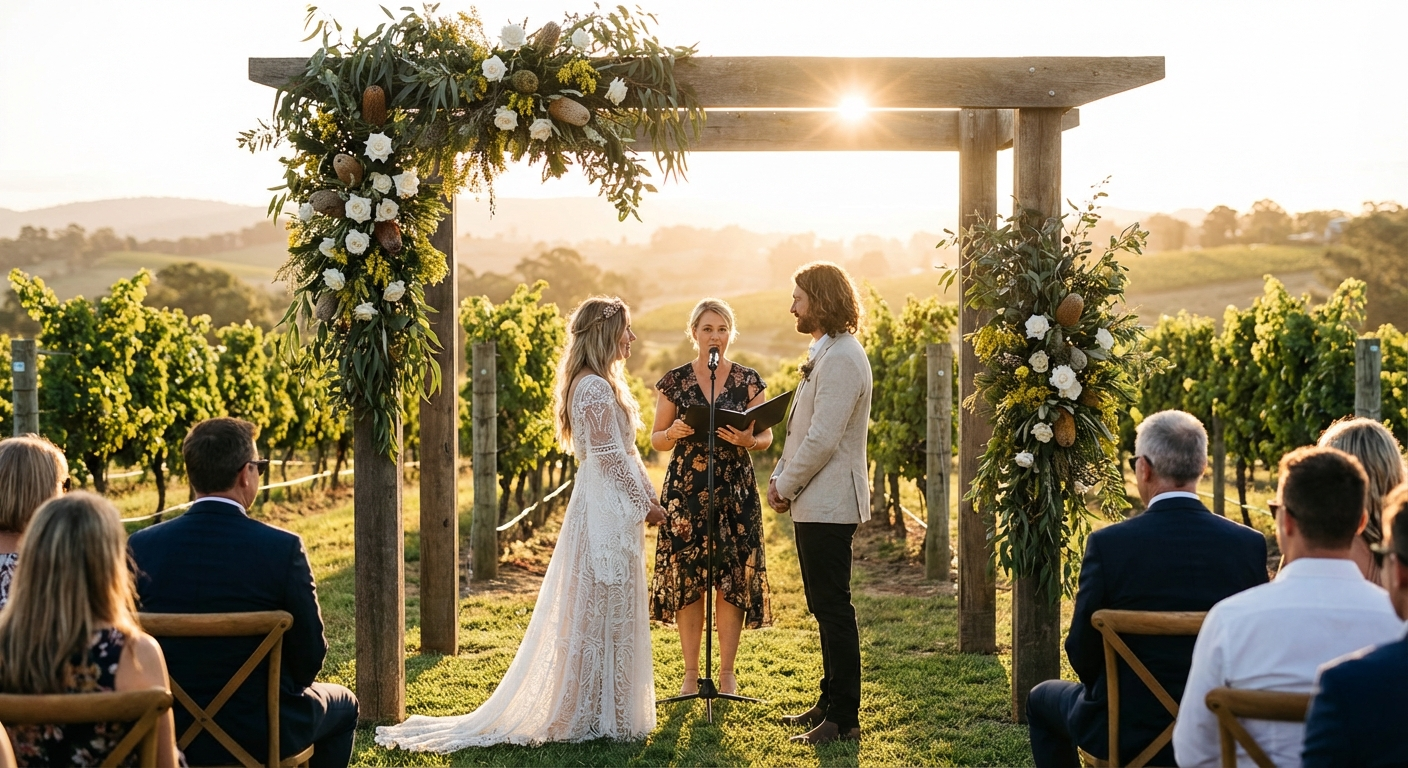
Of all the vendors you will book for your wedding, your celebrant holds a unique distinction: they are the only person who can legally make your marriage happen. Your photographer captures the moments, your florist sets the scene, and your caterer feeds the crowd, but without a registered celebrant, you walk away from the day unmarried. In Australia, this is not a formality you can skip or delegate to just anyone. The Marriage Act 1961 requires that all marriages be solemnised by an authorised celebrant, making this one of the most important decisions in your entire planning process.
Yet despite this significance, many Australian couples treat the celebrant search as an afterthought. They spend weeks comparing photographers, months deliberating over venues, and then book a celebrant based on a single Google search or a recommendation from a friend of a friend. The result can be a ceremony that feels generic, rushed, or disconnected from everything else you have carefully planned. In 2026, with more than ten thousand registered marriage celebrants across Australia and a growing trend toward deeply personalised ceremonies, there has never been more choice or more reason to get this decision right.
This guide covers everything you need to know about finding, evaluating, and booking a wedding celebrant in Australia. From the legal requirements you must satisfy to the questions that reveal whether a celebrant truly understands your vision, consider this your complete roadmap to one of the most personal vendor decisions you will make.
Understanding the Types of Marriage Celebrants in Australia
Before you start browsing celebrant directories or asking for recommendations, it helps to understand the different categories of authorised celebrants under Australian law. Each type serves a different purpose, and knowing the distinctions ensures you find the right fit for your ceremony style and legal requirements.
Commonwealth-Registered Marriage Celebrants
This is the most common type of celebrant for Australian weddings in 2026. Commonwealth-registered celebrants are authorised by the Australian Government through the Attorney-General's Department to perform marriages anywhere in the country. They are not affiliated with any religious organisation, which gives them complete flexibility to craft secular, spiritual, cultural, or blended ceremonies tailored to each couple.
There are currently more than ten thousand Commonwealth-registered celebrants across Australia, ranging from full-time professionals who conduct hundreds of ceremonies per year to part-time celebrants who balance the role with other careers. This variety means you can find someone who specialises in exactly the kind of ceremony you want, whether that is a relaxed barefoot ceremony on a Byron Bay beach, a formal garden wedding at a Yarra Valley estate, or an intimate elopement in the Tasmanian wilderness.
Ministers of Religion
Ministers of religion who are registered with the Attorney-General's Department can also legally perform marriages in Australia. If you want a Catholic, Anglican, Uniting Church, Orthodox, or other denominational ceremony, your minister or priest will handle the legal paperwork alongside the religious rites. It is worth noting that religious ceremonies must comply with both the rites of the particular religion and the requirements of the Marriage Act.
Some couples choose to have a religious blessing alongside a civil ceremony performed by a Commonwealth-registered celebrant. This can be a practical solution if your preferred religious leader is not registered as a marriage celebrant, or if you want to separate the legal and spiritual elements of your day.
State and Territory Officers
Registry offices in each state and territory employ authorised officers who can perform civil marriages. These ceremonies are typically brief, functional affairs held at the registry office during business hours. While they are the most affordable option, usually costing between $200 and $500 AUD depending on the state, they offer limited personalisation and are generally not suitable for couples who want a tailored ceremony experience at their chosen venue.
Legal Requirements You Need to Know Before Booking
Australian marriage law includes several requirements that directly affect your celebrant timeline and planning. Understanding these early will save you stress and ensure your ceremony is legally valid.
The Notice of Intended Marriage (NOIM)
Under the Marriage Act, you must lodge a Notice of Intended Marriage with your celebrant at least one month before your wedding date, but no earlier than eighteen months before. This is a legal document that your celebrant will help you complete, and it requires certain identification documents including your birth certificate, passport, or citizenship certificate.
The one-month minimum is a hard legal requirement with very limited exceptions. This means you need to have your celebrant booked and in contact well before the one-month mark. Most experienced celebrants recommend lodging the NOIM as early as possible once you have confirmed your date, ideally six to twelve months before the wedding. If you are planning a shorter engagement, the NOIM timeline becomes one of the first logistical items to sort.
The Monitum and Legal Vows
Regardless of how creative or personalised your ceremony becomes, Australian law requires that certain words be spoken during every marriage ceremony. Your celebrant must read the monitum, a legal statement that begins with the words: 'I am duly authorised by law to solemnise marriages according to law.' They must also confirm that both parties understand that marriage in Australia is the union of two people to the exclusion of all others, voluntarily entered into for life.
Both partners must also exchange legal vows that include specific elements. Your celebrant will guide you through exactly what is required and where you have creative freedom. The best celebrants weave these legal requirements so naturally into the ceremony that guests barely notice the transition between the mandated words and your personalised content.
Witnesses and Paperwork
Every Australian wedding requires two witnesses who are at least eighteen years old. These witnesses sign the marriage certificates along with you and your celebrant. Your celebrant is responsible for lodging the official marriage paperwork with the relevant state or territory registry of births, deaths, and marriages within fourteen days of the ceremony.
A good celebrant will walk you through all of this well before the day, ensuring your witnesses know what to expect and that all documentation is prepared in advance. They should also provide you with your commemorative marriage certificate on the day or shortly after.
When Should You Book Your Celebrant?
Timing is more important than many couples realise. The most sought-after celebrants in popular wedding regions can be booked twelve to eighteen months in advance, particularly for peak season dates between October and April. If you are planning an autumn 2026 wedding, March through May, many of the top-rated celebrants in Sydney, Melbourne, Brisbane, and Perth will already have limited availability.
As a general rule, begin your celebrant search as soon as you have confirmed your venue and date. This typically means booking eight to twelve months before the wedding, though earlier is always better if you have a specific celebrant in mind. Keep in mind that your celebrant relationship extends well beyond the ceremony itself. You will work together on the NOIM paperwork, ceremony scripting, rehearsal logistics, and any last-minute adjustments, so the earlier you establish that working relationship, the smoother the process becomes.
For couples planning destination weddings in regional areas such as the Hunter Valley, Margaret River, the Barossa Valley, or the Mornington Peninsula, booking early is especially critical. Regional celebrants often have smaller calendars and serve a large geographic area, which limits their availability during peak weekends.
What to Look For in a Wedding Celebrant
Finding a celebrant who is legally authorised is the baseline. Finding one who elevates your ceremony from a procedural requirement to the emotional centrepiece of your day is the real goal. Here is what distinguishes an adequate celebrant from an exceptional one.
Ceremony Style and Personality Match
Your celebrant sets the tone for your entire ceremony. A celebrant who specialises in relaxed, humour-filled ceremonies may not be the right fit if you envision something deeply romantic and formal. Conversely, a celebrant known for elegant, traditional ceremonies might feel out of place at a laid-back beach wedding on the Gold Coast.
Watch videos of potential celebrants performing ceremonies, not just their showreels, but full ceremony recordings if available. Pay attention to their voice, their pacing, how they handle transitions, and whether their energy matches the vibe you want for your day. Many celebrants now share ceremony snippets on Instagram and TikTok, which can give you a quick sense of their style before you make an enquiry.
Experience and Professionalism
Experience matters, but it is not just about the number of weddings performed. Look for a celebrant who has experience with your specific type of venue and ceremony style. A celebrant who has performed two hundred ceremonies in hotel ballrooms may be less comfortable managing a windswept clifftop ceremony in the Blue Mountains or navigating the acoustics of a large barn in the Yarra Valley.
Professionalism extends to communication, reliability, and preparation. Your celebrant should respond to enquiries promptly, provide clear information about their process and fees, carry professional indemnity insurance, and have a backup plan in case of illness or emergency. Ask whether they have a network of trusted colleagues who could step in at short notice if needed.
Approach to Personalisation
The biggest trend in Australian weddings in 2026 is deeply personalised ceremonies that tell the couple's unique story. The best celebrants invest significant time getting to know you as a couple, your history, your values, your sense of humour, and the moments that define your relationship. They use this understanding to craft a ceremony script that feels authentically yours rather than a template with your names inserted.
Ask potential celebrants how they approach the scripting process. Do they send a questionnaire? Do they schedule face-to-face or video meetings to learn about your relationship? Do they write the entire ceremony themselves, or do they collaborate with you on the content? How many rounds of revision do they include? The answers to these questions reveal how much creative energy they invest in each ceremony.
Essential Questions to Ask Before You Book
Meeting a potential celebrant, whether in person, over video, or by phone, is your opportunity to assess compatibility and professionalism. Come prepared with questions that go beyond logistics and reveal how they approach their craft.
Start with practical matters: How many weddings do you perform per weekend? Will you travel to our venue, and is there a travel fee? What is your fee structure and what does it include? Do you have professional indemnity insurance? What happens if you are unable to attend on the day?
Then move to the creative and personal: Can you describe a ceremony you performed that you are particularly proud of? How do you handle nerves or emotional moments during the ceremony? What is your approach when one partner wants a serious ceremony and the other wants something light-hearted? How do you incorporate cultural traditions or blended family dynamics?
Pay attention not just to their answers but to how they listen to your questions. A great celebrant will ask you as many questions as you ask them. They should be curious about your relationship, your vision for the day, and any elements that are important to you. If the initial consultation feels like a sales pitch rather than a genuine conversation, that is a red flag worth noting.
Finally, ask for references or reviews from recent couples. While online reviews on platforms like Easy Weddings, Google, and WedShed are helpful, direct feedback from couples who had similar ceremony styles or venues to yours is even more valuable.
What Does a Wedding Celebrant Cost in Australia in 2026?
Celebrant fees in Australia vary significantly based on location, experience, and the level of service included. Understanding the typical price ranges helps you budget appropriately and evaluate whether a quote represents fair value.
Typical Price Ranges Across Australian States
In 2026, most Commonwealth-registered marriage celebrants charge between $800 and $2,500 AUD for a full wedding ceremony service. This typically includes an initial consultation, NOIM lodgement and legal paperwork, ceremony scripting and revisions, a rehearsal (either on-site or virtual), the ceremony performance itself, and lodgement of marriage documents after the wedding.
At the lower end, around $800 to $1,200 AUD, you will find newer celebrants building their portfolio, part-time celebrants, or those offering streamlined packages with less personalisation. Mid-range celebrants, typically charging $1,200 to $1,800 AUD, usually offer a well-rounded service with multiple consultations, collaborative scripting, and on-site rehearsals. Premium celebrants, from $1,800 to $2,500 AUD and above, tend to be highly sought-after professionals with extensive experience, strong reputations, and deeply personalised approaches.
Geography plays a role too. Celebrants in Sydney and Melbourne generally charge at the higher end of these ranges, while those in regional areas, smaller cities, and less competitive markets may offer more affordable rates. Destination wedding locations like the Hunter Valley, Yarra Valley, and Margaret River often see slightly higher fees due to travel requirements and the premium nature of the venues.
What Should Be Included in the Fee
When comparing celebrant quotes, look beyond the headline number and examine what is included. A comprehensive package should cover all legal paperwork and government fees, at least two planning meetings (in person or virtual), a custom-written ceremony script with revisions, a rehearsal, the ceremony itself, provision of a signing table and PA system (or confirmation that the venue provides these), and your commemorative marriage certificate.
Some celebrants charge additional fees for travel beyond a certain distance, after-hours ceremonies, public holiday surcharges, or additional meetings beyond what is included in their base package. Clarify these potential extras upfront so there are no surprises. It is also worth asking whether their fee includes GST, as some quotes are listed exclusive of tax.
Ceremony Trends Australian Couples Are Embracing in 2026
The wedding ceremony in 2026 looks very different from even five years ago. Australian couples are pushing far beyond the traditional script, creating ceremonies that are as unique and memorable as the reception that follows. Understanding these trends can inspire your own ceremony design and help you find a celebrant who is skilled in the style you want.
Storytelling Ceremonies
Rather than a straightforward progression from processional to vows to signing, many couples are opting for narrative-driven ceremonies where the celebrant tells the story of their relationship. These ceremonies weave together anecdotes, meaningful moments, and personal details into a cohesive narrative that gives guests genuine insight into the couple's journey. When done well, storytelling ceremonies create an emotional depth that has guests laughing, crying, and feeling deeply connected to the moment.
Interactive Guest Involvement
Australian couples in 2026 are finding creative ways to involve their guests in the ceremony beyond sitting and watching. Ring-warming rituals, where the rings are passed among guests so each person can silently bless them, have become popular at mid-sized weddings. Group vows, where the celebrant asks guests to collectively promise their support for the marriage, add a communal dimension to the proceedings. Some couples are even incorporating live polls or audience participation moments that bring energy and laughter to the ceremony.
A skilled celebrant knows how to facilitate these interactive elements naturally, keeping the energy flowing without the ceremony feeling gimmicky or losing its emotional core. If guest involvement is important to you, look for a celebrant with specific experience in participatory ceremony design.
Cultural and Multicultural Ceremonies
Australia's multicultural fabric means that many couples bring together different cultural, religious, or family traditions in their ceremony. From incorporating an Acknowledgement of Country to blending Chinese tea ceremonies, Greek crowning rituals, Indian garland exchanges, or Italian confetti traditions, multicultural ceremonies require a celebrant who is both culturally sensitive and creatively confident.
The best celebrants approach multicultural ceremonies with genuine curiosity and respect, taking time to understand the significance of each tradition and working with families to ensure every element is honoured appropriately. If your ceremony will include cultural elements, prioritise celebrants who have direct experience with the specific traditions you want to incorporate.
How Your RSVP Platform Supports the Ceremony Experience
Your ceremony is the moment everything comes together, and the smoother your guest communication has been in the lead-up, the more seamlessly the day unfolds. Modern digital RSVP platforms play a surprisingly important role in ceremony logistics that many couples overlook.
A well-designed wedding RSVP website allows you to communicate ceremony details clearly, including the exact location, parking instructions, arrival time, dress code, and any special considerations such as unplugged ceremony requests. When guests have easy access to this information through their RSVP confirmation, they arrive prepared and on time, which means your celebrant can start the ceremony as planned rather than waiting for stragglers.
Digital RSVP platforms also help you manage the guest list details that affect your ceremony layout. Knowing your exact headcount, accessibility requirements, and family dynamics in advance allows your celebrant to plan the processional, seating arrangements, and flow of the ceremony with precision. If you have a blended family situation, young children attending, or guests with mobility needs, this information helps your celebrant adapt the ceremony structure accordingly.
For couples who want to send ceremony-specific updates, such as a last-minute venue change due to weather or a reminder about the unplugged policy, the mass communication features of digital RSVP platforms ensure every guest receives the same information instantly. This level of organisation reflects well on the entire celebration and takes pressure off both you and your celebrant on the day.
Red Flags When Choosing a Celebrant
Not every registered celebrant delivers the same quality of service. Being aware of common warning signs helps you avoid a disappointing ceremony experience.
Be cautious of celebrants who are unwilling to share samples of their ceremony scripts or provide references from recent couples. A professional celebrant should be proud of their work and happy to demonstrate their approach. Similarly, watch out for celebrants who seem disinterested in learning about your relationship during the initial consultation. If they jump straight to logistics without asking about your story, your values, or your vision for the ceremony, they are unlikely to deliver a personalised experience.
Avoid celebrants who book multiple weddings on the same day with tight turnaround times. While some celebrants manage this successfully, it creates risk that they will arrive rushed, leave quickly after the ceremony, or lack the mental space to be fully present for your celebration. Ask directly whether they have other commitments on your wedding date.
Finally, be wary of unusually low fees that seem too good to be true. While affordability is important, a celebrant charging significantly below market rates may be cutting corners on preparation time, personalisation, or professional development. Your ceremony is not the place to bargain-hunt. The fee difference between an adequate celebrant and an exceptional one is typically a few hundred dollars, a fraction of your overall wedding budget that pays dividends in the quality of your most important moment.
Where to Find Wedding Celebrants Across Australia
Australia offers numerous resources for finding qualified, experienced celebrants in your area. The Attorney-General's Department maintains an official register of all authorised marriage celebrants, searchable by location, which is the definitive source for confirming a celebrant's registration status.
Beyond the official register, wedding directories such as Easy Weddings, WedShed, and The Celebrant Directory allow you to browse celebrant profiles filtered by location, style, and price range. These platforms typically include reviews from past couples, portfolio content, and direct enquiry options. Social media, particularly Instagram, has also become a powerful discovery tool, with many celebrants sharing ceremony highlights, behind-the-scenes content, and client testimonials.
For couples planning weddings in specific regions, local wedding Facebook groups and community forums can provide personal recommendations. Groups dedicated to weddings in the Hunter Valley, Yarra Valley, Gold Coast, Margaret River, and other popular destinations are particularly active and offer honest feedback from couples who have recently married in those areas.
Word-of-mouth referrals remain one of the most reliable ways to find a great celebrant. Ask recently married friends, your venue coordinator, your photographer, or your wedding planner for recommendations. Vendors who work regularly in the wedding industry see celebrants in action at multiple events and can offer informed opinions about who consistently delivers outstanding ceremonies.
Your wedding celebrant is not just a legal requirement. They are the person who holds the emotional centre of your most important day, who sets the tone for everything that follows, and who turns a legal procedure into a moment you and your guests will remember for decades. In a market with more than ten thousand registered celebrants across Australia, the choice can feel overwhelming, but the investment of time in finding the right person pays off enormously.
Start early, do your research, meet several candidates, and trust your instincts about personal chemistry. The right celebrant will make you feel heard, understood, and genuinely excited about your ceremony long before the day arrives. And when you are standing together under that arbour, whether it is in a Yarra Valley vineyard, a Sydney harbourside garden, a Margaret River olive grove, or your own backyard, you will know that the person guiding you through those vows truly understands what this moment means to you.