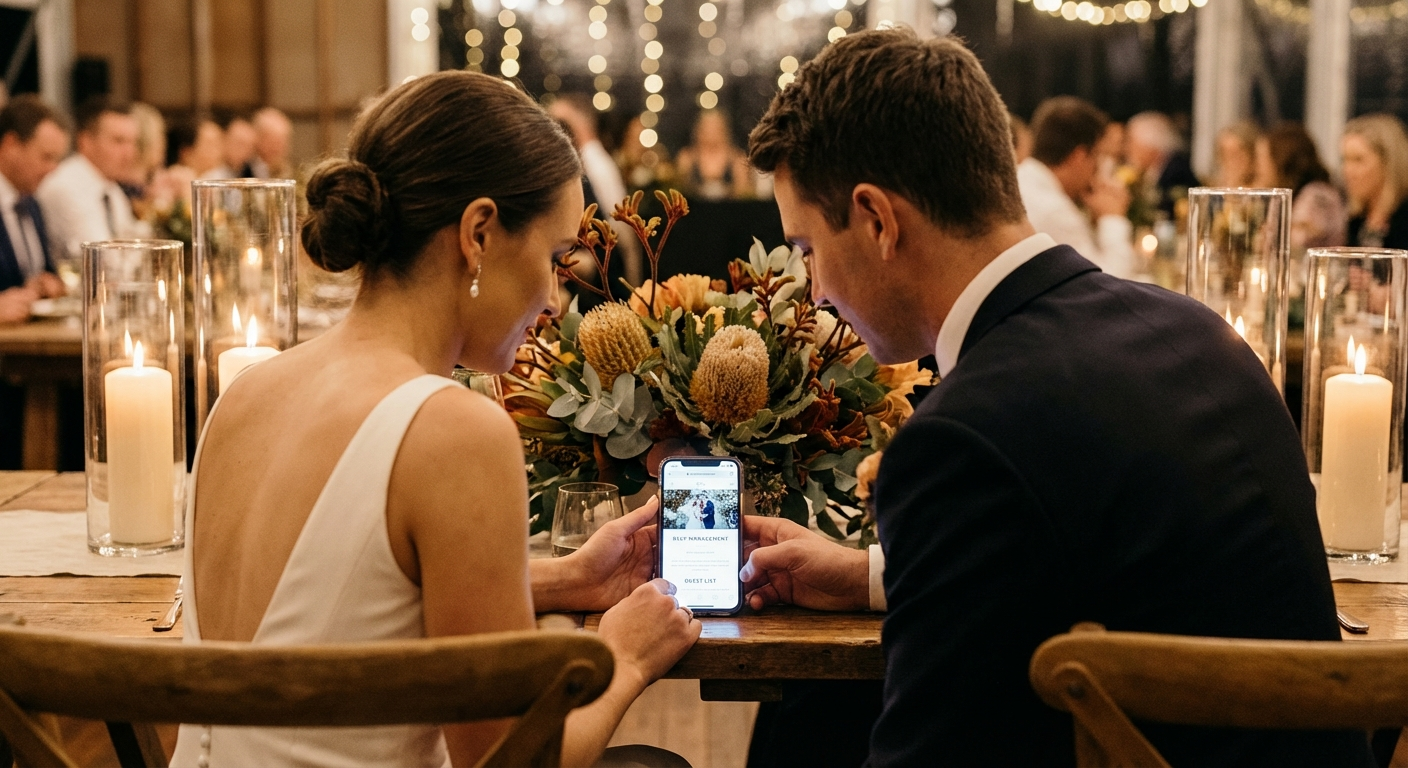
There was a time when managing wedding RSVPs meant stuffing reply cards into envelopes, paying for return postage, and then spending weeks chasing up the handful of guests who somehow never got around to dropping theirs in the post. For Australian couples planning weddings in 2026, that process feels almost quaint. Digital RSVP platforms have fundamentally changed how couples communicate with their guests, collect essential information, and manage the logistics that make a wedding day run smoothly.
But the transformation goes deeper than simply replacing paper with a web form. The best digital RSVP systems now function as comprehensive guest management tools that handle everything from dietary requirements and transport logistics to song requests and multi-event coordination. For a country as geographically spread as Australia, where wedding guests routinely travel interstate and sometimes internationally, the ability to centralise all guest communication in one platform has become not just convenient but essential.
This guide explores how digital RSVPs are reshaping the Australian wedding experience in 2026, what features matter most, and how couples can use these tools to reduce stress, save money, and create a smoother experience for everyone involved.
The Shift from Paper to Digital: Why Australian Couples Are Making the Switch
The move toward digital RSVPs in Australia has been building steadily, but 2026 marks the year where digital has become the default rather than the exception. According to recent Australian wedding industry surveys, over 70 per cent of couples now use some form of digital RSVP system, whether as a standalone tool or integrated into a broader wedding website. The reasons are both practical and financial.
Cost is the most immediate factor. A traditional paper RSVP suite for 120 guests, including reply cards, envelopes, and return postage, typically costs between $300 and $600 AUD when factoring in printing and stamps. For couples who have already invested $500 to $2,500 AUD in their primary invitation suite, the additional expense of reply cards can feel excessive. Digital RSVPs eliminate this cost entirely while offering functionality that paper simply cannot match.
Speed and reliability are equally compelling. Australia Post delivery times, particularly for regional and interstate mail, can stretch to five or more business days. A digital RSVP arrives instantly, can be completed in under two minutes, and provides the couple with an immediate confirmation. There is no risk of lost mail, no ambiguity about whether a guest received the invitation, and no need to wonder whether that reply card sitting on someone's kitchen bench will ever make it back.
Environmental considerations also play a growing role. Australian couples are increasingly conscious of the waste generated by traditional wedding stationery. A single wedding can produce several kilograms of paper waste across invitations, reply cards, menus, programs, and place cards. While many couples still choose physical invitations for the tactile experience, pairing a beautiful printed invitation with a digital RSVP system represents a practical compromise that reduces waste without sacrificing elegance.
Perhaps most importantly, digital RSVPs provide data in a format that is immediately useful. Rather than manually transcribing handwritten responses into a spreadsheet, couples receive structured information that can be sorted, filtered, and shared with vendors. When your caterer needs a final count of vegetarian meals or your venue coordinator needs to know how many guests require wheelchair-accessible seating, the information is already organised and ready to export.
Beyond Yes or No: The Information Modern RSVPs Can Capture
The most significant evolution in digital RSVPs is the range of information they can collect in a single interaction. A paper reply card offers space for a name, a tick box, and perhaps a line for dietary requirements. A well-designed digital RSVP form can gather everything a couple needs to plan their event without requiring follow-up communication.
Dietary Requirements and Accessibility Needs
Australian weddings in 2026 cater to a remarkably diverse range of dietary needs. Beyond the standard vegetarian and vegan options, couples regularly need to account for gluten-free, dairy-free, halal, kosher, nut-free, and low-FODMAP requirements. A digital RSVP form can present these as selectable options with an additional free-text field for specific allergies or preferences, giving caterers the detailed information they need to prepare appropriate meals.
Accessibility requirements are equally important and often overlooked in traditional RSVP processes. A digital form can discreetly ask about mobility needs, hearing requirements, or any other accommodations that would help a guest participate fully in the celebration. This information allows couples and venues to make arrangements in advance rather than scrambling on the day. For venues with mixed indoor-outdoor spaces, such as winery estates in the Hunter Valley or garden properties in the Adelaide Hills, knowing accessibility needs ahead of time is particularly valuable.
Transport and Accommodation Coordination
For weddings held in regional locations, which account for a significant proportion of Australian celebrations, transport logistics can be complex. A digital RSVP system can ask guests whether they plan to drive, whether they would like to be included on a shuttle bus from a nearby town, or whether they need accommodation recommendations. This information helps couples determine whether to arrange group transport, how many shuttle runs might be needed, and which accommodation options to highlight.
Consider a wedding at a Yarra Valley winery, where guests might be travelling from Melbourne's CBD, the eastern suburbs, or regional Victoria. Knowing that 40 guests plan to use a shuttle service versus 80 changes the logistics and cost significantly. Shuttle hire in Victoria typically runs between $800 and $2,000 AUD depending on distance and vehicle size, so accurate numbers directly affect the budget. A digital RSVP that captures this information weeks in advance gives couples time to organise cost-effective solutions.
Song Requests and Personal Touches
One of the most popular features of modern digital RSVP platforms is the ability to include custom questions that add personality to the process. Song requests are the most common, giving guests the chance to suggest tracks that will get them on the dance floor. This information is genuinely useful for DJs and bands, who can build playlists that reflect the specific crowd rather than relying on generic wedding setlists.
Other popular custom questions include asking guests to share a favourite memory with the couple, suggest a date-night idea, or offer a piece of marriage advice. These responses can be collected and turned into a keepsake book or displayed at the reception. It transforms the RSVP from a logistical task into the first interactive moment of the wedding experience.
Managing Multi-Event Wedding Weekends
The multi-event wedding weekend has become a defining feature of Australian weddings in 2026. What was once a single-day affair has expanded, particularly for couples hosting destination celebrations in regions like Byron Bay, Margaret River, the Gold Coast, or the Mornington Peninsula. A typical wedding weekend might include a welcome drinks session on Friday evening, the ceremony and reception on Saturday, and a recovery brunch or barbecue on Sunday morning.
Managing RSVPs across multiple events with paper invitations is logistically painful. Each event requires separate response tracking, and the potential for confusion multiplies with every additional card in the envelope. Digital RSVP platforms handle this elegantly by presenting all events in a single form, allowing guests to indicate their attendance for each occasion. The couple receives a unified view of who is attending what, which simplifies catering orders, venue arrangements, and seating logistics.
This is particularly relevant for Australian weddings where guest numbers can vary significantly between events. A formal seated reception for 100 guests might be preceded by welcome drinks for 60 and followed by a casual brunch for 80. Without a centralised system, tracking these overlapping numbers becomes an exercise in spreadsheet management that consumes hours of planning time. A digital platform automates this entirely, often providing dashboard views that show attendance numbers per event at a glance.
For couples hosting events across multiple venues or locations within a region, the RSVP platform can also serve as a communication hub, providing directions, parking information, and dress code guidance for each event. This reduces the volume of individual enquiries from guests and ensures everyone has the information they need in one accessible location.
Real-Time Tracking and the End of RSVP Anxiety
Anyone who has managed a traditional paper RSVP process knows the particular stress of watching the deadline approach while a third of your guest list remains unaccounted for. Digital RSVP systems eliminate much of this anxiety by providing real-time visibility into response rates and automating follow-up communication.
Most platforms offer a dashboard that shows total invitations sent, responses received, confirmed attendees, declines, and outstanding responses. This information is available at any time, from any device, and updates the moment a guest submits their response. For couples planning together, shared access means both partners can monitor progress without exchanging spreadsheets or tallying paper cards at the kitchen table.
Automated reminders are one of the most valuable features of digital RSVP platforms. Rather than personally contacting every guest who has not responded, couples can schedule gentle reminder emails or messages that go out at predetermined intervals before the deadline. This removes the social awkwardness of chasing responses while significantly improving response rates. Most platforms report that automated reminders increase on-time RSVP rates by 25 to 40 per cent.
The ability to close RSVPs after the deadline and immediately generate final guest lists is another practical advantage. Caterers in Sydney, Melbourne, Brisbane, and Perth typically require final numbers two to three weeks before the event. A digital system allows couples to export a finalised guest list with all dietary requirements, seating preferences, and attendance confirmations in a format that can be sent directly to vendors. What once took an evening of manual compilation can be completed in minutes.
For couples who have engaged a wedding planner or coordinator, shared platform access means the planner can monitor RSVPs independently and flag any issues without requiring constant updates from the couple. This is particularly useful in the final weeks before the wedding when both parties are managing multiple deadlines simultaneously.
The Cost Equation: Digital RSVPs Versus Traditional Stationery
Understanding the financial impact of switching to digital RSVPs requires looking beyond the obvious savings on paper and postage. The true value includes time saved, errors avoided, and the functionality gained.
Direct Cost Savings
A traditional paper RSVP process for a 120-guest wedding typically involves the following costs: reply cards and envelopes at $2 to $4 AUD per set ($240 to $480 total), return postage at $1.20 AUD per envelope ($144 total), and calligraphy or printing for guest names and addresses at $1 to $3 AUD per envelope ($120 to $360 total). The total direct cost ranges from approximately $500 to $980 AUD, and this does not account for the primary invitation suite itself.
A digital RSVP platform eliminates all of these costs. Free options exist but often carry limitations on guest numbers or customisation. Premium platforms like WeddingRSVP.org offer full-featured RSVP management with custom branding, unlimited guests, and multi-event support from $49 to $99 AUD, representing savings of $350 to $830 AUD compared to traditional paper RSVPs.
Indirect Value and Time Savings
The indirect savings are harder to quantify but equally significant. Couples who use digital RSVPs report saving an average of 15 to 20 hours over the course of their planning period, time that would otherwise be spent addressing envelopes, tracking responses manually, chasing non-respondents, and compiling final guest lists for vendors.
Error reduction is another form of value. Handwritten RSVP cards are frequently difficult to read, leading to misspelled names on place cards and incorrect dietary information reaching the caterer. Digital submissions eliminate handwriting ambiguity entirely. When a guest types their own name and selects their dietary requirements from a structured menu, the data is clean, consistent, and ready for vendor communication.
For couples on tighter budgets, the savings from digital RSVPs can be redirected to areas with higher experiential impact: an upgraded floral installation, a live musician during the ceremony, or an additional hour of photography coverage. When the average Australian wedding in 2026 costs between $35,000 and $55,000 AUD, every opportunity to reallocate spending toward elements that enhance the guest experience is worth considering.
Design and Personalisation: Making Digital Feel Premium
One concern couples sometimes express about digital RSVPs is whether they can match the aesthetic quality of their physical invitation suite. In 2026, the answer is unequivocally yes. Modern RSVP platforms offer extensive customisation options that allow couples to create a digital experience that feels like a natural extension of their wedding's visual identity.
Custom colour palettes, font selections, and background imagery mean that a couple who has chosen a terracotta and olive autumn palette can carry those exact tones through to their digital RSVP page. Some platforms support custom header images, allowing couples to feature an engagement photograph or a styled image of their venue. The result is a branded, cohesive experience that feels intentional rather than generic.
The integration between physical and digital stationery has also become more seamless. Many couples include a QR code on their printed invitation that links directly to their RSVP page, creating a bridge between the tactile experience of receiving a beautiful card and the convenience of responding digitally. The QR code can be designed to complement the invitation aesthetic, appearing as an elegant element rather than a utilitarian addition.
For Australian couples drawing on the 2026 trend of vintage-inspired styling, digital platforms can incorporate design elements that echo this aesthetic: serif typefaces, muted colour palettes, botanical illustrations, and textured backgrounds that give the digital page a hand-crafted quality. The goal is not to replicate paper but to create a digital experience that shares the same design language and emotional tone.
Wedding websites that integrate RSVP functionality take this a step further by providing a single destination where guests can find all event details, RSVP for each occasion, access accommodation recommendations, view the gift registry, and read about the couple's story. Platforms like WeddingRSVP.org offer these all-in-one solutions, ensuring that guests have a single bookmark-worthy URL rather than multiple links to manage.
Privacy and Data Security for Australian Couples
When guests provide personal information through a digital RSVP system, including names, email addresses, dietary requirements, and accessibility needs, data security becomes a legitimate consideration. Australian couples should ensure that the platform they choose complies with the Australian Privacy Act and handles personal information responsibly.
Look for platforms that use encrypted connections (HTTPS), do not share guest data with third parties for marketing purposes, and provide clear privacy policies that explain how data is stored and when it is deleted. The ability to export your data and delete your account after the wedding is also important, ensuring that guest information does not remain on a platform indefinitely.
For couples concerned about guests who may be less comfortable with digital tools, most platforms offer a simple, mobile-friendly interface that requires no account creation or app download. The RSVP process should work in any web browser, on any device, and take no more than two to three minutes to complete. This accessibility is particularly important for older guests or those who are less familiar with digital forms.
It is also worth noting that digital RSVPs can be more private than traditional methods in some respects. A paper reply card might be seen by anyone in the household, whereas a digital submission is between the guest and the couple. For guests with dietary restrictions or accessibility needs that they prefer to communicate privately, a digital form offers a layer of discretion that a shared household mailbox does not.
Practical Tips for Implementing Digital RSVPs
Successfully transitioning to a digital RSVP system requires some planning to ensure the process is smooth for both the couple and their guests. These practical considerations will help Australian couples get the most from their chosen platform.
Timing Your Invitations and Setting Deadlines
For Australian weddings, send invitations eight to twelve weeks before the date, with twelve weeks recommended for destination weddings or events near public holidays such as Easter or the Melbourne Cup long weekend. Set the RSVP deadline four weeks before the wedding to allow adequate time for final catering numbers, seating arrangements, and vendor communication. Most digital platforms allow you to set an automatic cut-off date after which the form is no longer accepting responses.
Consider sending a save-the-date six to eight months in advance, particularly for weddings in popular regions like the Blue Mountains, the Barossa Valley, or the Whitsundays where guests will need to book accommodation early. The save-the-date can include a link to your wedding website without the RSVP being active yet, allowing guests to familiarise themselves with the platform before their response is needed.
Communicating the Digital Process to Guests
While most guests will find a digital RSVP intuitive, it helps to communicate the process clearly. Include a brief line on your invitation such as 'Please RSVP via our wedding website' alongside the QR code or URL. Avoid assuming that every guest will immediately understand the process, particularly older relatives who may be accustomed to paper reply cards.
For the small number of guests who genuinely cannot or prefer not to use a digital system, have a backup plan. This might mean offering to submit the RSVP on their behalf after a phone call, or providing a simple email address as an alternative. The goal is inclusivity: digital should be the primary channel, but no guest should feel excluded by the technology.
A brief message in your invitation suite explaining the benefits of digital RSVPs can also help. Something as simple as 'We have set up our wedding website to make RSVPs easy and help us keep track of all the details. You can respond in under two minutes and let us know your meal preferences and song requests at the same time.' This frames the digital option as a convenience rather than a cost-cutting measure.
Sharing RSVP Data with Your Vendors
One of the greatest practical benefits of digital RSVPs is the ease of sharing organised data with your vendor team. Most platforms allow you to export guest lists as CSV or PDF files, filtered by criteria such as dietary requirements, event attendance, or transport needs.
Share your dietary summary with your caterer as soon as RSVPs close. Provide your venue coordinator with the final headcount and any accessibility notes. Send your DJ or band the compiled song request list. Give your florist the confirmed table count so they can finalise centrepiece numbers. Each of these communications becomes a simple export-and-send task rather than a manual compilation exercise.
For couples working with a wedding planner, shared access to the RSVP dashboard is invaluable. Planners in Sydney, Melbourne, and Brisbane routinely manage the final logistics phase using digital RSVP data, coordinating directly with vendors on the couple's behalf. This level of integration is simply not possible with paper-based systems.
Looking Ahead: The Future of Wedding RSVPs in Australia
The trajectory is clear: digital wedding RSVPs in Australia will continue to evolve beyond simple response collection toward comprehensive guest experience platforms. Emerging trends include integration with accommodation booking systems that allow guests to reserve nearby hotels directly through the wedding website, real-time seating map previews where guests can see their table assignment before the day, and integrated gift registry functionality that consolidates all wedding-related actions into a single platform.
Sustainability will continue to drive adoption. As more Australian couples prioritise environmentally conscious planning, the argument for eliminating unnecessary paper from the wedding process becomes increasingly compelling. The combination of a beautifully designed physical invitation with a fully digital RSVP and communication system represents the optimal balance of tradition and practicality.
For couples planning their Australian wedding in 2026 and beyond, the question is no longer whether to use digital RSVPs but which platform best suits their needs. The technology has matured to a point where it enhances rather than diminishes the wedding experience, providing couples with better information, less stress, and more time to focus on the moments that truly matter.
Whether you are organising an intimate gathering of 30 in a Tasmanian vineyard or a 200-guest celebration at a Sydney harbourside venue, a digital RSVP system is the foundation of efficient, modern wedding planning. It is the tool that connects your first communication with your guests to the final logistics of your celebration, ensuring that every detail is captured, every preference is honoured, and every guest feels considered.
Digital RSVPs have moved well beyond their origins as a simple online form. For Australian couples in 2026, they represent a smarter, more connected approach to wedding planning that saves money, reduces waste, and creates a better experience for everyone involved. From capturing complex dietary needs and coordinating multi-event weekends to providing real-time tracking and seamless vendor communication, the right RSVP platform transforms one of wedding planning's most tedious tasks into one of its most efficient.
The beauty of the digital approach is that it does not require choosing between elegance and practicality. A stunning printed invitation paired with a thoughtfully designed digital RSVP page delivers the best of both worlds. Your guests receive something beautiful to hold, and you receive the information you need in a format that makes the rest of your planning easier. In a country where weddings span every climate, landscape, and cultural tradition, that combination of beauty and function is exactly what modern Australian couples deserve.