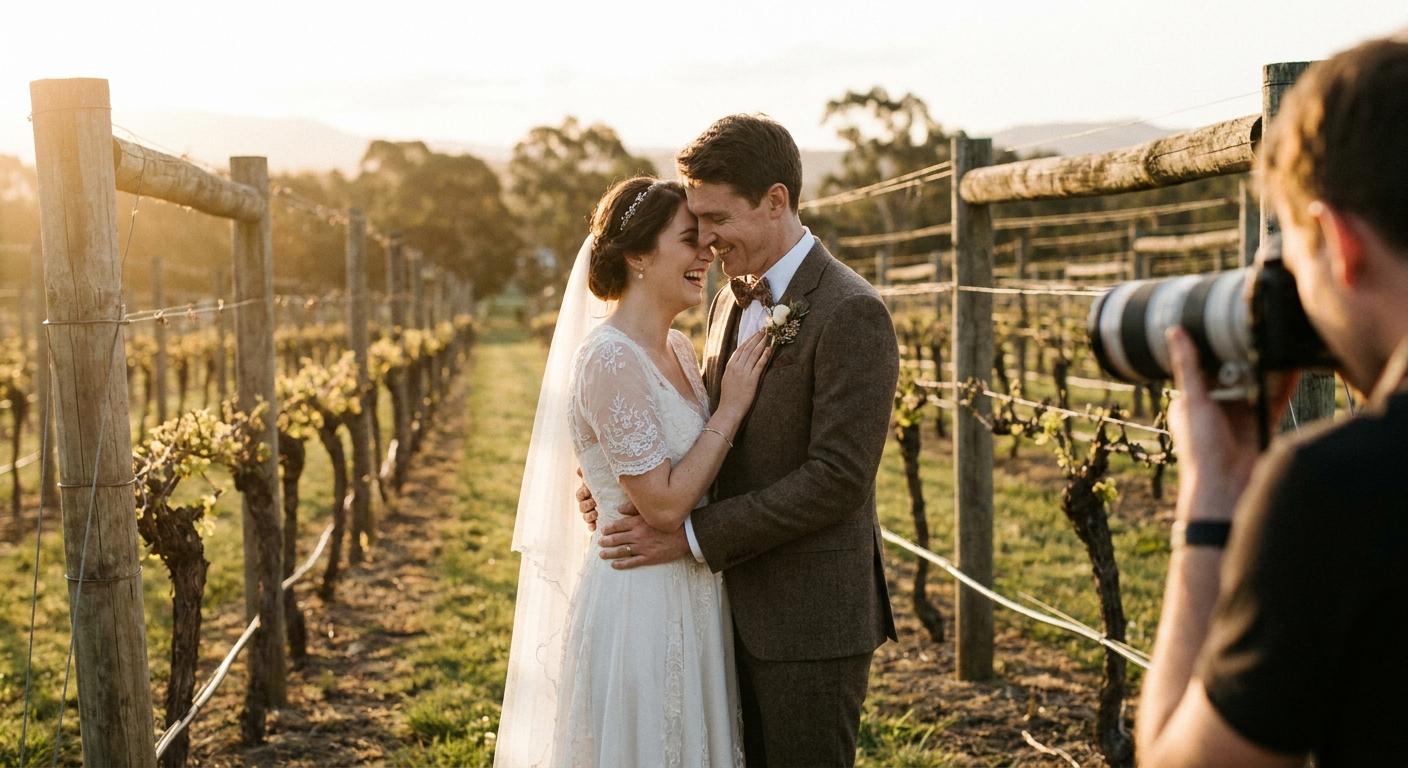
The traditional wedding photography playbook is well established: the couple stands in a picturesque location, the photographer directs them into flattering positions, and a sequence of posed portraits is produced with mechanical efficiency. This approach dominated wedding photography for decades, producing technically competent images that felt safe, predictable, and curiously lifeless. In 2026, Australian couples are rejecting that formula in favour of something fundamentally different. Documentary wedding photography, sometimes called photojournalistic or candid wedding photography, prioritises real moments over constructed images. The photographer becomes an observer, capturing the genuine emotions, unscripted interactions, and authentic atmosphere of the wedding day rather than manufacturing a series of portfolio-ready poses.
This shift is not merely aesthetic. It reflects deeper changes in how Australian couples think about their wedding day, their relationship with photography, and what they want their images to represent years or decades later. When couples look back at their wedding photographs, they want to remember how the day felt, not just how it looked. Documentary photography delivers that emotional authenticity. This article explains what documentary wedding photography involves, how it differs from traditional approaches, what Australian couples should look for when selecting a documentary photographer, and how to prepare for a photography experience that is fundamentally different from the traditional wedding shoot.
What Documentary Wedding Photography Actually Means
Documentary wedding photography is built on a philosophical foundation: the wedding day contains within it every moment, emotion, and interaction that will make the photographs meaningful, and the photographer's role is to observe and capture those moments rather than create them. The documentary photographer does not typically direct the couple into poses, does not orchestrate elaborate setups, and does not interrupt the natural flow of the day to create photographable situations. Instead, they move through the day as a quiet presence, anticipating moments, recognising significant interactions, and capturing them with technical precision and artistic sensibility.
This approach requires a different skill set than traditional wedding photography. A documentary photographer must be skilled at reading a room, predicting emotional peaks, working in available light without altering the environment, and capturing crisp, well-composed images in unpredictable conditions without direction or control. They must be comfortable being invisible when necessary and present when moments arise. The best documentary wedding photographers in Australia describe their practice as a combination of street photography, portrait photography, and event coverage — all of which require different instincts and different technical approaches.
The results are images that feel fundamentally different from traditional wedding photographs. A documentary image of the couple's first dance captures the actual moment of movement, the genuine expressions of the couple, and the authentic atmosphere of the room. A traditional version of the same moment would show the couple in a flattering pose, technically composed, but somehow missing the emotional truth that makes the photograph memorable. The difference is not a matter of quality — both approaches require technical excellence — it is a matter of what the photographs are trying to achieve.
Why Australian Couples Are Moving Away from Posed Photography
The shift toward documentary wedding photography in Australia reflects broader cultural changes in how couples approach their weddings generally. As more Australian couples embrace intimate weddings, multi-day celebrations, and personalised ceremonies that reflect their genuine relationship rather than family expectations, the idea of interrupting the authentic flow of the day for a series of manufactured photographs feels incongruous. When the wedding is intentionally small, personal, and unscripted, the photography should reflect those values.
The rise of social media has also influenced this shift. Traditional wedding photographs — the kinds of images produced by the standard wedding photography checklist — are recognisable and formulaic. They look like every other wedding album from the same era. Documentary photographs, by contrast, are unique to each wedding, each couple, and each moment. When couples share their wedding photographs online, documentary images stand out because they are visually distinctive and emotionally resonant. They tell a story rather than documenting a checklist.
There is also a generational dimension to this shift. Australian couples getting married in 2026 are predominantly Millennials and Generation Z, demographic groups who have grown up with smartphones and are acutely aware of the difference between authentic and performative imagery. The staged, artificial quality of traditional wedding photography feels dated to couples who are used to candid, authentic photography in their daily lives. They want their wedding photographs to feel consistent with the images they take and treasure in their personal lives.
Finding the Right Documentary Wedding Photographer in Australia
Finding a genuine documentary wedding photographer requires looking beyond the labels photographers use to describe themselves. The term 'documentary' has become widely used in the Australian wedding photography market, but not every photographer who describes their work as documentary operates in the pure documentary tradition. Some photographers combine documentary and traditional approaches, offering candid coverage for parts of the day and posed portraits for others. This hybrid approach can be appropriate for couples who want some of the authenticity of documentary photography without committing fully to the approach.
The most reliable way to assess a photographer's documentary credentials is to review their full wedding albums, not just their highlight selections. Documentary photographers typically show complete wedding coverage — every moment from the ceremony through to the reception — rather than curated collections of their best images. Complete album reviews reveal whether the photographer can consistently produce compelling documentary images throughout an entire event, rather than producing occasional documentary-style shots among a portfolio of predominantly posed work.
When reviewing photographer portfolios in Australia, look for evidence of specific technical and artistic skills that define documentary excellence. The ability to work in low light is essential — ceremonies in dimly lit chapels, evening receptions, and indoor venues require photographers who can capture crisp, well-exposed images without flash that would alter the atmosphere. Movement photography is another indicator — the ability to freeze or intentionally blur motion in ways that convey energy and emotion rather than producing static, posed-looking images.
Australian cities with established documentary wedding photography communities include Melbourne, Sydney, and Brisbane, where the approach has been popular for longer and where the vendor ecosystem reflects demand. However, documentary photographers operate throughout Australia, including regional centres that host destination weddings. The Hunter Valley, Margaret River, Yarra Valley, and Byron Bay regions — all popular wedding destinations — have resident documentary photographers who specialise in the intimate, character-rich venues those regions are known for.
Documentary Photography in the Australian Wedding Context
Australian weddings present specific challenges and opportunities for documentary photographers that differ from other markets. The outdoor orientation of many Australian weddings — beach ceremonies, vineyard celebrations, bush settings — creates conditions that are both technically demanding and visually rewarding. Documentary photographers who work regularly in Australian outdoor venues develop expertise in available-light photography that photographers in more indoor-oriented markets rarely achieve.
The spatial characteristics of Australian wedding venues also shape the documentary approach. Australia's best wedding venues — from the cellar doors of the Barossa Valley to the coastal clifftops of the Mornington Peninsula — are often characterful spaces with limited room for large photography equipment setups. Documentary photographers adapt to these constraints by working with smaller, more portable gear that allows them to move quickly and unobtrusively through the space. This mobility is essential to capturing the spontaneous interactions and unguarded moments that define documentary photography.
The seasonal variation in Australian weddings also affects documentary photography. Peak wedding season in Australia runs from October through April, with the highest concentration from November to March. During these months, the longer daylight hours — particularly in southern cities like Melbourne and Adelaide — create extended golden hour windows that documentary photographers use extensively for portraits and atmospheric shots. Winter weddings, from June to August, present different opportunities: intimate indoor celebrations, dramatic afternoon light, and the rich visual texture of Australian winter landscapes.
Preparing for Your Documentary Photography Experience
Couples who choose documentary photography should understand that their experience on the wedding day will be fundamentally different from the traditional photography run-through. There will be no formal portrait sessions requiring the couple to stand in specific locations for extended periods. There will be no photographer directing the couple to hold hands, look at each other, or produce specific expressions. Instead, the photographer will observe the day as it unfolds, capturing genuine interactions, authentic emotions, and unscripted moments.
This approach requires a different preparation mindset. Couples should communicate openly with their photographer about what matters most to them — which relationships, which moments, which elements of the day — so the photographer can prioritise coverage accordingly. If a couple values the relationship with their grandparents above all else, the photographer should know that so they can ensure those interactions are documented even if they occur in peripheral moments during the reception.
There are practical preparations that support documentary photography. Providing the photographer with a run-of-show or timeline allows them to anticipate significant moments — the first dance, the speeches, the cake cutting — and position themselves appropriately. However, the best documentary photographers will capture these moments regardless of advance positioning because they have developed the instincts to recognise and anticipate significant interactions. The timeline helps but does not determine the coverage.
Understanding Documentary Wedding Photography Costs in Australia
The cost of documentary wedding photography in Australia varies significantly by city, experience level, and coverage package. In 2026, Australian couples should expect to invest between $4,500 and $12,000 AUD for full-day documentary wedding photography coverage, with prices in Sydney and Melbourne at the higher end of this range and regional photographers often offering more accessible entry points. This investment reflects the photographer's technical skill, artistic vision, post-production time, and the significant number of hours that go into producing a complete wedding album.
The pricing model for documentary photographers typically differs from traditional wedding photography in important ways. Many documentary photographers price by the hour or offer flat full-day rates rather than charging per head or by the number of final images delivered. This reflects the documentary approach: the photographer is not managing a production setup that scales with guest numbers; they are providing their expertise, equipment, and artistic eye throughout the event.
When evaluating the cost of documentary wedding photography, consider the value of the complete coverage. Traditional wedding photography packages often include a defined number of edited images — perhaps 400 to 600 from a full-day event. Documentary photographers typically deliver more complete coverage, with albums of 800 to 1,500 images representing the full narrative of the day. The cost per image, when calculated this way, is often comparable to or lower than traditional photography packages that deliver fewer images.
Documentary Photography Trends Shaping Australian Weddings in 2026
Several emerging trends within the documentary photography space are defining Australian weddings in 2026. Extended coverage — photography that begins with the morning preparations and continues through the full reception — is increasingly standard rather than a premium add-on. Couples want their photographs to tell the complete story of the day, not just the ceremony and formal portrait sessions. Photographers are responding by offering full-day and multi-day coverage packages that reflect the extended celebration format that characterises many contemporary Australian weddings.
Film and hybrid photography is another significant trend. Some documentary photographers are incorporating medium-format film cameras alongside their digital equipment, producing a subset of images with the distinctive colour rendition, grain structure, and tonal range of film photography. This hybrid approach adds a layer of texture and authenticity to the documentary coverage, and the resulting film images have a timeless quality that digital photography struggles to replicate.
The integration of video content with documentary photography is also evolving. While these remain separate services in most cases, the boundaries are blurring as some photography studios now offer hybrid coverage that includes short-form video content alongside still photography. This reflects the demand from couples who want their wedding coverage to serve both print and digital use cases — from framed prints on the wall to social media content for their online presence.
Why Documentary Photography Is the Right Choice for Your Australian Wedding
Documentary wedding photography represents more than an aesthetic choice — it reflects a philosophy about what a wedding should be and what makes it worth remembering. Couples who choose documentary photography are making a statement about authenticity, intentionality, and the value of genuine moments over manufactured performances. The photographs they receive will not look like every other wedding album from 2026. They will look like their wedding — specific, unique, and emotionally true.
For Australian couples planning weddings in 2026, the documentary approach aligns particularly well with the broader trends shaping the Australian wedding market. Intimate celebrations, multi-day experiences, personalised ceremonies, and meaningful guest interactions are the context in which documentary photography thrives. When the wedding is built around genuine connection rather than spectacle, the photographs should reflect that same authenticity.
The decision ultimately comes down to what you want your wedding photographs to do for you in ten, twenty, or fifty years. Traditional posed photographs will document the visual facts of your wedding day. Documentary photographs will capture how it felt. For most Australian couples, that distinction makes the choice clear.