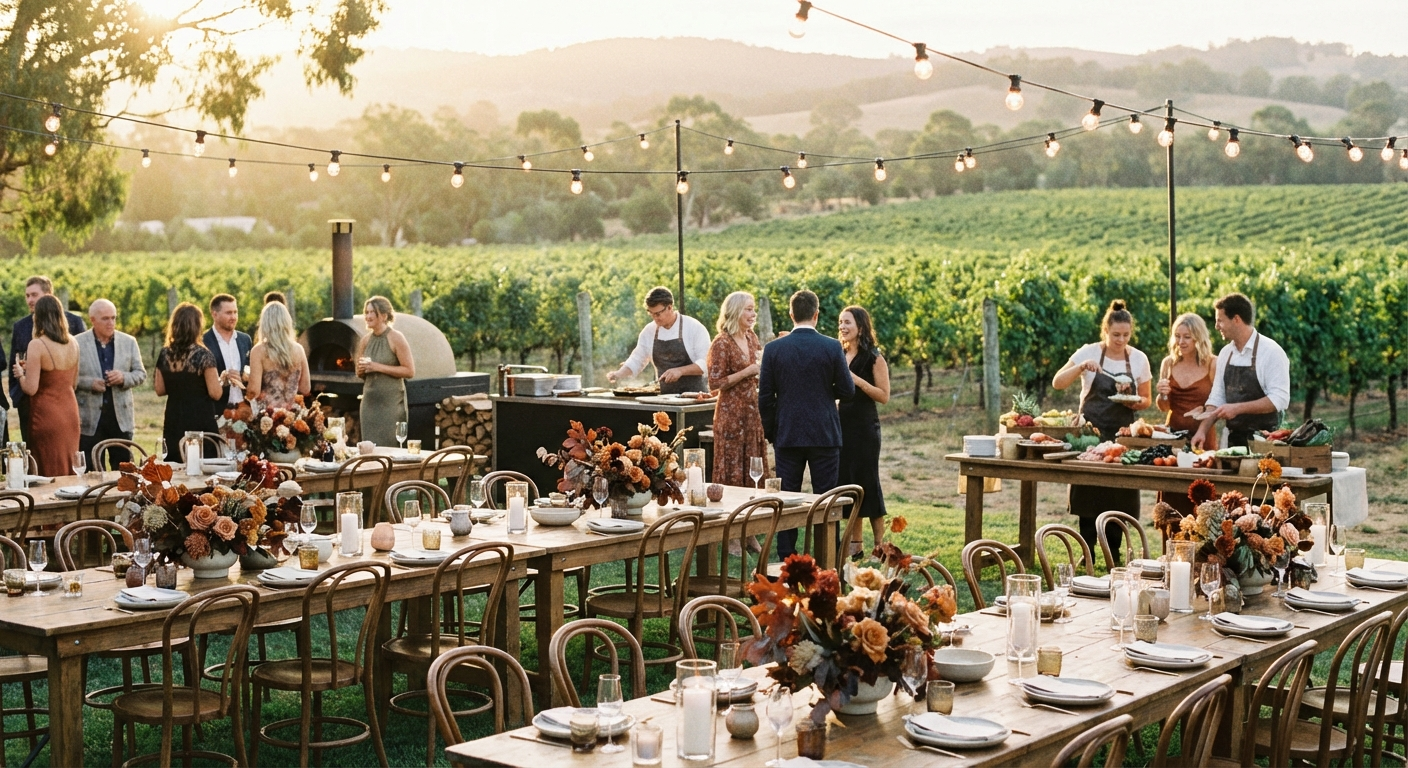
The traditional Australian wedding formula of ceremony, canapes, sit-down dinner, and dancing is being reimagined by couples who want their celebration to feel less like an event and more like an experience. According to the 2026 Easy Weddings trend report, immersive guest experiences have emerged as one of the defining priorities for Australian couples this year, with more than sixty per cent of engaged pairs saying they want their wedding to feel genuinely different from every other celebration their guests have attended.
This shift is not about extravagance or inflated budgets. It is about intentionality. Couples across Sydney, Melbourne, Brisbane, Perth, and regional Australia are discovering that thoughtful design across all five senses, combined with interactive elements and a cohesive narrative, can transform even a modest celebration into something genuinely memorable. The best immersive weddings feel less like a production and more like stepping into the couple's world for a day.
Whether you are planning an intimate gathering of forty in a Yarra Valley cellar door or a two-hundred-guest celebration at a waterfront venue in Sydney, this guide covers every element of creating a multi-sensory, interactive wedding experience that reflects who you are as a couple and leaves your guests with stories they will retell for years.
What Makes a Wedding Truly Immersive
An immersive wedding is one where every element works together to create a cohesive atmosphere that engages guests on multiple levels. Rather than a sequence of separate events, the celebration feels like a single, flowing experience with its own rhythm and personality. The concept draws from the worlds of hospitality, theatre, and event design, but when applied to weddings, it becomes something deeply personal.
The key distinction is the shift from passive attendance to active participation. At a traditional wedding, guests are largely spectators. They watch the ceremony, sit for dinner, and move to the dance floor when prompted. At an immersive wedding, guests become part of the story. They might discover a handwritten note at their place setting that connects to a shared memory, encounter a roaming musician during canapes, or find themselves choosing their own adventure through different food and drink stations rather than waiting for a plated course.
Australian wedding planner and stylist Sarah Lawson of The Events Lounge in Brisbane describes the trend as a return to genuine hospitality. She notes that couples are thinking about how their guests feel from the moment they arrive to the moment they leave, designing transitions between spaces, curating soundscapes, and considering the emotional arc of the entire day rather than just ticking boxes on a run sheet.
Designing the Guest Journey from Start to Finish
The immersive experience begins well before the wedding day itself. It starts with the first point of contact, typically a digital RSVP or wedding website, and extends through every touchpoint until the last guest departs. Thinking of your wedding as a guest journey rather than a series of logistics fundamentally changes how you approach planning.
The Pre-Wedding Digital Experience
Your wedding website is the first chapter of the story you are telling. Rather than treating it as a purely functional tool for collecting RSVPs and sharing logistics, consider it an introduction to the world of your wedding. A well-designed digital RSVP platform can set the visual tone, build anticipation, and give guests a sense of what to expect. Include details that go beyond the basics: a curated playlist guests can listen to before the day, a guide to the region if you are hosting a destination celebration, or a personal message that sets the emotional register.
Platforms like WeddingRSVP.org allow you to create a cohesive digital experience that matches your wedding's aesthetic, from colour palettes and typography to the flow of information guests encounter. When your digital presence feels intentional, guests arrive already immersed in the atmosphere you have created.
Arrival and First Impressions
The first sixty seconds after guests arrive set the tone for everything that follows. Consider what they see, hear, smell, and feel as they step into your venue. A welcome drink offered immediately upon arrival is standard, but you can elevate it by making the drink itself part of the story. Perhaps it is a signature cocktail that references where you had your first date, or a locally made sparkling wine from the vineyard where you are celebrating.
Many Australian couples are investing in what designers call a threshold moment: a deliberate transition from the outside world into the wedding space. This might be a walkway lined with native Australian botanicals like banksia and eucalyptus, a canopy of draped fabric that creates a sense of entering a different space, or even a custom scent diffused at the entrance. At a recent wedding in the Blue Mountains west of Sydney, the couple created an arrival tunnel of dried grasses and hanging flowers that guests walked through to reach the ceremony clearing, transforming a simple walk into a sensory experience.
Transitions Between Spaces
One of the most overlooked elements of wedding design is what happens between the ceremony and the reception, or between different phases of the evening. These transitional moments are where energy and momentum can dissipate if not managed thoughtfully. The best immersive weddings treat transitions as opportunities rather than gaps.
Consider using a different space or outdoor area for canapes and cocktails that has its own distinct atmosphere, perhaps a garden courtyard with lawn games and a live acoustic musician at a venue like Bendooley Estate in the Southern Highlands of New South Wales. When guests eventually move to the reception space, the shift in environment, lighting, and sound creates a natural sense of progression and anticipation. Some couples even use a reveal moment, keeping the reception space hidden behind curtains or doors until the room is ready to be unveiled in its full glory.
Engaging All Five Senses at Your Wedding
The hallmark of a truly immersive experience is multi-sensory engagement. Most weddings focus primarily on sight and taste, but the most memorable celebrations deliberately address all five senses. When you design for sound, scent, and touch alongside visual styling and food, you create layered memories that stick with guests on a deeper level.
Visual Design and Lighting
Lighting is arguably the single most transformative element in wedding design, yet it remains one of the most underutilised. The difference between a venue lit by standard overhead fixtures and one designed with intentional lighting is dramatic. In 2026, Australian couples are embracing moody, atmospheric lighting that evolves throughout the evening, starting with warm, soft tones during the ceremony and gradually shifting to more dramatic, saturated hues as the night progresses.
Festoon lights remain popular for outdoor celebrations across Australia, particularly at winery and garden venues in regions like the Hunter Valley, Margaret River, and the Mornington Peninsula. However, the trend has moved beyond simple string lights to include combinations of pillar candles in varying heights, neon signage with personalised messages, and architectural uplighting that washes walls and trees in warm amber or deep copper tones. For autumn weddings, lighting that enhances the golden quality of the season's natural light can create an atmosphere that feels almost cinematic.
Projection mapping is an emerging option for couples with larger budgets, allowing patterns, images, or even video to be projected onto walls, ceilings, or outdoor surfaces. A few specialist Australian lighting companies, primarily based in Melbourne and Sydney, now offer this service specifically for weddings, with packages starting from around $3,500 AUD.
Soundscape and Music
Sound shapes atmosphere more powerfully than most couples realise. The music and ambient sound at your wedding should be as carefully curated as the visual styling. Rather than a single playlist running all day, consider how the soundscape can evolve to match the emotional arc of your celebration.
During the ceremony, live acoustic music from a solo guitarist or string duo creates intimacy that recorded music cannot match. For the cocktail hour, a jazz trio or roaming musician who moves through the crowd brings energy and a sense of discovery. As the reception progresses from dinner to dancing, the musical tone can shift accordingly, perhaps from a vocalist performing relaxed covers during the meal to a DJ or band taking the energy up for the party.
Some Australian couples are also incorporating non-musical sound elements. At an outdoor ceremony at a property in the Adelaide Hills, one couple positioned the ceremony space near a natural creek so the sound of running water formed a backdrop to their vows. Others have used curated ambient soundscapes played softly through hidden speakers, anything from birdsong to gentle rainfall, to enhance the atmosphere of indoor spaces.
Hiring a live musician for your ceremony and cocktail hour in Australia typically costs between $800 and $2,500 AUD depending on the ensemble size and location. A professional wedding DJ for the reception ranges from $1,200 to $3,000 AUD, while a live band can range from $3,000 to $8,000 AUD or more.
Scent Design
Scent is the sense most directly connected to memory, yet it is rarely considered in wedding planning. Incorporating intentional fragrance into your celebration can create powerful associations that transport guests back to your wedding day whenever they encounter similar scents in the future.
The simplest approach is through floral choices. Native Australian flowers like wax flower, boronia, and eucalyptus carry distinctive, evocative fragrances that can perfume an entire ceremony space. Candles are another natural vehicle: Australian candle makers like Sunnylife, Lumira, and Boy Smells offer scents that range from coastal sea salt to warm amber and sandalwood, allowing you to choose fragrances that complement your venue and season.
For a more deliberate approach, some couples work with scent designers or perfumers to create a custom wedding fragrance that is diffused throughout the venue. While this remains a niche service in Australia, companies like Air Aroma in Sydney offer bespoke scent solutions for events, with wedding packages starting from approximately $500 AUD. Alternatively, you can achieve a similar effect by choosing a signature candle and placing multiples throughout your reception space.
Texture and Touch
The tactile experience of a wedding is conveyed through every physical element guests encounter, from the weight and texture of a linen napkin to the feel of a velvet lounge in a cocktail area. In 2026, Australian stylists are moving away from uniformly smooth, polished aesthetics in favour of layered textural contrast.
Consider the difference between a table set with a plain white tablecloth and standard hire chairs versus one dressed with a textured linen runner, handmade ceramic plates, mismatched vintage glassware, and timber charger plates. The second creates a sensory richness that guests respond to almost unconsciously. It communicates care, personality, and warmth in a way that polished perfection does not.
Outdoor and semi-outdoor venues, which remain enormously popular across Australia, offer additional opportunities for textural contrast. Natural elements like timber, stone, and greenery create a foundation, while soft furnishings such as cushions, throws, and rugs can be layered in to define lounge areas and add comfort. For autumn weddings in cooler regions like the Yarra Valley, the Southern Highlands, or Tasmania, providing woollen blankets or pashminas for guests is both practical and atmospheric.
Interactive Food and Drink Experiences
Food and drink represent one of the most natural opportunities for interactive, immersive design. The shift away from traditional three-course plated dinners towards more dynamic formats is one of the defining catering trends in Australian weddings for 2026.
Grazing Tables and Interactive Food Stations
Grazing tables have been an Australian wedding staple for several years, but the concept has evolved significantly. In 2026, the most creative versions function as edible installations, works of art that double as food service. Melbourne-based grazing company Your Platter Matters and Sydney's Platter and Graze are among the vendors pushing the format forward, creating elaborate displays built around seasonal Australian produce.
Beyond grazing, interactive food stations allow guests to customise their dining experience. Popular formats include build-your-own taco or bao stations, live pasta making, oyster shucking bars featuring rock oysters from Sydney, Coffin Bay in South Australia, or Tasmania, and dessert stations where guests choose their own toppings and combinations. Each station becomes a social hub where guests congregate, interact, and share the experience of discovery.
The cost of interactive food stations in Australia varies widely depending on the format and guest count. As a general guide, a comprehensive food station setup for 100 guests typically ranges from $8,000 to $15,000 AUD, which is often comparable to or only slightly more than a traditional plated dinner service.
Signature Drinks and Experiential Bars
The bar experience at Australian weddings has transformed from a simple drinks service into a design and entertainment feature in its own right. Signature cocktails named after meaningful moments in the couple's relationship have become expected, but the trend has expanded to include experiential bar concepts that double as entertainment.
Mobile cocktail bars are particularly popular at Australian outdoor weddings. Converted vintage caravans, horse floats, and Kombi vans serve as photogenic bar setups at venues across the country. Some couples are incorporating interactive elements like a gin blending station where guests create their own botanical blend using Australian native ingredients like lemon myrtle, finger lime, and pepperberry, or a whisky and cheese pairing station guided by a knowledgeable host.
The growing prominence of Australian craft spirits has also influenced wedding bar culture. Featuring local distilleries like Four Pillars from the Yarra Valley, Archie Rose from Sydney, or West Winds Gin from Margaret River gives the bar experience a sense of place that resonates with the broader immersive approach.
Live Entertainment and Creative Installations
Entertainment at an immersive wedding goes beyond a band or DJ. It encompasses any element that creates moments of surprise, delight, or participation throughout the celebration.
Live Wedding Painters
Live wedding painting has exploded in popularity across Australia over the past two years. A live painter sets up at the reception and creates a painting of the celebration in real time, typically capturing a key moment like the first dance or a wide view of the reception in full swing. The finished artwork becomes a one-of-a-kind keepsake that captures the atmosphere of the day in a way photography cannot.
Australian live wedding painters such as Poppy Dodge Art in Melbourne, Wed on Canvas in Sydney, and Impressions Live Art, which operates nationally, typically charge between $1,500 and $4,000 AUD depending on the canvas size and complexity. Most painters position themselves where guests can watch the work progress throughout the evening, turning the painting process itself into a source of entertainment and conversation.
Interactive Guest Activities
The most memorable immersive weddings include moments where guests actively participate rather than simply observe. Lawn games remain popular for Australian outdoor weddings, but the concept has expanded to include more creative options.
Polaroid and instant-print photo stations where guests take their own portraits and leave a copy in a guest book have largely replaced traditional photo booths. Audio guest books, where guests record a voice message for the couple using a vintage telephone handset, are another rising trend. For couples who love music, a collaborative playlist station where guests can queue songs creates a sense of shared ownership over the party soundtrack.
Some couples are incorporating workshop-style activities during the cocktail hour. At a recent wedding at Stones of the Yarra Valley, the couple set up a botanical cocktail blending station where guests could create their own drinks under the guidance of a mixologist, while another couple at a Byron Bay celebration offered a flower crown making station using native Australian flowers.
Theatrical and Surprise Elements
The element of surprise is a powerful tool in immersive design. Well-timed unexpected moments create peaks of excitement that punctuate the celebration and give guests something to talk about. This does not require theatrical production values. Some of the most effective surprises are simple.
A fireworks display at the end of the night, a surprise musical performance by a talented friend, an unexpected dessert course served at midnight, or a sparkler exit along a path lined with lanterns can all create moments of genuine wonder. For autumn and winter weddings in southern Australia, fire pits and outdoor braziers serve a dual purpose: they provide warmth and create a natural gathering point where guests congregate under the stars.
The key is restraint. One or two well-executed surprises have far more impact than a constant stream of novelty. The best approach is to design the overall flow of the evening so that these moments feel organic rather than forced, building naturally from the atmosphere you have created.
Budget Considerations and How to Prioritise
Creating an immersive guest experience does not necessarily mean spending more than you would on a traditional wedding. In many cases, it means spending differently, redirecting budget from conventional line items towards elements that create a stronger emotional impact.
Where to Invest Your Budget
The highest-impact investments for an immersive wedding are typically lighting, music, and food format. These three elements shape the atmosphere more than any other factors, and spending well in these areas creates a foundation that elevates everything else. Professional lighting design, starting from around $1,500 AUD for a basic package, can transform even a simple venue into something spectacular. Quality live music during the ceremony and cocktail hour creates emotional resonance that sets the tone for the entire day.
Conversely, some traditional wedding expenses contribute less to the overall guest experience than their cost suggests. Elaborate printed stationery suites, for example, rarely influence how guests feel at the wedding itself, and the budget saved by using a well-designed digital RSVP platform can be redirected towards lighting, entertainment, or an upgraded food experience.
Budget-Friendly Immersive Ideas
Not every immersive element requires professional services or significant expense. DIY approaches can be highly effective when executed thoughtfully. Creating a curated playlist that evolves through the day costs nothing but time. Collecting mismatched vintage glassware from op shops and markets adds textural interest for a fraction of the cost of hiring uniform glassware. Writing personal notes to each guest and placing them at their seats creates an intimate, emotional touchpoint that no amount of money can replicate.
For Australian couples on tighter budgets, focusing on one or two high-impact immersive elements rather than trying to address everything is the smartest strategy. A couple spending $25,000 to $35,000 AUD on their entire wedding might choose to invest in professional lighting and a signature cocktail station while keeping other elements simple. The result can be just as memorable as a wedding with three times the budget that spreads its spending thinly across every category.
Community and personal connections also offer opportunities. A friend who is a talented baker can create a dessert station. A family member with a beautiful singing voice can perform during the ceremony. A colleague who makes candles can provide custom favours that double as scent design elements. These personal touches often create more meaningful immersive moments than anything money can buy.
Pulling It All Together: Planning Your Immersive Wedding
The most important principle in creating an immersive wedding experience is coherence. Every element, from the digital RSVP and pre-wedding communications through to the final farewell, should feel like it belongs to the same world. This does not mean everything needs to match perfectly, but it does mean that the overall aesthetic, mood, and energy should feel consistent and intentional.
Start by defining the feeling you want your wedding to create. Not a theme or a colour palette, but an emotion. Do you want guests to feel like they have escaped to a European countryside retreat? Like they are at the most stylish dinner party they have ever attended? Like they have stumbled into a secret garden? Once you have that emotional anchor, every decision, from lighting colour temperature to music genre to food format, can be evaluated against it.
Work with your vendors as collaborators rather than service providers. Share your vision, the emotional intention, the sensory priorities, the guest journey you have imagined, and invite them to contribute their expertise. The best Australian wedding vendors, whether they are based in capital cities or regional areas, are passionate about creating experiences that go beyond the ordinary, and most will welcome the opportunity to push creative boundaries.
Finally, remember that the most immersive element of any wedding is the genuine love and joy between the couple. No amount of styling, lighting, or interactive entertainment can substitute for authentic emotion. The best immersive weddings use design to amplify what is already there: two people who love each other, surrounded by the people who matter most to them, celebrating in a way that feels truly and unmistakably their own.
The shift towards immersive wedding experiences in Australia reflects a broader desire for celebrations that are meaningful, personal, and genuinely memorable. By thinking beyond the conventional wedding formula and designing for all five senses, interactive participation, and emotional resonance, you can create a celebration that stays with your guests long after the last song plays.
Whether your budget is modest or generous, the principles remain the same: define the feeling you want to create, invest in the elements that shape atmosphere most powerfully, and trust that thoughtful, intentional design will always outperform lavish spending without direction. Your wedding is not just a day. It is an experience. Make it one worth remembering.