There was a time when every engaged Australian couple marched into a department store, scanned barcodes on toasters and towel sets, and called it a gift registry. That era is well and truly over. According to recent industry data, more than seventy percent of Australian couples now prefer monetary contributions over physical gifts, and the wishing well has become the default approach for weddings across Sydney, Melbourne, Brisbane, Perth, and everywhere in between.
The shift makes practical sense. Many couples in 2026 have already been living together for years before tying the knot. They own the crockery. They have the linen. What they actually need is help funding a honeymoon to the Whitsundays, a deposit on their first home, or simply the breathing room to recover from the cost of the wedding itself. The average Australian wedding now sits well above $30,000 AUD, and that figure climbs significantly in capital cities. A wishing well is not greedy. It is honest.
But honesty does not mean bluntness, and this is where many couples stumble. Asking for money as a wedding gift still carries a faint social stigma in some circles, particularly among older guests or those with more traditional expectations. The trick lies in communicating your preference with warmth, clarity, and grace, so that every guest feels comfortable rather than obligated. This guide walks you through everything: the etiquette, the wording, the digital tools, and the modern alternatives that Australian couples are embracing in 2026.
Why Wishing Wells Now Dominate Australian Weddings
The wishing well has become so prevalent in Australian wedding culture that many younger couples do not even realise it was once considered unusual. Understanding why this shift happened helps you communicate your own preference with confidence.
The Practical Reality of Modern Couples
Australian couples are getting married later than ever before. The median age at first marriage now sits at thirty-two for men and thirty for women, according to the Australian Bureau of Statistics. By the time most couples reach the altar, they have already established a household. Duplicate kitchen appliances and mismatched crockery sets are not just unwanted, they are genuinely impractical for couples living in apartments across Melbourne or Sydney where storage space comes at a premium.
Beyond practicality, the financial reality of weddings in 2026 cannot be ignored. Venue hire alone can range from $5,000 AUD for a modest regional property to $25,000 AUD or more for a premium estate in the Hunter Valley or Mornington Peninsula. Catering, photography, florals, and styling push the total well beyond what most couples can comfortably absorb. A wishing well that contributes toward honeymoon flights, a house deposit, or simply covering wedding costs is a gift that genuinely changes a couple's financial position.
Growing Cultural Acceptance Across Australia
What was once whispered about is now openly discussed. Australian wedding forums, social media groups, and vendor communities have normalised the wishing well to the point where including one requires no justification. Most guests, particularly those under fifty, expect it. In fact, many guests actively prefer giving cash because it removes the guesswork of choosing the right gift and avoids the hassle of wrapping, transporting, and potentially returning items.
The cultural shift is also reflected in how Australian wedding stationery and website platforms have adapted. Nearly every digital RSVP and wedding website builder now includes dedicated wishing well or gift registry sections with pre-written templates. The infrastructure exists because the demand is overwhelming.
The Golden Rules of Wishing Well Etiquette in 2026
While the stigma around asking for cash has largely evaporated, there are still etiquette principles that separate a graceful request from an awkward one. Australian wedding etiquette expert consensus points to several key guidelines that keep your wishing well communication warm, respectful, and effective.
Never Mention Specific Dollar Amounts
This is the single most important rule, and the one most frequently broken. Under no circumstances should your wishing well wording suggest a minimum contribution, a recommended amount, or a per-head cost expectation. Phrases like 'we suggest $100 per guest' or 'contributions of $150 AUD or more' are considered poor form regardless of how they are framed. Your guests will contribute what they can afford and what they feel is appropriate. Trust them to make that decision without guidance.
The exception is when guests ask you directly. If a family member or close friend privately asks what amount is typical, it is perfectly acceptable to give them a general range. But this conversation should only happen one-on-one, never broadcast through your wedding stationery or website.
Always Frame It as Optional
Your wording should make abundantly clear that your guests' presence is the real gift and that any contribution to the wishing well is entirely optional. This is not just politeness; it genuinely matters. Some of your guests may be travelling interstate, taking time off work, paying for accommodation, and buying an outfit for the occasion. The cost of simply attending a wedding can easily exceed $500 AUD before they even think about a gift. Acknowledge that their presence is valuable by making the wishing well feel like an afterthought rather than an expectation.
Provide Clear, Practical Instructions
If you have a physical wishing well box at the venue, describe where it will be located. If you prefer bank transfers, provide the account details clearly on your wedding website. If you are using a digital platform like WeddingRSVP.org's built-in gift registry feature, include the direct link. The worst outcome is a guest who wants to contribute but does not know how, so they end up buying a last-minute candle from the nearest homeware store. Remove all friction from the process.
For bank transfers, consider setting up a dedicated account specifically for wedding contributions. This makes tracking and thank-you notes significantly easier than trying to sort wedding gifts from regular deposits in your everyday account.
Thank Everyone Equally Regardless of Contribution
After the wedding, every guest who contributed to the wishing well should receive a personalised thank-you note within eight weeks. The warmth and specificity of the note should not correlate with the amount given. A guest who contributed $50 AUD deserves the same genuine gratitude as one who contributed $500 AUD. Reference something specific about their attendance, such as a moment you shared on the dance floor or a conversation during the reception, rather than referencing the monetary gift directly.
Wishing Well Wording Templates That Actually Work
The right wording strikes a balance between clarity and warmth. Below are several templates tailored to different tones and styles, all written for Australian couples. Use them as written or adapt them to match your voice.
Classic and Formal
For couples hosting a traditional or black-tie celebration, a formal tone matches the occasion: 'Your presence at our wedding is the greatest gift we could ask for. For those who wish to honour us with a gift, a contribution to our wishing well would be gratefully received. A wishing well box will be available at the reception, or contributions can be made via our wedding website.' This template works well for weddings at formal venues such as heritage hotels in Sydney, grand ballrooms in Melbourne, or estate gardens in the Adelaide Hills.
Warm and Casual
For relaxed celebrations at coastal venues, winery properties, or backyard settings, a casual tone feels more authentic: 'We have been lucky enough to build our home together over the past few years, so we have everything we need (except maybe a holiday fund that does not involve camping). If you would like to contribute to our wishing well, we would be truly grateful, but honestly, just having you there is more than enough.' This style suits the easygoing, unpretentious vibe that characterises many Australian weddings, particularly in regions like Byron Bay, the Gold Coast, or Margaret River.
Honeymoon Fund Focused
If you are saving for a specific honeymoon, mentioning the destination adds a personal touch that guests love: 'Instead of a traditional gift registry, we are putting together a honeymoon fund for our trip to [destination]. If you would like to contribute toward a sunset dinner in Santorini, a cooking class in Tuscany, or even just our airport coffees, you can do so through our wedding website. But truly, the only thing we need on the day is you.' Tying contributions to tangible experiences makes guests feel like they are gifting something meaningful rather than simply transferring money.
Charity and Wishing Well Combination
Some Australian couples in 2026 are splitting their wishing well between personal contributions and a nominated charity. This approach resonates particularly well with socially conscious guests: 'Your presence is our gift. For those who wish to do something extra, we have set up a wishing well with the option to contribute toward our future together or to make a donation to [charity name], a cause close to our hearts. Details are available on our wedding website.' This format works beautifully when the charity has personal significance, such as a medical foundation, environmental organisation, or local community group.
Where to Include Your Wishing Well Information
Placement matters as much as wording. Including your wishing well details in the wrong place can feel pushy, while burying them too deep means guests miss the information entirely.
Your Wedding Website (Primary Location)
Your wedding website should be the central hub for all wishing well information. Platforms like WeddingRSVP.org allow you to create a dedicated gift or wishing well page that sits naturally alongside your RSVP form, event details, and FAQs. This is where you can include the full wording, bank transfer details, and links to any digital contribution platforms. Because guests visit the website to RSVP, they will naturally encounter the wishing well information without you needing to draw attention to it.
The advantage of placing wishing well details on your website rather than in printed stationery is flexibility. You can update the information at any time, add a progress bar if you are using a honeymoon fund, and provide multiple contribution options without cluttering a physical card.
Within Your Invitation Suite
If you are sending printed invitations, include a small card with your wishing well wording, separate from the main invitation. This is standard Australian wedding etiquette. The card should be understated, matching the design of your invitation suite, and should direct guests to your wedding website for full details. Keep the wording brief on the physical card and let the website do the heavy lifting.
Avoid placing wishing well information directly on the invitation itself. The invitation is about celebrating the event, not about gifts. A separate enclosure card maintains that distinction while still communicating your preference.
RSVP Confirmation Messages
When guests submit their RSVP through your wedding website, the automated confirmation message is another natural touchpoint for wishing well details. A simple line such as 'If you would like to contribute to our wishing well, you can find details on our gift page' ensures that even guests who skimmed over the information earlier get a gentle reminder at the moment they are most engaged with your wedding details.
Digital Wishing Well Platforms for Australian Couples
The days of a letterbox-style wishing well stuffed with cash-filled envelopes are not over, but digital alternatives are rapidly gaining ground. For Australian couples in 2026, several platforms make the process secure, trackable, and convenient for both the couple and their guests.
Integrated Wedding Website Platforms
The most seamless option is a wedding website that includes built-in gift registry and wishing well functionality. WeddingRSVP.org, for example, allows couples to set up their RSVP, event details, and wishing well all in one place. Guests can contribute directly through the platform without navigating to a separate site. This integration reduces friction and keeps the entire guest experience cohesive, from RSVP to gift to event-day information.
The benefit of an integrated platform is data management. When your RSVP responses, dietary requirements, and gift contributions all live in one system, you can generate thank-you lists, track RSVPs alongside gifts, and manage everything from a single dashboard rather than juggling multiple logins and spreadsheets.
Direct Bank Transfer
Many Australian couples still prefer the simplicity of a direct bank transfer. It costs nothing to set up, incurs no platform fees, and most Australian guests are comfortable with BSB and account number transfers through their banking app. The downside is that you lose the visual presentation and tracking features of a dedicated platform, and guests who prefer credit card payments will need an alternative option.
If you choose this route, consider including your BSB and account number on your wedding website along with a preferred reference format, such as 'Gift - [Guest Surname]', so you can easily match contributions to guests when writing thank-you notes.
Dedicated Honeymoon Registry Platforms
Platforms that allow you to itemise honeymoon experiences, such as specific dinners, activities, or hotel nights, add a layer of personalisation that resonates with guests. Instead of contributing to a generic fund, a guest might choose to gift a wine tasting experience in the Barossa Valley or a sunrise hot air balloon ride. While the money ultimately goes into the same pool, the psychological effect of gifting a specific experience makes guests feel more connected to your trip.
Australian couples should check the fee structure of these platforms carefully. Some charge a percentage of each contribution, while others offer flat monthly rates. For a wedding with a hundred or more guests, even a small percentage fee can add up to several hundred dollars AUD.
Styling Your Physical Wishing Well for the Reception
Even if most contributions arrive digitally, many couples still choose to have a physical wishing well at the reception for guests who prefer to bring a card or cash on the day. The styling of this element has evolved significantly, and the rustic birdcage of the 2010s has given way to more refined, intentional designs.
Modern Wishing Well Display Ideas
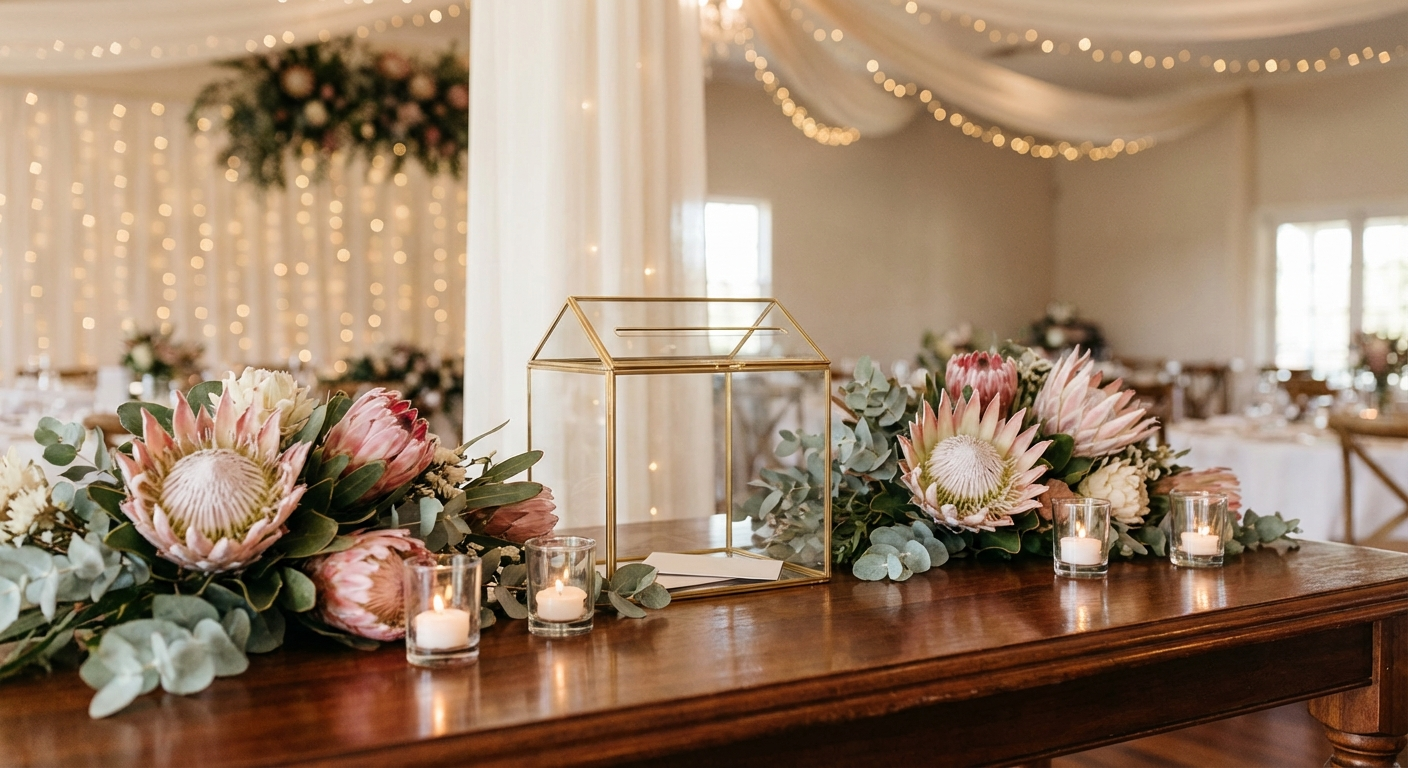
Clear acrylic card boxes with gold or brass hardware have become the most popular choice for 2026 Australian weddings. They are sleek, photograph well, and suit a wide range of styling directions from coastal minimalism to formal elegance. Position the card box on a dedicated table near the entrance of your reception space, styled with florals, a framed sign, and perhaps a small arrangement of candles.
For couples hosting outdoor weddings at Australian venues, such as a garden ceremony in the Yarra Valley or a marquee reception in the Southern Highlands, consider weather-proofing your display. A covered table or a position under a permanent structure ensures that cards and envelopes are protected if conditions turn.
Timber card boxes with a modern silhouette suit rustic-luxe venues, particularly winery or farmhouse properties. Look for Australian-made options from local artisans on platforms like Etsy AU or Madeit, which often offer personalisation with your names and wedding date laser-engraved into the lid.
Wishing Well Signage Wording
The sign accompanying your physical wishing well should be brief and warm. Options include: 'Wishing Well - Your love and laughter are all we need. But if you wish to bless us with a gift, a card or contribution to our wishing well is greatly appreciated.' Alternatively, for a more minimal approach: 'Cards and Well Wishes' paired with a simple arrow or visual indicator. The sign should match your overall stationery suite in font, colour, and style. Many Australian couples commission their wedding stationer to create the wishing well sign alongside their other day-of signage, ensuring visual cohesion throughout the reception.
How to Handle Guests Who Bring Physical Gifts Anyway
Despite your best efforts with wishing well wording, some guests will arrive with a wrapped gift in hand. This is completely normal and should be handled with grace.
Designate a space at your reception, typically near the wishing well table, where physical gifts can be placed. A simple sign reading 'Gift Table' or 'Gifts' is sufficient. Ask your wedding coordinator or a trusted family member to keep an eye on this area throughout the evening and to help transport gifts to your car or accommodation at the end of the night.
Under no circumstances should you appear disappointed or mention your wishing well preference when receiving a physical gift. The guest chose that gift with thought and effort, and their generosity deserves the same gratitude as any monetary contribution. Accept it warmly, thank them sincerely, and move on.
Some of the most memorable wedding gifts are physical ones that a guest chose specifically because they knew you would love them. A cookbook from the restaurant where you had your first date, a framed photograph, or a handwritten letter can carry more sentimental weight than any bank transfer.
Tailoring Your Wishing Well to Different Wedding Styles
The way you present your wishing well should reflect the broader tone and style of your wedding. A one-size-fits-all approach can feel disconnected from the experience you have carefully curated.
Formal and Black-Tie Celebrations
For weddings at venues like Doltone House in Sydney, The Langham in Melbourne, or Crown Towers in Perth, your wishing well presentation should match the formality. Use structured, elegant language in your wording. Choose a card box in glass or acrylic with metallic accents. Position it on a draped table with architectural florals. The signage should use a classic serif font on high-quality card stock or acrylic.
Relaxed and Outdoor Celebrations
Beach weddings on the Gold Coast, garden parties in the Adelaide Hills, or marquee receptions in rural Victoria call for a more relaxed approach. Your wording can be playful and personal. A woven basket or natural timber box suits the aesthetic better than polished acrylic. Handwritten signage on textured paper or a chalkboard adds to the casual warmth. Some couples even skip the physical wishing well entirely for outdoor weddings, directing everything through their wedding website to avoid logistics in an open-air setting.
Destination and Interstate Weddings
If your guests are travelling to a destination, whether that is a tropical celebration in Port Douglas, a Tasmanian wilderness elopement, or a weekend affair in the Blue Mountains, acknowledge their travel investment in your wishing well wording. Something like: 'We know that travelling to celebrate with us is already an incredible gift. Please do not feel any obligation beyond your presence. For those who wish to contribute to our wishing well, details are on our website.' This acknowledgement goes a long way with guests who may have spent over $1,000 AUD on flights and accommodation to attend.
Common Wishing Well Mistakes Australian Couples Make
Even with the best intentions, some approaches to wishing well communication can create awkwardness or leave guests feeling uncertain. Avoid these common pitfalls.
Mentioning the wishing well on social media is a significant misstep. Your Instagram announcement, Facebook event, or TikTok save-the-date should focus on the celebration, not on gifts. Reserve all wishing well communication for your wedding website and printed stationery.
Using overly cutesy poems to request cash gifts was popular a decade ago, but in 2026 it reads as dated and can trivialise your request. Straightforward, warm prose is more effective and more respectful of your guests' intelligence. Avoid rhyming couplets about 'not needing a blender' or 'preferring cash that is legal tender'.
Sending a separate email or message specifically about the wishing well, detached from other wedding information, can feel like a targeted request for money. Always embed your wishing well details within broader wedding communications so they feel like one element among many rather than the focal point.
Finally, forgetting to include the wishing well information altogether and relying on word of mouth creates confusion and inconsistency. Guests talk to each other, and if some know about the wishing well while others do not, it creates an uneven experience. Be clear, be upfront, and let your wedding website do the communicating.
After the Wedding: Thank-You Notes and Acknowledgements
Your relationship with the wishing well does not end when the last guest leaves the reception. Proper follow-through is essential and reflects directly on you as a couple.
Within the first two weeks after your wedding, compile a list of all contributions, both digital and physical. Cross-reference this with your guest list to ensure nobody is missed. Most integrated wedding platforms, including WeddingRSVP.org, provide exportable reports that make this process straightforward.
Send personalised thank-you notes within six to eight weeks of the wedding. While email or digital messages are acceptable in some contexts, a handwritten card remains the gold standard in Australian wedding etiquette. Reference the guest's attendance specifically and, where possible, mention a moment you shared during the celebration. Avoid generic form letters that could apply to any guest.
For contributions made through a honeymoon fund, consider sending a follow-up message or photo from your trip. A quick snapshot from the sunset dinner that a particular guest helped fund, with a note saying 'your gift made this possible', creates a lasting connection between their generosity and your experience.
The wishing well has earned its place as the standard gift approach for Australian weddings in 2026, and for good reason. It respects the practical reality of modern couples, eliminates guesswork for guests, and directs generosity toward what the couple actually needs. The key to getting it right lies not in whether you ask for cash, but in how you ask.
Lead with gratitude, provide clear instructions, and let your wedding website carry the weight of the details. Whether your celebration is a formal affair at a Sydney harbour venue or a barefoot ceremony on a Queensland beach, the principles remain the same: be warm, be clear, and trust your guests to respond with the same generosity that brought them to your wedding in the first place.