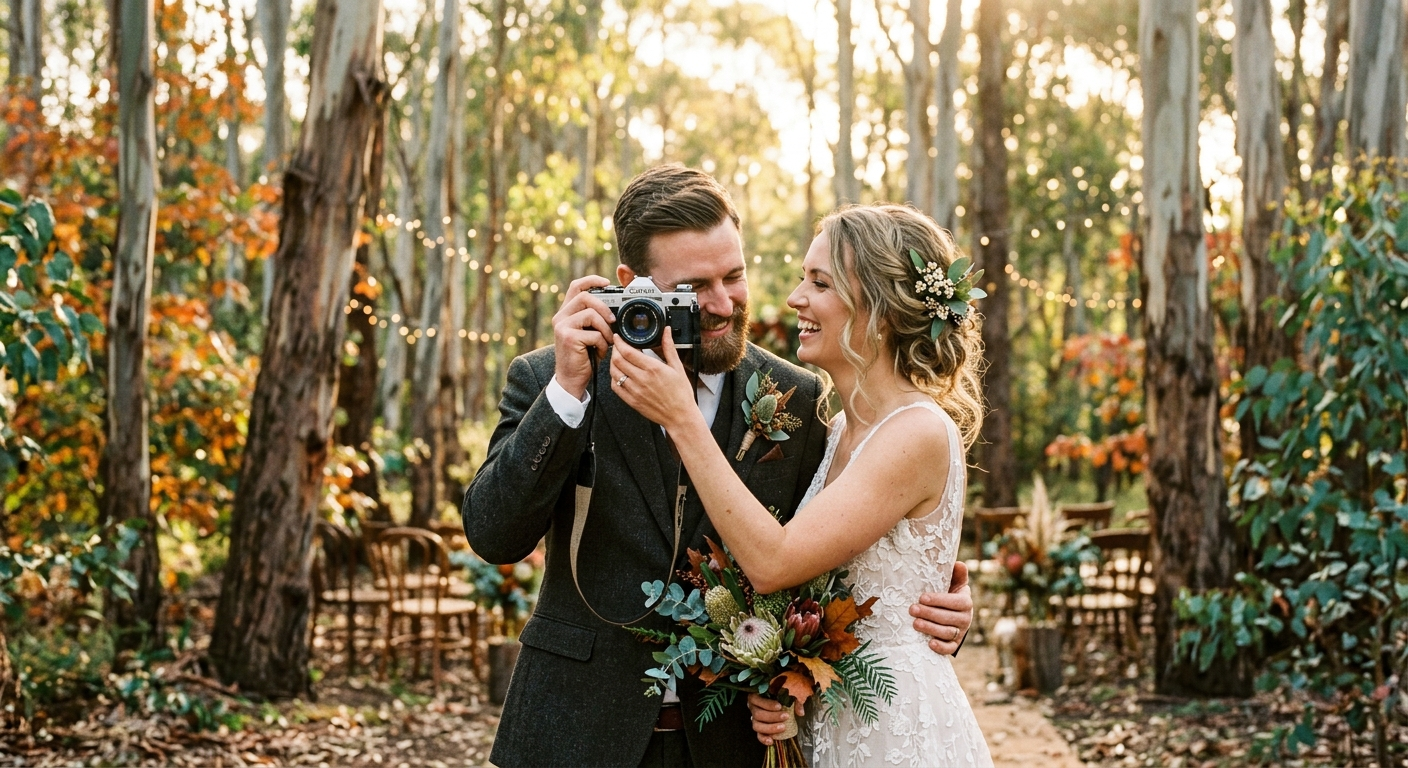
There is a quiet revolution happening in Australian wedding photography and videography, and it is being driven by a longing for something real. After years of heavily edited, colour-graded, drone-heavy wedding content that prioritised cinematic perfection over genuine emotion, couples in 2026 are turning back to analogue. They want their wedding photos to feel like memories, not magazine spreads. They want their wedding videos to look like home movies their grandchildren will stumble across in forty years and feel the warmth radiating from the screen.
The numbers reflect this shift. Australian wedding photographers report that enquiries for film photography have increased by over sixty per cent since 2024, while videographers offering Super 8 or camcorder-style packages are booking out months in advance. Disposable cameras on guest tables, once considered a novelty of the nineties, have become one of the most requested reception details across Sydney, Melbourne, Brisbane, and Perth.
This guide explores the nostalgic photography and videography trends defining Australian weddings in 2026, from the technical details of shooting on film to practical advice on finding the right photographer, budgeting for analogue formats, and incorporating vintage capture methods into your celebration without sacrificing reliability.
Why Nostalgia Is Defining Wedding Photography in 2026
The appeal of nostalgic wedding photography is not merely aesthetic. It represents a broader cultural desire for authenticity in a digital age. Australian couples who have grown up surrounded by filtered Instagram feeds and algorithmically curated content are choosing their wedding day as the moment to break free from that cycle. They want images that feel imperfect, warm, and deeply human.
This shift aligns with what Australian wedding industry professionals describe as the experience-first movement. Couples are no longer optimising their wedding for social media performance. Instead, they are prioritising how moments feel in real life and how they will feel when revisited decades from now. A slightly grainy 35mm photograph of a bride laughing with her father carries an emotional weight that a technically flawless digital image sometimes struggles to match.
The trend also connects to a generational fascination with pre-digital media. Millennials and older Gen Z couples are drawn to the aesthetic of their parents' and grandparents' wedding albums. They remember the tactile quality of printed photographs, the warm colour shifts of Kodak film stock, and the intimate, unpolished charm of VHS wedding recordings. Recreating that feeling with modern intentionality is the heart of this movement.
The Film Photography Renaissance: 35mm and Medium Format
At the centre of the nostalgic wedding photography trend is a return to actual film. While digital photography remains the industry standard for reliability and volume, a growing number of Australian wedding photographers now offer hybrid packages that combine digital coverage with rolls of 35mm or medium format film for selected moments throughout the day.
How Film Photography Works at Modern Weddings
A film wedding photographer typically shoots digital for the bulk of the day, ensuring comprehensive coverage of every moment from getting ready through to the last dance. They then switch to film for curated moments: the first look, the ceremony, intimate portraits during golden hour, and candid reception scenes. This hybrid approach gives couples the security of thousands of digital files alongside twenty to forty carefully composed film images that carry a distinctly different quality.
The most popular film stocks among Australian wedding photographers in 2026 include Kodak Portra 400 for its warm skin tones and forgiving exposure latitude, Kodak Portra 800 for lower light reception work, and Fuji 400H for cooler, more ethereal tones that suit coastal and garden ceremonies. Medium format cameras like the Contax 645 and Mamiya RZ67 are particularly prized for their shallow depth of field and extraordinary detail.
Processing and scanning film adds time to the delivery schedule. Couples should expect film images to arrive four to eight weeks after the wedding, as rolls need to be developed at specialist labs. In Australia, leading film labs include Ikigai Film Lab in Melbourne, Rewind Photo Lab in Sydney, and Fotofast in Brisbane. The wait, however, is part of the experience. Many couples describe receiving their film scans as a second wave of wedding joy, weeks after the day itself.
Finding a Film Wedding Photographer in Australia
The pool of Australian wedding photographers who shoot genuine film is growing but remains relatively niche. When searching, look for photographers who display unedited film scans in their portfolio rather than digital images processed to look like film. The difference is subtle but significant. True film images have organic grain patterns, natural colour shifts, and a luminosity that digital filters cannot perfectly replicate.
In Sydney, photographers working with film tend to cluster around the inner west and northern beaches, drawing inspiration from the area's natural light. Melbourne's film photography community is particularly strong, with several photographers specialising in moody, editorial film work suited to the city's laneway venues and heritage buildings. Perth and Adelaide are seeing rapid growth in film photography offerings, driven by the regions' abundant golden light that pairs beautifully with warm film stocks.
Budget for film photography varies. A hybrid digital-and-film package typically costs between $4,500 and $9,000 AUD for full-day coverage, depending on the photographer's experience and the number of film rolls included. Some photographers offer film as an add-on to their standard digital packages, starting from around $800 AUD for five to ten rolls of processed and scanned film.
Direct Flash Photography: The Party Aesthetic Taking Over Receptions
If film photography represents the soulful, contemplative side of the nostalgia trend, direct flash is its energetic, party-loving counterpart. Direct flash photography, where the camera's flash fires straight at subjects without any diffusion or bounce, creates images with stark contrast, vivid colours, deep shadows, and an unmistakably raw quality reminiscent of paparazzi photography and point-and-shoot snapshots from the nineties and early two thousands.
This style has exploded in popularity at Australian wedding receptions. Where traditional photographers spend the reception bouncing flash off ceilings to create even, flattering light, direct flash photographers embrace the harshness. The result is images that look spontaneous, lively, and utterly real. Guests caught mid-laugh, couples on the dance floor with sweat-dampened hair, late-night pizza runs and bare feet on the tiles. These are the images that feel most like the actual experience of being at a wedding.
Direct flash works particularly well in Australian reception settings. Outdoor marquee receptions common across the Hunter Valley and Mornington Peninsula photograph beautifully under direct flash after sunset, when the contrast between the bright flash and the dark night sky creates a dramatic, almost editorial quality. Industrial warehouse venues in Sydney's Alexandria and Melbourne's Collingwood also pair exceptionally well with this raw aesthetic.
Most photographers who offer direct flash include it as part of their evening reception coverage rather than as a separate package. The key is ensuring your photographer is skilled in this technique, as poorly executed direct flash can look amateurish rather than intentionally nostalgic. Review their portfolio specifically for reception and party images before committing.
Super 8 and Camcorder Videography: Home Movies Reimagined
The nostalgic videography trend is arguably even more emotionally powerful than its photography counterpart. Where traditional wedding videography in Australia has gravitated toward highly produced cinematic films with drone footage, colour grading, and dramatic soundtracks, a counter-movement is emerging that prioritises warmth and intimacy over production value.
Super 8 Film Videography
Super 8 is a small-gauge motion picture film format that was the standard for home movies from the 1960s through the 1980s. Its distinctive look, characterised by soft focus, warm colour tones, visible grain, and a gentle flickering quality, evokes an immediate emotional response. When applied to wedding footage, it transforms a ceremony into something that feels timeless and deeply personal.
A handful of Australian wedding videographers now offer Super 8 as either a standalone product or an addition to their digital video packages. The process involves shooting key moments on actual Super 8 film cartridges, which are then developed and scanned to digital. A typical Super 8 wedding reel runs three to five minutes and captures the emotional highlights: the walk down the aisle, the exchange of vows, the first dance, and candid moments with loved ones.
Super 8 film is expensive. Each cartridge provides approximately three minutes of footage, and film plus development costs around $80 to $120 AUD per cartridge. A complete Super 8 wedding package, including shooting, development, scanning, and editing, typically ranges from $2,000 to $5,000 AUD. Despite the cost, demand in Australia has outpaced supply, with several videographers reporting that their Super 8 packages sell out within weeks of opening their booking calendar for each season.
Camcorder-Style Digital Videography
For couples who love the nostalgic aesthetic but want more comprehensive coverage at a lower cost, camcorder-style digital videography offers a compelling alternative. This approach uses modern digital cameras but intentionally adopts the visual language of nineties camcorders: date stamps in the corner, slightly oversaturated colours, zoom effects, and a handheld quality that feels spontaneous rather than staged.
Some videographers go further, purchasing actual vintage camcorders from the eighties and nineties and using them alongside modern equipment. The resulting footage, when edited together, creates a layered viewing experience that moves between crisp contemporary footage and genuinely vintage-looking material.
Camcorder-style packages in Australia generally cost between $2,500 and $6,000 AUD for full-day coverage, depending on the videographer and the complexity of the edit. This approach is particularly popular for casual, outdoor Australian weddings. A barefoot beach ceremony on the Gold Coast or a relaxed garden party in the Adelaide Hills filmed in camcorder style feels perfectly suited to the laid-back Australian wedding ethos.
Disposable Cameras and Guest Perspectives: Crowdsourcing Your Wedding Album
One of the most accessible ways to incorporate nostalgic photography into your Australian wedding is through disposable cameras. The concept is simple: place single-use film cameras on each guest table and let your guests become photographers for the night. The results are unpredictable, often imperfect, and frequently brilliant.
Disposable cameras at weddings have surged in popularity across Australia, with retailers reporting wedding-related bulk orders increasing by over one hundred per cent year on year. A pack of ten disposable cameras costs approximately $150 to $250 AUD depending on the brand and film quality, with Kodak FunSaver and Fujifilm QuickSnap being the most popular choices.
The practical challenge is development. Each camera produces twenty-seven exposures, so ten tables generate two hundred and seventy images that need developing and scanning. Budget approximately $15 to $25 AUD per camera for development and digital scanning at a local photo lab. Services like FilmNeverDie in Melbourne and Rewind Photo Lab in Sydney offer bulk wedding development packages that can reduce costs.
To get the best results from guest disposable cameras, include a small card at each table with simple tips: shoot in well-lit areas, hold the camera steady, and do not cover the flash. Some couples assign a designated guest at each table as the camera champion to ensure the cameras are actually used rather than pocketed as souvenirs.
The magic of disposable camera images lies in their perspective. Your professional photographer captures the day through expert eyes, but your guests capture it through love. The blurry photo of your grandmother wiping away a tear, the over-exposed snap of friends raising glasses, the accidentally brilliant composition of the flower girl asleep under a table. These become some of the most treasured images from the entire day.
Audio Guestbooks: Adding Sonic Nostalgia to Your Celebration
While not strictly photography or videography, audio guestbooks deserve mention as part of the broader nostalgia trend reshaping how Australian weddings are documented. These vintage rotary telephones or handset-style devices invite guests to pick up the receiver and leave a voice message for the couple.
The concept has taken off remarkably quickly in Australia. Companies like After the Tone, Dial A Message, and The Audio Guest Book Co. offer rental packages ranging from $250 to $600 AUD, which include the phone unit, a recording device, and delivery of all audio files after the wedding. Some packages include editing services that compile the best messages into a single keepsake audio reel.
Audio guestbooks work particularly well alongside nostalgic photography and videography because they complete the sensory experience of the wedding record. Couples end up with film photographs they can hold, video footage they can watch, and voice recordings they can listen to. Together, these create a multi-layered archive of their celebration that digital-only documentation cannot match.
For best results, place the audio guestbook in a relatively quiet area of the venue, such as near the entrance or in a separate room. Include a small sign explaining the concept and suggesting prompts: share a favourite memory of the couple, offer marriage advice, or simply express what the day means to you. Position it away from the band or DJ to ensure clear recordings.
Building Your Nostalgic Photography and Videography Package
Putting together a cohesive nostalgic documentation package for your Australian wedding requires balancing aesthetic ambition with practical budget realities. Here is a framework for different budget levels.
Essential Package: From $5,000 AUD
At the essential level, invest in a photographer who offers hybrid digital and film coverage. This ensures you have comprehensive digital documentation of your entire day alongside a curated selection of film images for your most meaningful moments. Add ten disposable cameras for guest tables at around $400 AUD including development. This combination provides the nostalgic aesthetic without requiring a separate videographer or specialist equipment.
Premium Package: From $10,000 AUD
A premium package adds camcorder-style or Super 8 videography to your hybrid photography. This gives you three layers of documentation: digital photography for reliability, film photography for artistry, and nostalgic videography for emotional storytelling. Include an audio guestbook rental for approximately $400 AUD to complete the multi-sensory experience. Budget around $10,000 to $15,000 AUD for this comprehensive approach.
Luxury Package: From $18,000 AUD
At the luxury level, engage separate specialists for each medium. A dedicated film photographer shooting exclusively on medium format, a Super 8 videographer working alongside a digital cinematographer, and a full-service audio guestbook with professional editing. This approach suits couples who view their wedding documentation as a genuine artistic investment. Several high-end venues in the Yarra Valley, Byron Bay, and Margaret River actively recommend this multi-vendor approach for their luxury wedding packages.
Practical Tips for Nostalgic Photography in Australian Conditions
Australian light is distinctive, and it affects analogue photography differently than the softer light found in European or North American settings. Here are practical considerations for ensuring your nostalgic photography and videography thrives in Australian conditions.
Autumn weddings in March through May offer ideal conditions for film photography across most of Australia. The lower sun angle creates longer golden hours, giving photographers extended windows of warm, directional light that film stocks render beautifully. The Yarra Valley, Hunter Valley, and Adelaide Hills are particularly stunning on film during autumn, when changing foliage adds rich colour without the harsh contrasts of summer.
For beach and coastal weddings across the Gold Coast, Byron Bay, or Margaret River, film photographers recommend shooting during the hour after sunrise or the two hours before sunset. The intense midday Australian sun can overexpose film stocks quickly, particularly lighter options like Portra 160. Ask your photographer which film stocks they plan to use and how they handle the bright Australian light.
Heat is a genuine concern for film storage at summer weddings. Film should be kept below thirty degrees Celsius to maintain quality. If your wedding falls between November and February, ensure your photographer has a cooler bag or insulated case for unexposed rolls. Disposable cameras left on outdoor tables in direct sunlight can produce degraded images, so consider placing them out during the reception rather than the ceremony.
Finally, factor in the reality of Australian distances when booking film-specialist vendors. Film development labs are concentrated in capital cities, particularly Melbourne and Sydney. If your wedding is in a regional location, your photographer may need to post film for development, adding time to the delivery schedule. Discuss turnaround expectations upfront to avoid disappointment.
The nostalgic photography and videography trend sweeping Australian weddings in 2026 is more than an aesthetic choice. It is a statement about what couples value: authenticity over perfection, feeling over polish, and memories that age with the same grace as the love they document. Whether you invest in a full analogue package or simply scatter disposable cameras across your reception tables, incorporating nostalgic elements into your wedding documentation creates a richer, more textured record of your celebration.
As you plan your approach, remember that the best wedding photography has always been about capturing genuine emotion. The tools are simply changing. Film grain, direct flash, Super 8 flicker, and the crackle of a voice message left on a vintage telephone all serve the same purpose: preserving the feeling of a moment so it can be relived for generations to come. In a country as visually stunning as Australia, with its golden light, dramatic coastlines, and ancient landscapes, these analogue formats have never looked better.