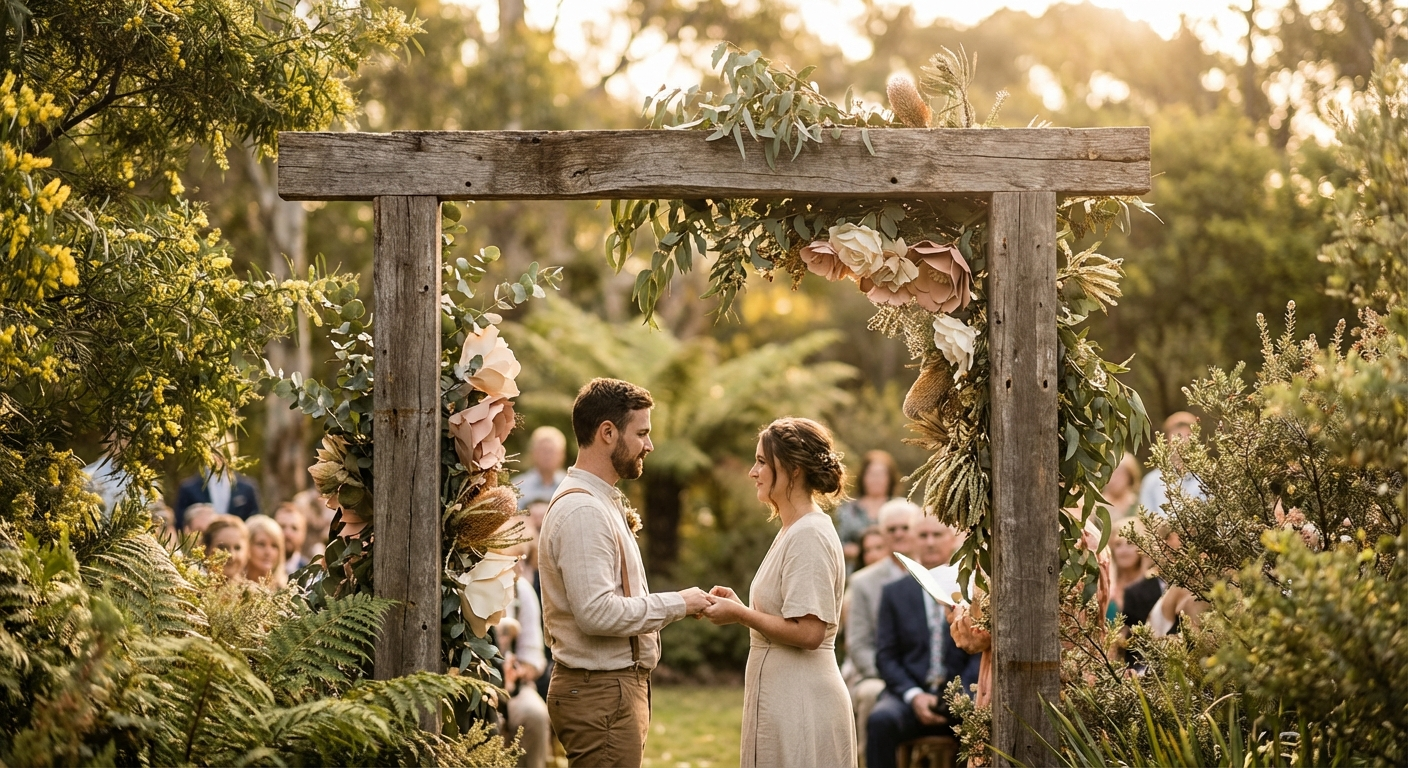
Sustainability is no longer a niche concern for Australian couples planning their weddings. It has become a defining priority. According to the 2026 Easy Weddings Industry Report, more than forty-five per cent of Australian couples now list environmental impact as a key consideration when choosing vendors, venues, and styling. This shift reflects broader cultural changes, but it is also deeply connected to the Australian experience of living alongside fragile ecosystems, bushfire-affected landscapes, and some of the most biodiverse environments on the planet.
The good news is that planning a sustainable wedding in Australia has never been easier or more stylish. A growing network of eco-conscious vendors, carbon-neutral venues, ethical caterers, and sustainable fashion designers means that couples no longer have to choose between environmental responsibility and a beautiful celebration. In fact, many of the most visually striking weddings in 2026 draw their character directly from sustainable choices, whether that is a ceremony framed by native Australian wildflowers, a reception powered entirely by renewable energy, or invitations and RSVPs managed through elegant digital platforms.
This guide covers every aspect of planning a sustainable wedding in Australia, from venue selection and floral design to catering, fashion, stationery, and guest management. Whether you are aiming for a fully zero-waste celebration or simply want to make more conscious choices where you can, these practical strategies will help you plan a wedding that feels both personally meaningful and environmentally responsible.
Why Sustainable Weddings Matter in Australia
The average Australian wedding generates a significant environmental footprint. Research from the University of Melbourne's Sustainable Society Institute estimates that a typical 120-guest wedding produces between 14 and 18 tonnes of carbon dioxide equivalent, comparable to the annual emissions of two average Australian households. This figure accounts for guest travel, venue energy consumption, food production and waste, floral supply chains, fashion manufacturing, and single-use decorative items.
For a country that has experienced devastating climate impacts firsthand, from the Black Summer bushfires of 2019-2020 to record-breaking floods in New South Wales and Queensland, these numbers carry particular weight. Many Australian couples feel a genuine sense of responsibility to reduce the environmental cost of their celebrations, and vendors across the industry are responding with innovative solutions that make sustainable choices accessible at every budget level.
Beyond the environmental argument, there is a growing recognition that sustainable weddings often produce more meaningful celebrations. When couples invest time in sourcing local food, supporting small-scale artisans, choosing native plants over imported flowers, and creating keepsake-worthy details rather than disposable decorations, the result tends to be a wedding that feels more personal, more connected to place, and more reflective of the couple's values.
Choosing an Eco-Friendly Wedding Venue
Venue selection is the single most impactful sustainability decision you will make. The right venue can dramatically reduce your wedding's carbon footprint, while the wrong one can undermine even the most careful planning in other areas. In Australia, sustainable venue options range from purpose-built eco-retreats to historic properties that have invested in renewable energy and waste management systems.
What to Look for in a Sustainable Venue
When evaluating venues, ask specific questions about energy sources, waste management, water usage, and environmental certifications. Venues powered by solar or wind energy, those with on-site composting systems, and properties that hold certifications such as EarthCheck or Green Star ratings demonstrate a genuine commitment to sustainability rather than surface-level greenwashing.
Consider the venue's location relative to your guest list. A stunning eco-lodge in rural Tasmania is a wonderful choice, but if eighty per cent of your guests are flying from Sydney or Melbourne, the travel emissions may outweigh the venue's environmental credentials. For most Australian couples, choosing a sustainable venue within reasonable driving distance of the majority of guests is the most effective strategy.
Look for venues that offer in-house catering with locally sourced ingredients, reusable tableware rather than disposables, and established relationships with sustainable florists and stylists. These integrated partnerships can simplify your planning while ensuring consistency in your environmental approach.
Top Sustainable Venues by State
New South Wales offers several standout options. The Fig Tree Restaurant in Byron Bay has long been a leader in sustainable wedding hosting, sourcing produce from its own organic garden and surrounding farms. In the Hunter Valley, Spicers Vineyards Estate operates on a comprehensive sustainability framework that includes solar energy, on-site water recycling, and native habitat restoration programs. Closer to Sydney, Gunners' Barracks in Mosman has invested significantly in energy efficiency and waste reduction while maintaining its reputation as one of the city's most elegant reception venues.
Victoria's sustainable venue landscape is anchored by the Yarra Valley and Mornington Peninsula regions. TarraWarra Estate in the Yarra Valley combines biodynamic winemaking with energy-efficient event facilities and stunning views across the valley. In regional Victoria, properties like Sault Restaurant in Daylesford and Balgownie Estate in the Yarra Valley have earned recognition for their environmental commitments.
Queensland couples can explore venues like Spicers Clovelly Estate in the Scenic Rim, which operates an organic kitchen garden and comprehensive composting program. In Western Australia, the Margaret River region offers venues such as Aravina Estate, where sustainable viticulture practices extend to event hosting. South Australia's Barossa Valley features properties like Seppeltsfield, which has integrated sustainability into its heritage conservation approach.
Sustainable Wedding Flowers and Styling
The floral industry is one of the most environmentally problematic aspects of traditional weddings. Imported flowers, often flown from Kenya, Colombia, or the Netherlands, carry enormous air-freight emissions. Chemical pesticides used in conventional floriculture contaminate waterways, and single-use floral foam (a petroleum-based product that does not biodegrade) generates thousands of tonnes of landfill waste across the Australian wedding industry each year.
Fortunately, Australia is uniquely positioned for sustainable floral design. The country's extraordinary native flora provides a wealth of options that are not only more sustainable but often more visually distinctive than imported alternatives.
Native Australian Flowers for Weddings
Australian native flowers have experienced a remarkable surge in popularity for weddings in 2026. Proteas, banksias, waratahs, flannel flowers, and eucalyptus varieties provide dramatic textures and colours that work beautifully in both formal and relaxed wedding settings. King proteas make stunning statement blooms for bridal bouquets, while delicate flannel flowers and waxflowers offer softer, more romantic options.
Sourcing native flowers locally reduces transport emissions and supports Australian growers. Farms like Fern Valley Flowers in the New South Wales Southern Highlands, Tesselaar Flowers in Victoria, and numerous small-scale native flower farms across Queensland and Western Australia supply directly to florists who specialise in native arrangements.
For autumn weddings in particular, Australian natives offer a colour palette that is perfectly suited to the season. Deep burgundy leucadendrons, golden banksia spikes, rust-toned kangaroo paw, and silvery-green eucalyptus create arrangements that echo the changing landscape without relying on imported seasonal flowers.
Foam-Free and Zero-Waste Floristry
A growing number of Australian florists have committed to foam-free design, using chicken wire, kenzan (pin frogs), moss, or biodegradable alternatives to support their arrangements. Organisations like Sustainable Floristry Network Australia provide directories of foam-free florists across the country, making it easy to find practitioners who align with your values.
Consider dried flower arrangements as an alternative or complement to fresh flowers. Dried natives like banksia, pampas grass, and preserved eucalyptus create stunning installations that can be prepared well in advance, produce zero waste on the day, and serve as lasting keepsakes for the couple or guests. Prices for dried arrangements typically start from $250 AUD for a bridal bouquet, comparable to fresh native alternatives.
Another approach gaining popularity is the 'replantable' wedding, where potted native plants serve as table centrepieces and guests take them home to plant in their own gardens. This transforms a traditionally wasteful element of wedding styling into a lasting, positive environmental contribution.
Ethical and Sustainable Wedding Fashion
Wedding fashion is another area where conscious choices can make a meaningful difference. The fast-fashion model has infiltrated the bridal industry, with mass-produced gowns often manufactured under questionable labour conditions using synthetic fabrics derived from petroleum products. A more thoughtful approach to wedding fashion supports ethical manufacturing, reduces textile waste, and often results in a more unique and personal aesthetic.
Sustainable Wedding Dress Options
Australian designers are leading the way in sustainable bridal fashion. Grace Loves Lace, founded on the Gold Coast, has built a global reputation for producing beautiful gowns from responsibly sourced fabrics in their Australian atelier. Their 2026 collection features gowns made from recycled lace and sustainably produced silk, with prices starting from around $1,800 AUD.
Hiring or renting a wedding dress is increasingly popular and eliminates the environmental cost of manufacturing a garment that is traditionally worn once. Services like Something Borrowed Bridal in Sydney and The Borrowed Collection in Melbourne offer designer gowns for hire at a fraction of the retail price, typically between $500 and $1,500 AUD. Pre-loved wedding dress platforms such as Still White, which was founded in Australia, connect sellers with buyers seeking second-hand designer gowns.
For couples who prefer to buy new, look for Australian designers who use natural fibres such as organic cotton, hemp, linen, or Tencel. Labels like Misha Collection, Shona Joy, and Anna Campbell offer bridal-appropriate pieces made with greater attention to environmental and ethical standards than mass-market alternatives.
Sustainable Suits and Groomswear
Grooms and wedding party members can make sustainable choices too. Hiring suits rather than purchasing eliminates manufacturing demand entirely, and Australian hire companies such as InStitchu and Oscar Hunt offer tailored options that feel personal without the environmental cost of a single-use purchase. If buying, consider Australian labels that use natural or recycled fabrics and transparent manufacturing processes.
Vintage and second-hand suits from curated vintage stores in Melbourne's Fitzroy, Sydney's Surry Hills, or Brisbane's Fortitude Valley can provide distinctive, characterful options that no new purchase can replicate. A vintage suit styled with modern accessories creates a look that is both sustainable and stylish.
Sustainable Wedding Catering and Food
Food typically represents the largest single expense in an Australian wedding budget, and it is also one of the areas where sustainable choices can have the greatest environmental impact. The key principles are straightforward: source locally, minimise waste, and consider the carbon intensity of your menu.
Local and Seasonal Menus
Work with your caterer to design a menu built around locally sourced, seasonal ingredients. For an autumn wedding in Australia (March to May), this might include lamb from regional New South Wales or Victoria, seasonal root vegetables, stone fruits from the Adelaide Hills, and locally produced cheeses and charcuterie. A menu that celebrates regional produce not only reduces food miles but also gives your wedding a genuine sense of place.
Many Australian caterers now offer 'paddock to plate' packages that trace every ingredient back to specific local farms and producers. Companies like Gourmet Grazing Co in the Hunter Valley, Pope Joan Catering in Melbourne, and Locale in Brisbane specialise in locally sourced wedding menus. Expect to pay between $120 and $200 AUD per head for a premium, locally sourced wedding menu, depending on the format and location.
Consider offering a plant-forward menu, even if it is not entirely vegetarian. Reducing the proportion of red meat in your menu is one of the most effective ways to lower the carbon footprint of your wedding catering. Many Australian chefs are now creating sophisticated plant-based dishes that satisfy even committed carnivores.
Minimising Food Waste
Food waste is a significant concern at weddings. The average Australian wedding generates approximately 30 kilograms of food waste, much of which goes directly to landfill. Accurate RSVP tracking is essential for reducing this waste, as it allows caterers to prepare appropriate quantities rather than over-catering as a safety buffer.
Using a digital RSVP platform that captures dietary requirements, meal preferences, and accurate headcounts gives your caterer the information they need to minimise waste. Platforms like WeddingRSVP.org allow you to collect detailed dietary information alongside your standard RSVP responses, ensuring that every meal prepared is a meal that will be eaten.
Partner with organisations like OzHarvest or SecondBite, which operate in all major Australian cities and can collect surplus food from your reception for redistribution to people in need. Arrange this in advance with your venue and caterer to ensure smooth logistics on the night.
Digital Invitations and RSVPs: The Sustainable Choice
Traditional paper wedding stationery suites, including save-the-dates, invitations, RSVP cards, information inserts, menus, and place cards, consume significant resources. A complete stationery suite for a 120-guest wedding typically uses the equivalent of one full tree when accounting for paper production, printing, and mailing materials. Digital alternatives eliminate this environmental cost entirely while offering practical advantages that paper cannot match.
The Environmental Impact of Paper Stationery
Beyond paper consumption, traditional wedding stationery involves chemical inks, petroleum-based envelope adhesives, and the carbon emissions associated with postal delivery. For a 120-guest wedding with a full stationery suite, the total environmental cost including paper production, printing, and Australia Post delivery is estimated at approximately 200 kilograms of CO2 equivalent.
If you prefer some physical stationery, consider a hybrid approach: send digital save-the-dates and manage RSVPs online, but invest in a smaller run of beautifully produced, recycled-paper invitations for close family members. Several Australian stationers, including Paperlust in Melbourne and Inkcredible in Sydney, specialise in recycled and plantable seed paper that can be composted or planted after use.
Benefits of Digital RSVP Platforms
Digital RSVP platforms offer environmental benefits alongside practical advantages that traditional paper RSVPs simply cannot provide. Real-time tracking of responses eliminates the uncertainty of waiting for postal returns and the need for follow-up phone calls or messages. Automated reminders gently prompt guests who have not yet responded, improving response rates without requiring manual effort from the couple.
Platforms like WeddingRSVP.org are designed specifically for Australian couples, with features that support local conventions around dietary requirements, plus-one management, and event-specific logistics. Digital RSVPs also make it effortless to collect detailed information about dietary needs, accessibility requirements, and transport preferences, all of which contribute to more efficient and less wasteful event planning.
The cost comparison is also compelling. A premium digital wedding website with integrated RSVP management typically costs between $30 and $150 AUD, compared to $800 to $2,500 AUD for a full suite of custom-printed stationery with postage. The environmental and financial savings make digital the clear choice for sustainability-minded couples.
Sustainable Wedding Favours and Gifts
Wedding favours have traditionally been one of the most wasteful elements of Australian weddings. Mass-produced trinkets, individually wrapped chocolates in excessive packaging, and personalised items that guests rarely keep generate enormous amounts of waste. The 2026 trend toward sustainability has prompted a rethinking of the entire concept.
Meaningful Eco-Friendly Favour Ideas
Native plant seedlings or seed packets make beautiful favours that guests can take home and grow, creating a living reminder of your celebration. Companies like Botanica Naturalis and Australian Seed offer customised seed packets featuring native species appropriate to your guests' local climate zones, typically priced between $3 and $8 AUD per favour.
Edible favours sourced from local producers, such as small jars of locally harvested honey, artisan preserves, or handmade chocolates from Australian makers like Koko Black or Haigh's, reduce packaging waste while supporting local businesses. These items are genuinely appreciated and consumed rather than discarded.
Charitable donations made on behalf of guests to organisations like Landcare Australia, the Australian Wildlife Conservancy, or local bushfire recovery programs offer a meaningful alternative to physical favours. A simple card at each place setting explaining the donation can be more moving than any material gift.
Sustainable Gift Registry Approaches
For your own gift registry, consider experience-based registries that fund honeymoon activities, cooking classes, or charitable contributions rather than accumulating physical goods. Platforms like Hitchd (Australian-founded) specialise in honeymoon fund registries that allow guests to contribute to specific experiences rather than purchasing items that may not be needed.
If you do register for physical gifts, choose items from sustainable and ethical Australian brands. Prioritise quality over quantity, selecting items that will genuinely be used and will last for years rather than ending up in landfill.
Carbon Offsetting Your Wedding
Even the most carefully planned sustainable wedding will generate some carbon emissions, particularly from guest travel. Carbon offsetting is not a substitute for genuine emission reductions, but it can be a valuable complementary strategy for addressing unavoidable impacts.
Australian carbon offset providers such as Greenfleet and South Pole offer wedding-specific offsetting packages that calculate your event's emissions based on guest numbers, travel distances, venue energy use, and catering choices. Greenfleet's wedding program, which funds native reforestation projects across Australia, costs approximately $80 to $200 AUD for a typical wedding depending on guest travel profiles.
Some couples choose to integrate carbon offsetting into their RSVP process, adding a small voluntary offset contribution option alongside the standard response. This approach raises awareness among guests and distributes the cost across participants who are willing and able to contribute.
The most effective strategy combines genuine emission reduction through the choices outlined in this guide with targeted offsetting for the emissions that cannot be avoided. A wedding that has already minimised its footprint through local sourcing, digital invitations, plant-forward catering, and an eco-friendly venue will require far less offsetting than one that has not considered these factors.
Planning Timeline for a Sustainable Wedding
Sustainable weddings benefit from slightly longer planning horizons in some areas, particularly when sourcing specific local vendors or seasonal flowers. Here is a practical timeline for couples planning a sustainable wedding in Australia.
Twelve to eighteen months before the wedding, research and book your venue, focusing on properties with genuine environmental credentials. Begin conversations with sustainable caterers and florists, as the best eco-conscious vendors often book well in advance. Set up your digital wedding website and RSVP platform early, as this eliminates the need for paper save-the-dates.
Six to twelve months out, finalise your catering menu based on seasonal availability for your wedding date. Source your wedding attire, whether buying sustainable, hiring, or purchasing pre-loved. Research carbon offset options and begin to estimate your wedding's likely emissions profile.
Three to six months before, send digital invitations and open your RSVP portal. Confirm all vendor arrangements and discuss waste management plans with your venue. Order any eco-friendly favours or decorations, and finalise your floral brief with your sustainable florist.
In the final month, track your RSVPs carefully to provide accurate numbers to your caterer, minimising food waste. Confirm arrangements with food rescue organisations for any surplus. Finalise your carbon offset purchase based on confirmed guest numbers and travel arrangements.
Making Sustainability Your Own
The most important thing to remember about planning a sustainable wedding is that perfection is not the goal. Every conscious choice you make, whether that is one decision or fifty, contributes to a more responsible celebration. You do not need to achieve zero waste or complete carbon neutrality to make a meaningful difference. Choose the areas that matter most to you and your partner, make thoughtful decisions in those areas, and do not let the pursuit of environmental perfection diminish your enjoyment of the planning process or the celebration itself.
Australian couples are uniquely positioned to lead in sustainable wedding planning. The country's extraordinary natural beauty, thriving local food culture, world-class native flora, and growing network of eco-conscious wedding vendors provide all the ingredients for celebrations that are both environmentally responsible and genuinely magnificent. By making considered choices about venues, flowers, food, fashion, stationery, and guest management, you can create a wedding day that reflects your values, celebrates your love, and treads lightly on the landscapes that make Australia such a remarkable place to begin a marriage.
Planning a sustainable wedding in Australia is no longer about sacrifice or compromise. It is about making intentional choices that align your celebration with your values. From native wildflower bouquets and locally sourced menus to digital RSVPs and carbon-neutral venues, every decision is an opportunity to create a wedding that is both beautiful and responsible. The tools, vendors, and resources available to Australian couples in 2026 make it easier than ever to plan an eco-friendly celebration without compromising on style, quality, or joy. Your wedding is the beginning of your shared life together, and starting that life with intention and care for the world around you is one of the most meaningful choices you can make.