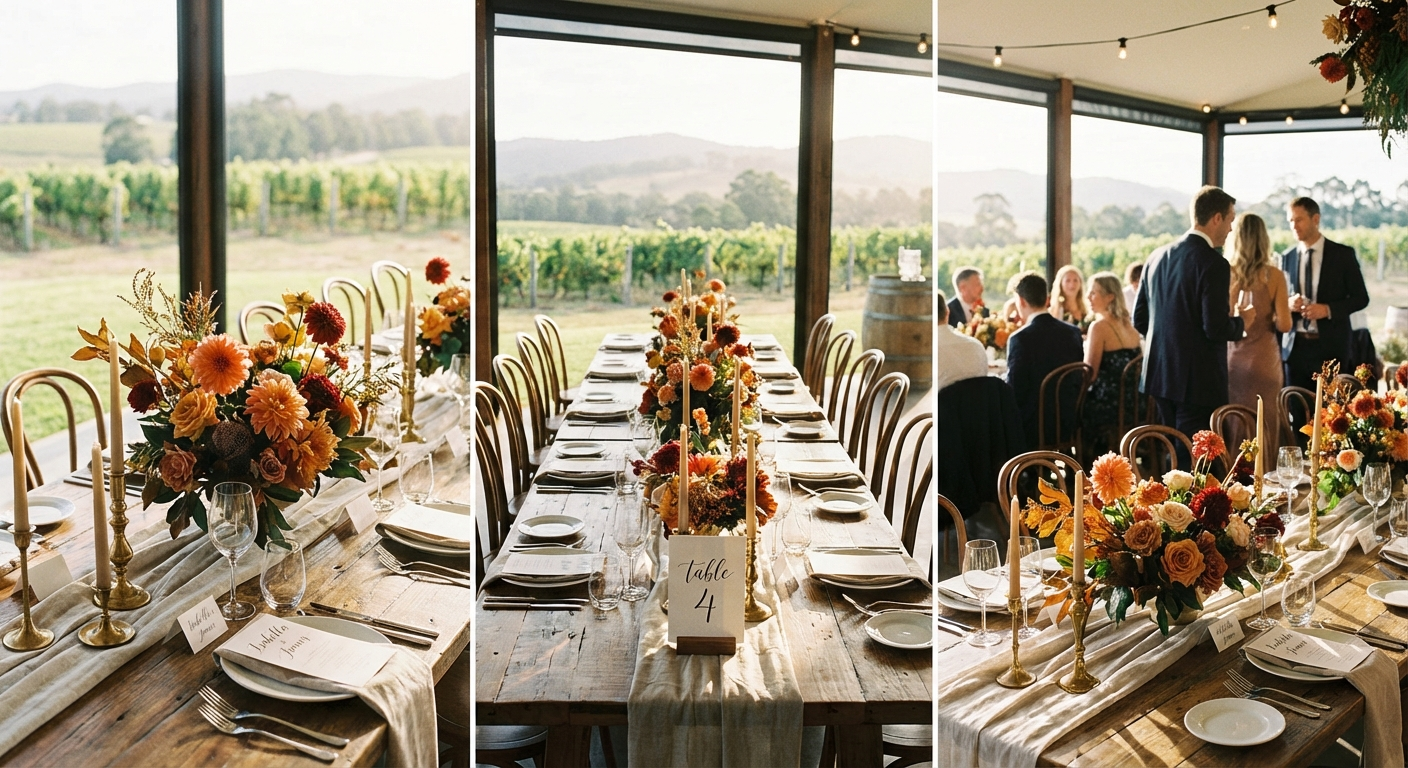
If there is one task that reduces even the most organised couples to tears, it is the wedding seating arrangement. You have sent the invitations, collected the RSVPs, confirmed the dietary requirements, and now you are staring at a blank floor plan wondering how on earth you seat your opinionated aunt next to your partner's university friends without causing an international incident.
The good news is that seating arrangements are a solvable problem. With the right approach, your RSVP data becomes a powerful planning tool that takes much of the guesswork out of who sits where. The better news is that Australian wedding culture in 2026 has relaxed many of the rigid rules that once made seating plans feel like diplomatic negotiations. Couples today have more flexibility than ever to create arrangements that genuinely reflect how they want their reception to feel.
This guide walks you through every stage of the seating arrangement process, from choosing your table layout and understanding the etiquette basics to handling tricky family dynamics and using your digital RSVP responses to streamline the entire operation. Whether you are planning an intimate 40-person dinner in a Yarra Valley winery or a 200-guest celebration at a harbourside venue in Sydney, the principles remain the same.
Why Seating Plans Matter More Than You Think
It is tempting to skip the seating plan entirely and let guests sit wherever they choose. Some couples do this successfully, particularly for casual receptions with fewer than 50 guests. However, for most Australian weddings, an open seating approach creates more problems than it solves.
Without assigned seating, guests arrive at the reception and immediately face a social challenge. Groups cluster together, leaving awkward gaps. Couples who arrive late find themselves separated or stuck at a table where they know nobody. Families with young children scramble for appropriate spots. The first fifteen minutes of your reception become a low-grade game of musical chairs rather than the warm, welcoming atmosphere you planned.
A well-considered seating plan removes that friction entirely. Guests arrive, find their name on the seating chart, and sit down knowing they have been thoughtfully placed with people they will enjoy. It also gives you control over the energy of the room. You can ensure every table has a mix of personalities, that quiet guests are seated with warm conversationalists, and that the tables closest to the dance floor are filled with the people most likely to get the party started.
From a practical standpoint, seating plans are essential for catering. If you have collected dietary information through your RSVPs, your caterer needs to know exactly where each guest with a specific requirement is sitting. A guest with a severe allergy seated at the wrong table is not just an inconvenience; it is a safety issue. Most Australian caterers and venue coordinators will insist on a finalised seating plan at least ten days before the event.
Choosing Your Table Layout: Round, Long, or Mixed
The table layout you choose affects everything from the atmosphere of your reception to how easily guests can move around the room. Australian venues typically offer several options, and the right choice depends on your guest count, venue dimensions, and the vibe you are aiming for.
Round Tables
Round tables seating 8 to 10 guests are the most common configuration at Australian wedding venues. They encourage conversation because everyone can see and speak to everyone else at the table. This makes them ideal for mixed groups where not all guests know each other, as there are no awkward end-of-table positions where someone might feel isolated.
Most banquet-style venues in Sydney, Melbourne, Brisbane, and Perth default to round tables with a diameter of 1.5 to 1.8 metres. At $180 to $350 AUD per head, these venues typically include table setup, linen, and centrepiece space in their packages. Round tables work well for guest counts between 60 and 200, as they fill a room efficiently without creating a cavernous feel.
The main limitation of round tables is that they can feel formal and predictable. If you are aiming for a relaxed, dinner-party atmosphere, round tables may not deliver the intimacy you want.
Long Banquet Tables
Long tables have surged in popularity across Australian weddings, particularly at winery, barn, and garden venues. A single long table or several parallel tables create a communal, feast-style atmosphere that feels generous and convivial. They are especially popular in regions like the Hunter Valley, Margaret River, the Mornington Peninsula, and the Adelaide Hills, where the rustic-elegant aesthetic pairs naturally with timber trestle tables.
Long tables seat guests in two facing rows, typically accommodating 20 to 30 guests per table depending on length. The advantage is atmosphere. There is something undeniably special about looking down a beautifully styled long table and seeing all of your favourite people sharing a meal together. Centrepieces, garlands, and candle runners look spectacular along the length of the table.
The practical challenge is conversation. Guests can realistically only talk to the two or three people directly opposite and beside them. Unlike round tables, there is no easy way to engage with someone five seats away. This means your seating placement within each long table matters enormously. Seat quiet guests next to other quiet guests and you risk creating a silent zone in the middle of your reception.
Mixed and Alternative Layouts
Many Australian couples in 2026 are opting for mixed layouts that combine different table types. A common approach is one or two long tables for the bridal party and immediate family, with round tables for remaining guests. This creates a visual focal point while maintaining the practical benefits of round tables for the majority of the room.
Other creative options gaining traction include U-shaped or E-shaped configurations for smaller weddings (under 60 guests), cocktail-style receptions with a mix of high bar tables and lounge seating, and outdoor setups with picnic-style trestle tables for relaxed garden or beach weddings along the Gold Coast or Byron Bay coastline.
If your venue has an unusual footprint, such as a converted warehouse in Melbourne's inner suburbs or a heritage barn in the Southern Highlands, work with your venue coordinator to explore layouts that make the most of the space rather than forcing a standard configuration.
Australian Wedding Seating Etiquette: The Rules That Still Apply
While Australian weddings have become more relaxed over the past decade, certain seating etiquette conventions persist for good reason. These are not arbitrary traditions; they exist to prevent genuine social discomfort and to honour the people who matter most to you.
The Bridal Table or Sweetheart Table
The traditional bridal table seats the couple, their bridal party, and sometimes the bridal party's partners. In Australian weddings, this typically means a long table at the front of the room, facing the guests. The couple sits in the centre, with the best man beside the bride and the maid of honour beside the groom, alternating male and female along the table.
However, many Australian couples in 2026 are moving away from the traditional bridal table in favour of a sweetheart table for just the two of them. This intimate setup allows the couple to share quiet moments during the reception while their bridal party sits with their own partners and friends. It also solves the common problem of bridal party members feeling trapped at a formal table all night when they would rather be with their own social group.
If you choose a sweetheart table, place it in a central or slightly elevated position so you remain visible and accessible. Your bridal party should be seated at the tables closest to you, ideally with direct sightlines.
Seating Parents and Immediate Family
Parents of both the couple should be seated at tables of honour, typically the tables closest to the bridal table or sweetheart table. The traditional arrangement places the bride's parents at one table and the groom's parents at another, each hosting their respective extended families and close friends. In practice, many Australian couples now seat both sets of parents at the same table to encourage the families to bond.
Divorced parents require careful handling. The general rule is to never seat divorced parents at the same table unless they have an amicable relationship and both explicitly confirm they are comfortable with the arrangement. Each divorced parent should host their own table, surrounded by their side of the family and their own friends. If one or both parents have re-partnered, their current partner sits beside them. Under no circumstances should a current partner be separated from a parent to accommodate an ex-spouse's comfort.
Grandparents and elderly relatives should be seated close to the bridal table but away from speakers and the dance floor. Consider accessibility when placing elderly guests, ensuring they have clear paths to bathrooms and are not in high-traffic areas where constant movement might be disruptive or unsafe.
Keeping Couples Together
This is a non-negotiable rule: never separate couples. Married partners, engaged partners, de facto partners, and guests who RSVPed with a plus-one must be seated at the same table and ideally beside each other. Some older etiquette guides suggest separating couples to encourage socialising, but this convention has fallen firmly out of favour in Australia. Separating a couple, particularly at a wedding where they may not know many other guests, is considered poor form.
The one exception is the bridal party. If a member of the bridal party is seated at the bridal table while their partner is not in the wedding party, the partner is typically seated at the nearest guest table. This is generally understood and accepted, but if you are concerned about it, the sweetheart table approach eliminates the issue entirely.
How to Use Your RSVP Data to Build the Perfect Seating Plan
If you have used a digital RSVP system, you are sitting on a goldmine of information that makes seating arrangements dramatically easier. Modern RSVP platforms collect far more than just attendance confirmations, and that data is your secret weapon for creating a seating plan that works.
Dietary Requirements and Table Placement
Your RSVP responses should include dietary information for every guest. When building your seating plan, group guests with similar dietary requirements where possible. If you have four vegetarian guests, seating them at the same table simplifies service for your caterer and ensures those guests feel considered rather than singled out when their meals arrive differently from everyone else's.
For guests with severe allergies, particularly nut allergies, coeliac disease, or anaphylaxis risks, discuss table placement with your caterer. Some caterers prefer to seat allergy guests at specific tables where cross-contamination risks can be more easily managed. Your digital RSVP data, exported as a spreadsheet, becomes the document your caterer works from in the final week before the wedding.
Australian caterers, particularly at premium venues in regions like the Barossa Valley, Noosa, and the Blue Mountains, are accustomed to managing complex dietary requirements. But they need accurate, organised information to do it well. A seating plan that clearly maps dietary needs to table numbers is the most useful document you can provide.
Using Custom RSVP Questions for Smarter Seating
Some digital RSVP platforms allow you to ask custom questions beyond the standard name, attendance, and dietary fields. This is where creative couples gain a real advantage in seating planning. Consider asking guests to indicate their music preferences, whether they prefer to be near the dance floor or in a quieter area, and whether there are specific guests they would love to be seated with.
A simple question like 'Is there anyone you would especially enjoy sitting with?' gives you direct input from your guests about their preferences. It does not commit you to honouring every request, but it flags natural groupings you might not have considered. Two guests who met at your engagement party and became friends, for example, might request to sit together, creating a connection point at a table that would otherwise be full of strangers.
Similarly, asking 'Would you prefer to be near the dance floor or in a quieter spot?' helps you create natural zones within your reception. Guests who want to dance all night sit closer to the action, while those who prefer conversation are positioned where the music is less overwhelming. This kind of thoughtful placement is what transforms a good reception into a great one.
RSVP Deadlines and Seating Plan Timelines
Your seating plan cannot be finalised until your RSVPs are complete, which is why RSVP deadline management is critical. Set your RSVP deadline at least three to four weeks before the wedding. This gives you a buffer to chase non-responders, confirm final numbers with your venue and caterer, and actually build the seating plan without last-minute panic.
In Australia, it is common for 10 to 20 per cent of guests to miss the RSVP deadline. Digital RSVP systems make follow-up easier with automated reminder emails and real-time tracking dashboards. If you are still waiting on responses two weeks before the wedding, pick up the phone. A direct call is more effective than a third reminder email and gives you the chance to confirm dietary requirements at the same time.
Build your seating plan in stages. Start with the fixed placements: parents, grandparents, bridal party, and any guests with specific needs. Then fill in the remaining tables, working from your closest friends outward. Leave two or three flexible seats at different tables to accommodate last-minute changes, late RSVPs, or the inevitable guest who brings an unexpected plus-one despite your carefully worded invitation.
Handling Tricky Guest Dynamics and Difficult Situations
Every wedding has at least one seating challenge that requires diplomatic navigation. The key is to anticipate these situations early and address them before they become problems on the night.
Divorced Parents with New Partners
We touched on this in the etiquette section, but it deserves deeper attention because it is one of the most common and emotionally charged seating challenges Australian couples face. If your parents are divorced and one or both have re-partnered, the seating arrangement sends a powerful signal about how you view the family structure.
The simplest approach is to give each parent their own table of honour, equally positioned relative to the bridal table or sweetheart table. Neither parent should feel they have been given a lesser position. If the venue allows it, place the tables on opposite sides of the room to create natural separation without making it obvious.
If your parents are on genuinely good terms and you want to seat them at the same table, confirm this with both parents individually before finalising. Do not assume. What looks like a friendly relationship on the surface may involve tensions that a formal event could inflame. When in doubt, separate them and let each parent enjoy the evening surrounded by people who make them comfortable.
Family Members or Friends Who Do Not Get Along
If you know that certain guests have a difficult relationship, whether it is feuding siblings, friends who had a falling out, or family members with political differences that turn heated, seat them at different tables with maximum physical distance between them. Do not try to use your wedding as an opportunity for reconciliation. It will not work, and the fallout will affect your evening.
If the conflict involves people who must be at adjacent tables due to family structure, such as two siblings who are not speaking, use a buffer table between them filled with easygoing, socially confident guests who can diffuse tension if needed. Brief your bridal party on the situation so someone is keeping a casual eye on dynamics throughout the night.
Solo Guests and Tables of Strangers
One of the hardest seating challenges is placing solo guests, particularly those who have travelled from interstate or overseas and do not know many other attendees. Nobody wants to spend a wedding reception making awkward small talk at a table of complete strangers while every other table erupts in laughter and shared memories.
The best approach is to create one or two tables that combine solo guests with your most outgoing, welcoming friends. Choose tablemates who are naturally inclusive and confident in social situations. Brief these friends in advance: let them know the table includes guests who might not know anyone, and ask them to make an effort to include everyone in conversation.
If you have used custom RSVP questions about interests or seating preferences, use that data here. Two solo guests who both indicated they love dancing, for example, already have a conversation starter and a shared activity to bond over. Thoughtful placement transforms a table of strangers into a table of new friends, and these are often the tables guests remember most fondly.
Practical Tools and Tips for Building Your Seating Plan
With the strategy sorted, here are the practical steps and tools that make the actual construction of your seating plan manageable.
Start with Your Venue Floor Plan
Request a scaled floor plan from your venue coordinator before you begin. Every reputable Australian venue will provide one, showing table positions, the dance floor, bar locations, entry points, speaker placement, and bathroom access. This is your canvas. Understanding the physical space prevents you from creating a plan that looks perfect on paper but fails in practice because you did not account for a support column blocking sightlines or a speaker positioned directly above table seven.
Mark the key zones on your floor plan: the bridal table area, parent tables, high-energy tables near the dance floor, quiet tables away from speakers, and accessible positions for elderly or mobility-impaired guests. These fixed points give you a framework to build around.
Digital Tools and Seating Chart Software
Several digital tools can simplify the seating arrangement process. Platforms that integrate with your RSVP system are particularly valuable because they allow you to drag and drop confirmed guests onto a virtual floor plan without re-entering names manually. Look for tools that let you tag guests with attributes like dietary requirements, relationship groups, and seating preferences, then flag conflicts or unplaced guests automatically.
For couples using a wedding website with built-in RSVP management, the seating plan feature often pulls directly from your guest list data. This integration means that when a guest updates their RSVP, such as adding a dietary requirement or changing their plus-one, the seating plan reflects the change automatically. It is a significant time-saver compared to managing separate spreadsheets.
If you prefer a simpler approach, a spreadsheet with columns for guest name, table number, dietary requirements, and notes works perfectly well. The key is having a single source of truth that you and your partner can both access and edit, and that you can share with your venue coordinator and caterer in the final week.
Seating Chart Display Ideas for the Reception
How you display your seating chart at the reception matters for both aesthetics and logistics. Guests need to find their table assignment quickly and easily, particularly if your reception includes a pre-dinner drinks area where guests transition to the dining room at a set time.
Popular display options at Australian weddings in 2026 include large acrylic or mirror boards with calligraphy names organised by table number, individual escort cards arranged on a styled table or display wall, and digital displays on screens for tech-savvy couples. Escort cards have the advantage of doubling as a small gift or keepsake, such as a card attached to a native plant cutting or a small bottle of local olive oil from the region.
Whichever display method you choose, position it at the entrance to the reception area where guests naturally congregate. Ensure the text is large enough to read without squinting, and consider having a printed backup list with a member of the bridal party stationed nearby to help guests who cannot find their name. There is always at least one guest who panics at the seating chart, and a calm, friendly guide prevents a bottleneck at the door.
Common Seating Arrangement Mistakes to Avoid
Even with the best planning, certain mistakes crop up repeatedly at Australian weddings. Being aware of them in advance helps you avoid the pitfalls that trip up so many couples.
Leaving the seating plan until the last week is the most common error. The final week before a wedding is consumed by vendor confirmations, rehearsals, and logistics. If you have not started your seating plan at least two to three weeks before the wedding, you will be making rushed decisions under pressure. Start as soon as your RSVP deadline passes.
Overthinking table chemistry is another trap. You cannot engineer perfect conversation at every table. Aim for tables where guests will be comfortable and have at least one natural connection point, whether that is a mutual friend, a shared workplace, or a similar life stage. Not every table needs to be a curated masterclass in social dynamics.
Ignoring the physical environment leads to practical problems. The table next to the kitchen door will hear constant traffic. The table beside the speaker stack will struggle to hold conversation after the band starts. The table in the far corner may feel disconnected from the celebration. Walk your venue before finalising the plan and note which positions are premium and which are compromised.
Forgetting to communicate the plan to your vendors is a surprisingly common oversight. Your caterer, venue coordinator, MC, and any entertainment providers all need a copy of the final seating plan. The caterer needs it for dietary placement, the MC needs it for announcements, and the venue coordinator needs it for setup. Send the finalised plan to all relevant vendors at least five business days before the wedding.
Finally, not having a contingency for last-minute changes guarantees stress on the day. Guests cancel, new plus-ones appear, and dietary requirements change after the deadline. Leave a small buffer of flexibility in your plan, identify two or three guests at different tables who could shift seats without disruption, and brief your MC or wedding planner on the backup plan.
Your Seating Arrangement Checklist
Use this checklist to ensure nothing falls through the cracks as you build and finalise your seating plan.
Four weeks before the wedding: Set your RSVP deadline and begin chasing any outstanding responses. Request the venue floor plan and confirm table configuration options with your coordinator.
Three weeks before: Close RSVPs and export your final guest list with dietary requirements. Identify fixed placements such as parents, grandparents, bridal party, and guests with accessibility needs. Begin drafting the seating plan.
Two weeks before: Complete the first draft of your seating plan. Review it with your partner for any conflicts or overlooked dynamics. Contact any remaining non-responders by phone.
Ten days before: Finalise the seating plan and share it with your caterer, venue coordinator, and MC. Order or prepare your seating chart display, whether that is calligraphy boards, escort cards, or a printed chart.
Five days before: Confirm final numbers with your venue and caterer. Make any last-minute adjustments for cancellations or additions. Print a backup copy of the seating plan for the day.
On the day: Brief one member of your bridal party or wedding party on the seating plan and give them a printed copy. They are your point person for any guest questions about seating. Then let it go. The plan is set, and your job is to enjoy the reception you have so thoughtfully arranged.
Wedding seating arrangements are one of those tasks that feel overwhelming until you break them into manageable steps. Start with your table layout, anchor the fixed placements, use your RSVP data to inform every decision, and leave room for the inevitable last-minute changes. The goal is not perfection; it is a reception where every guest feels welcome, comfortable, and part of the celebration.
Your RSVP responses are more than just headcounts. They contain the dietary information, guest preferences, and relationship data that make intelligent seating possible. By collecting this information digitally and using it strategically, you transform the seating plan from a dreaded chore into a straightforward exercise in thoughtful hospitality.
Australian weddings in 2026 are defined by intentionality, and nowhere is that more visible than in how you seat your guests. A well-crafted seating arrangement tells every person in the room that you thought about them, that you considered who they would enjoy spending the evening with, and that their comfort matters to you. That is the kind of detail guests remember long after the last dance.