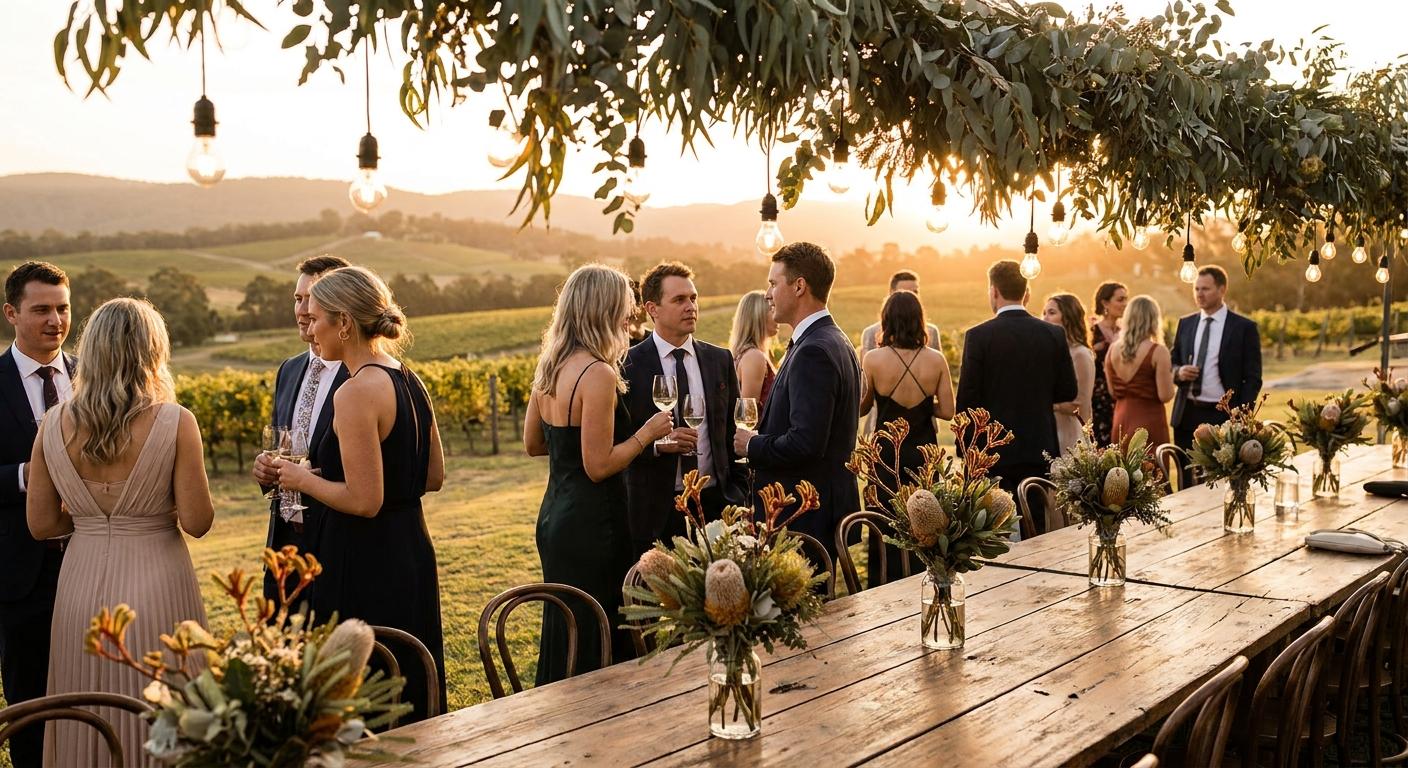
The traditional Australian wedding followed a predictable formula: a ceremony in the afternoon, photographs, and a reception that concluded by midnight. That model is dissolving rapidly. In 2026, Australian couples are choosing to extend their wedding celebrations across multiple days, transforming single events into immersive experiences that allow guests to connect, celebrate, and create memories together over an extended period. This shift toward wedding weekends reflects deeper changes in how Australian couples think about their relationships, their priorities, and what they want their wedding to represent.
Understanding this trend helps couples planning their wedding in 2026, whether they are considering a full wedding weekend or simply extending their celebration by a single evening. This guide explores the factors driving the wedding weekend trend, the formats that are emerging, and the practical considerations for Australian couples who want to create multi-day celebrations that their guests will remember for years to come.
Why Wedding Weekends Are Growing in Australia
The limitations of single-day Australian weddings, despite their energy and emotion, often fail to deliver the experience that couples and guests truly want. The compressed timeline creates pressure: guests rush from ceremony to reception, conversations are brief, and the celebration ends before many meaningful interactions have occurred. The couple, caught up in the pace of the day, often feel they have not had sufficient time with each guest.
Research into guest experience at Australian weddings consistently identifies time as the primary limitation. Guests report that they enjoy formal celebrations but feel they miss the opportunity to connect with the couple and with each other in any meaningful way. The pressure of a tight schedule means that the celebration, however beautiful, can feel like a series of events rather than a genuine gathering.
The financial equation has also shifted. With the average Australian wedding costing $38,252 according to the Easy Weddings Annual Survey 2026, couples are increasingly questioning whether they should redirect some of that investment toward extending the celebration rather than intensifying a single day. The answer for many couples is yes: they would rather create two or three days of meaningful experience than a single day of spectacle.
The Influence of Festival Culture and Experience Design
Australian couples in 2026 have grown up with festival culture. From laneway festivals in Melbourne to regional music events across the country, Australians have embraced the concept of multi-day experiences that unfold over time rather than peaking and concluding in a single afternoon or evening. This cultural fluency with festival formats has translated naturally into wedding planning.
Couples approaching their wedding with festival mindsets ask different questions than those planning traditional celebrations. Instead of asking how to fill a single evening with entertainment, they ask how to create an experience that evolves over days, with different mood and activities at different times. The answer involves thinking about flow, variety, and the rhythm of the celebration across its full duration.
The guest-focused trend identified in 2026 wedding planning guides reinforces this shift. Wedding planners and industry commentators note that couples are increasingly prioritising what guests experience rather than what the celebration looks like from the outside. Multi-day formats naturally serve this priority, as they create time for genuine interaction rather than manufactured moments.
Popular Wedding Weekend Formats in Australia
The most common wedding weekend format in Australia follows a consistent pattern: welcome drinks on Friday evening, the main wedding celebration on Saturday, and a relaxed recovery brunch or activity on Sunday. This structure gives guests time to arrive, settle in, and transition into celebration mode before the main event, and provides an opportunity to decompress and connect informally afterward.
In wine regions such as the Yarra Valley, Hunter Valley, and Margaret River, this three-day format has become the default for destination weddings. Venues and accommodation providers have developed packages that support the full timeline, and local suppliers have adapted their services to serve guests across multiple days. The format works particularly well in these locations because the destination itself provides activities and experiences that fill the non-wedding days naturally.
Coastal wedding destinations such as Byron Bay, the Gold Coast, and the Mornington Peninsula have adopted similar approaches, with the beach and ocean providing natural activities for days when formal wedding events are not scheduled. Couples hosting weddings in these locations can create weekend itineraries that mix celebration with leisure, giving guests a genuine holiday experience alongside the wedding itself.
Intimate Extended Weekends
A growing subset of Australian couples is taking the wedding weekend concept further, hosting guest lists of 20 to 50 people across four or five days of activity. These intimate extended weekends typically involve a mix of structured events, optional activities, and unstructured time that allows guests to explore, relax, and connect at their own pace.
The appeal of intimate extended weekends lies in the depth of connection they enable. With fewer guests and more time, couples can genuinely engage with each person on their guest list, and guests can build relationships with each other rather than exchanging business cards in a reception line. This format aligns naturally with the broader trend toward intimate weddings, and the combination of small guest lists with extended timelines produces celebrations that feel genuinely meaningful.
The logistics of intimate extended weekends require careful planning but are more manageable than many couples assume. With fewer guests, accommodation coordination simplifies, and the intimate scale allows for more flexible scheduling. Couples can plan a detailed itinerary or allow the weekend to unfold organically, depending on their preferences and the character of their guest group.
Choosing the Right Destination
The success of a wedding weekend depends significantly on destination selection. The ideal location offers more than beautiful wedding venues; it provides context and activities that make the extended timeline feel natural rather than forced. Australian couples have access to an extraordinary range of destination types, from wine regions and coastal retreats to mountain settings and outback properties.
The Yarra Valley and Mornington Peninsula in Victoria offer cellar door venues, vineyard accommodation, and wine experiences that fill weekend itineraries naturally. The Hunter Valley in New South Wales provides similar infrastructure with the added attraction of proximity to Sydney, making it accessible for guests who cannot commit to remote travel. Margaret River in Western Australia delivers a complete experience combining wine, beaches, forests, and world-class dining, though the travel time limits its accessibility for eastern-states guests.
Byron Bay and the Gold Coast in Queensland have become premier wedding destinations precisely because they offer built-in activities and atmosphere. The beach environment provides natural relaxation and recreation, while the region restaurants, cafes, and attractions provide options for every taste and budget. The warm Queensland climate makes these destinations viable year-round, with spring and autumn providing the most comfortable conditions for outdoor celebration.
Building Your Weekend Itinerary
A well-designed wedding weekend itinerary balances structure with flexibility. The Friday welcome event sets the tone for the celebration, introducing guests to each other and to the couple in a relaxed environment. This event does not need to be elaborate: drinks at a local venue, a casual dinner at the accommodation, or even just time in a shared space can serve this purpose effectively.
Saturday builds to the main celebration, with the ceremony and reception forming the emotional centre of the weekend. However, even Saturday can incorporate pre-ceremony activities that build atmosphere: a morning yoga session, a group breakfast, or time at a local attraction keeps guests engaged and creates additional shared experiences. The key is creating flow across the day rather than a series of isolated events.
Sunday provides a gentle conclusion without the pressure of formal celebration. Recovery brunches, beach days, winery visits, or simply shared time at accommodation allow guests to process the previous day joy while extending the sense of community that the wedding created. Some couples plan specific activities such as group hikes, cooking classes, or boat trips that create final memories before guests depart.
Managing Guest Communication and RSVPs
Wedding weekends require more sophisticated RSVP management than single-day celebrations. Guests need to confirm attendance across multiple events, indicate preferences for optional activities, and understand their options for accommodation and travel. Clear communication systems are essential for managing this complexity without creating confusion or frustration.
Digital RSVP platforms designed for multi-event weddings allow couples to collect responses at the event level rather than requiring a single attendance confirmation. Guests can indicate which weekend events they plan to attend, whether they want to participate in optional activities, and what their dietary requirements are for each meal. This granular approach to RSVPs helps couples plan catering, accommodation, and activities with precision.
The timing of invitations for wedding weekends should be earlier than for single-day events. Guests committing to multiple days need more notice to arrange time off work, accommodation, and travel. Couples should send save-the-date notifications at least six months ahead and formal invitations at least three months before the wedding, with RSVPs requested at least six weeks before the event.
Budget Considerations for Wedding Weekends
Wedding weekends involve different cost structures than single-day celebrations. While the per-person cost for each event may be lower, the extended timeline means that accommodation, meals, and activities across multiple days can add significantly to the overall budget. Couples need to understand these dynamics and plan accordingly.
The most significant cost advantage of wedding weekends is the ability to share fixed costs across more guests and more events. Venue hire, entertainment, and styling costs that would be concentrated in a single day can be distributed across multiple events, potentially reducing per-event costs. However, these savings must be balanced against the additional catering and activity costs that extended timelines generate.
A typical budget for a 50-guest, three-day wedding weekend in Australia might range from $55,000 to $95,000 AUD depending on location, supplier quality, and the ambition of the program. This figure includes venue hire for multiple events, catering across the weekend, entertainment, activities, and guest accommodation subsidies where applicable.
Australian Destinations for Wedding Weekends
Australia wine regions have established themselves as premier wedding destinations precisely because they offer everything a wedding weekend requires: beautiful venues, quality accommodation, excellent food and wine, and surrounding environments that provide natural activities and photographic backdrops. The Yarra Valley offers proximity to Melbourne, diverse venue options from intimate cellar doors to grand vineyard estates, and a developed supplier ecosystem that understands multi-day celebrations.
Margaret River presents a more remote but extraordinarily complete destination. The combination of world-class wine, stunning coastline, tall timber forests, and exceptional dining creates an unparalleled setting for extended celebrations. Couples should note that Margaret River popularity means key venues and accommodation book quickly, particularly for spring and autumn weddings when the weather is most favourable.
The Mornington Peninsula in Victoria offers a different coastal experience, with bay beaches, ocean swimming beaches, and coastal walks providing varied environments within a compact area. The region proximity to Melbourne makes it accessible for guests who cannot commit to remote travel, while the quality of its restaurants, wineries, and accommodation ensures a premium experience.
Creating Meaningful Guest Experiences
Wedding weekends allow entertainment to evolve across multiple days rather than peaking during the Saturday reception. This extended timeline enables experiences that would feel forced in a single evening but emerge naturally across a longer celebration. Welcome events on Friday evening might feature acoustic music, a curated playlist, or even a magician or sketch artist who mingles with guests during drinks.
Saturday entertainment can build from ceremony music through to reception dancing, with the extended timeline allowing for variety. A photo booth during pre-dinner drinks, lawn games in the afternoon, and a band or DJ for the evening reception create different modes of entertainment across the day. Sunday activities might include a group breakfast, a beach walk, or simply shared time that requires no formal entertainment at all.
Wedding weekends create opportunities to incorporate Australian traditions that single-day celebrations may not accommodate. A sunset drinks reception on Friday evening might feature Australian sparkling wine and local cheese, introducing guests to the destination character before the main celebration. A Sunday morning gathering might include an Acknowledgement of Country that acknowledges the traditional owners of the land, adding cultural depth to the celebration.
Managing the Practical Details
Multi-day weddings require careful accommodation management that single-day events do not demand. Couples should research accommodation options in their chosen destination well in advance, secure group rates where possible, and communicate clearly with guests about their options. Many wedding venues in popular Australian destinations have accommodation on-site or established relationships with nearby providers.
Getting guests between accommodation, venues, and activities requires coordination that single-day weddings do not need. In destinations where cars are necessary, couples should consider arranging group transport for key events to avoid guests driving under the influence and to create a more communal atmosphere. Shuttle services between accommodation and wedding venues are appreciated by guests and can be arranged through local transport providers in most Australian wedding destinations.
For coastal and regional destinations, clear communication about distances, travel times, and road conditions helps guests plan their weekend effectively. Some couples provide printed itineraries that include maps and transportation information, which guests often appreciate as a reference throughout the weekend.
The rise of wedding weekends in Australia reflects something deeper than a fashion trend. Australian couples in 2026 are choosing to prioritise genuine connection over manufactured spectacle, meaningful experience over photographic opportunity, and community over performance. The wedding weekend format serves these priorities naturally, creating time for the interactions and experiences that make celebrations genuinely memorable.
Planning a wedding weekend requires more thought than planning a single-day celebration, but the additional effort is repaid in the quality of the experience for both couple and guests. The extended timeline transforms the wedding from a series of events into a genuine gathering, with space for conversations to develop, relationships to deepen, and memories to accumulate naturally across multiple days.
WeddingRSVP supports multi-day wedding planning with tools designed for complex celebrations. Our platform handles tiered guest lists, multiple event RSVPs, and communication that reaches guests at the right time with the right information. Start building your wedding weekend today and discover how WeddingRSVP can help you create the celebration you envision.